


Uhopemedical Answers: How Do You Verify a Cohesive Bandage Manufacturer's Product Consistency
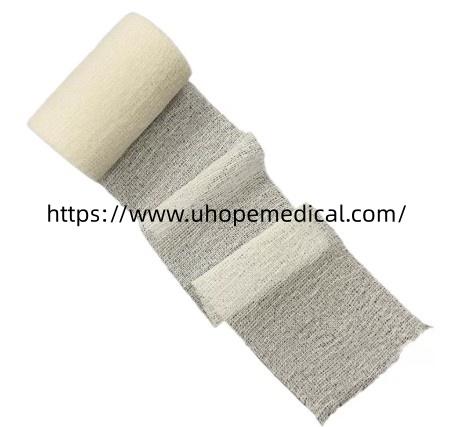
The Essential Tests for Cohesive Bandage Performance.
Clinical users depend on cohesive bandages to maintain secure dressing fixation while accommodating joint movement and tissue swelling. These two functions—adhesion and elasticity—determine product effectiveness across applications from wound care to sports medicine. Medical procurement professionals evaluate these properties through standardized mechanical testing that reveals manufacturer capability and product consistency. Uhopemedical subjects its cohesive bandages to comprehensive adhesion and elasticity verification, ensuring each batch meets defined performance specifications. The company's quality laboratory employs specialized equipment to measure peel strength and elastic recovery under controlled conditions. Why should purchasing decisions factor in a Cohesive Bandage Manufacturer's testing protocols and test result transparency?
Peel Strength Measurement for Adhesion Verification.
The self-adherent property that distinguishes cohesive bandages requires quantitative evaluation through peel strength testing. This procedure measures the force required to separate a bandage layer from itself after application, indicating the adhesive system's effectiveness. Standard test methods position the bandage sample on a steel plate or backing material, applying a controlled peeling force at specific angles and speeds. The resulting measurement in Newtons per centimeter directly correlates with clinical holding power, predicting whether the bandage will maintain position during patient movement. Uhopemedical's quality documentation provides these peel strength values across different production batches, enabling direct comparison with clinical requirements and competitor specifications.
Elastic Ratio Testing for Stretch and Recovery Characterization.
Elastic performance determines how a cohesive bandage accommodates limb circumference changes during activity and edema fluctuation. Elastic ratio testing involves stretching a fabric sample to defined extensions, measuring the length change before and after stretching. This test reveals the material's ability to return to its original dimension when tension releases, a property that affects compression consistency over the wear period. Uhopemedical's testing records demonstrate elastic ratios that support consistent application tension, reducing the risk of inadequate compression or excessive constriction that compromises patient comfort and treatment outcomes.
Tensile Strength and Elongation at Break Assessment.
The bandage material must withstand application tension without tearing, requiring tensile strength evaluation. Universal testing machines apply increasing force to fabric samples until rupture occurs, recording the maximum load and elongation percentage at break. These values guide clinical expectations for bandage durability during high-tension wrapping techniques. Uhopemedical's quality control includes this destructive testing on production samples, confirming that material strength remains within acceptable parameters regardless of manufacturing variables.
Waterproofness and Moisture Resistance Evaluation.
Clinical environments expose cohesive bandages to moisture from wound exudate, sweat, and external fluids. Standardized testing observes water droplet behavior on fabric surfaces, measuring contact angle and retention duration to assess water resistance. This property ensures that the cohesive function continues despite fluid exposure, maintaining secure fixation even in challenging wound care scenarios. Uhopemedical's material selection process evaluates waterproofness alongside mechanical properties, ensuring application versatility across diverse clinical settings.
Viscosity and Solid Content Analysis for Adhesive System.
The adhesive applied to cohesive bandage fabric influences both initial tack and long-term holding power. Viscosity testing measures the flow resistance of the adhesive formulation, indicating application consistency and coating uniformity. Solid content testing determines the adhesive layer's effective mass after solvent evaporation, correlating with overall peel strength and durability. Uhopemedical's manufacturing process includes these adhesive characterization steps, establishing a foundation for consistent cohesive performance across production runs.
Peel Strength on Self-Backing for Realistic Performance Simulation.
Clinical application involves bandage layers contacting each other rather than a steel surface. Testing peel strength on self-backing material more accurately predicts actual usage performance, accounting for fabric texture and adhesive interaction with the bandage's own surface. Uhopemedical performs this application-relevant testing to verify that laboratory results translate to clinical effectiveness, closing the gap between quality documentation and practical outcomes.
Grammage and Fabric Weight Uniformity Verification.
Variation in fabric weight directly affects elasticity, adhesion, and overall product performance. Grammage testing uses precision sampling cutters and electronic balances to measure weight per unit area, identifying inconsistencies that affect winding tension and compression delivery. Uhopemedical maintains tight fabric weight tolerances, ensuring that each roll provides predictable performance characteristics irrespective of production batch timing.
Calibrated Instrumentation and Standardized Procedures.
Accurate testing requires properly maintained and calibrated equipment operating under standardized environmental conditions. Uhopemedical's laboratory facilities include tensile testers, viscometers, and controlled-environment chambers that support reproducible measurements. The company's adherence to recognized test standards ensures that published performance data withstands independent verification, supporting regulatory submissions and customer confidence.
Documented Testing Records and Batch Traceability.
The value of quality testing extends beyond individual measurements to the systematic documentation that supports batch traceability and trend analysis. Uhopemedical maintains comprehensive records for each production batch, including material test results, in-process quality checks, and final product verification. This documentation enables rapid response to customer inquiries and supports continuous improvement through historical performance analysis.
Long-Term Performance and Aging Characteristics.
Cohesive bandage properties change during storage, affecting adhesion and elasticity over time. Accelerated aging studies simulate extended shelf life conditions, providing data on performance stability throughout the product's intended usable period. Uhopemedical incorporates this aging assessment into its testing program, confirming that mechanical properties remain within specifications until the stated expiration date.
The systematic testing of adhesion strength and elasticity provides objective evidence of cohesive bandage performance capability. Uhopemedical implements these verification protocols as routine quality procedures, generating data that supports clinical effectiveness and product reliability. https://www.welding-helmet.com/ provides comprehensive product specifications and test data that enable informed purchasing decisions based on verified mechanical properties.

 English
 French
 Spanish
 Portuguese
 Deutsch
 Turkish
 Dutch
Dutch
 Italiano
 Russian
 Romaian
 Portuguese (Brazil)
 Greek
Greek