


Healthcare Regulatory Compliance: What Every Provider Needs to Know in 2026
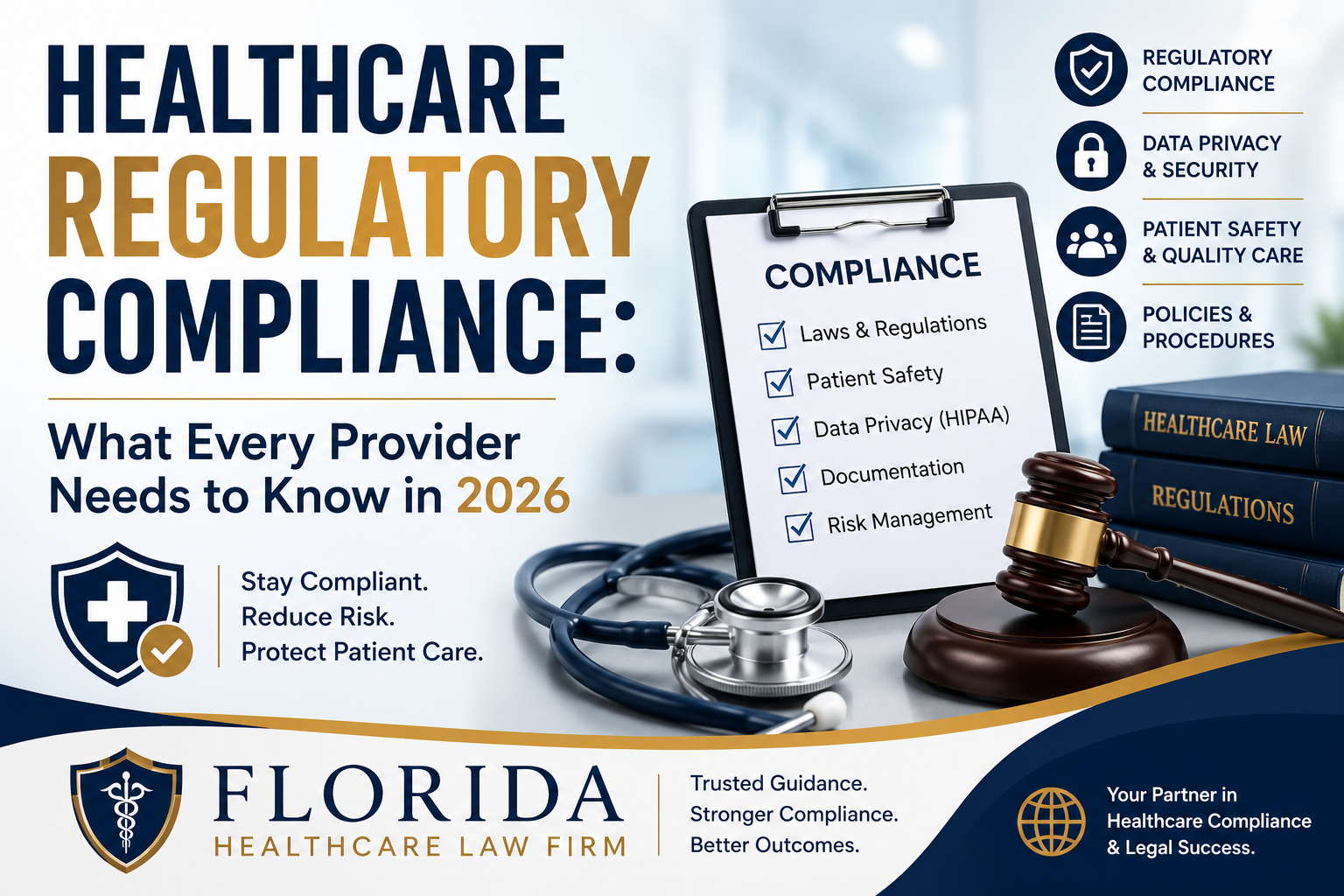
Running a medical practice, clinic, or healthcare business today means operating inside one of the most heavily regulated industries in the country. Staying on top of Healthcare Regulatory Compliance is no longer optional — nearly every decision, from how you market your services to how you structure compensation and handle patient data, touches a federal or state regulation somewhere. For physicians, practice owners, and administrators, understanding these rules is the difference between a thriving practice and one facing costly investigations, penalties, or worse.
At Florida Healthcare Law Firm, we work with doctors, clinics, hospitals, surgery centers, and healthcare entrepreneurs every day to help them understand where the compliance landmines are — and how to avoid stepping on them. Here's a breakdown of the core regulatory areas every healthcare business should have on its radar.
Anti-Kickback Compliance
The federal Anti-Kickback Statute and Florida's Patient Brokering Act restrict any arrangement where compensation is exchanged for patient referrals. This affects far more than you might expect, including:
- Marketing arrangements
- Medical directorships
- Leases between providers
- Corporate structuring
- Purchase and sale transactions
- Compensation arrangements
Because these arrangements are common in everyday practice operations, providers often don't realize they've crossed a line until it's too late. Getting a legal opinion before finalizing an arrangement is far cheaper than defending one after the fact.
Fraud & Abuse: Staying Ahead of Enforcement
Fraud and abuse laws are constantly evolving, and enforcement has only intensified in recent years. Providers need experienced counsel for situations like:
- Structuring complex business arrangements
- Unwinding a transaction or venture
- Conducting due diligence before a deal
- Reviewing compensation arrangements
- Managing internal investigations and self-disclosures
- Navigating group purchasing safe harbors
- Assessing financial relationships with physicians
A proactive compliance review can often catch issues before they become the subject of a government inquiry.
Fee Splitting: A Quiet but Serious Risk
Fee splitting tends to surface in percentage-based compensation arrangements, and it's an area where providers frequently get into trouble without realizing it. Violations can create liability not just for the practice, but for every party involved in the arrangement. Reviewing compensation structures with legal counsel before implementation helps prevent providers from unknowingly becoming part of a fee-splitting violation.
EMTALA: Anti-Dumping Regulations
EMTALA compliance matters most for hospitals and emergency providers, but its reach extends to medical staff and administrators as well. Common situations requiring guidance include:
- Responding to a subpoena or EMTALA investigation notice
- Developing EMTALA policies for hospitals and medical staff
- Investigating potential compliance errors internally
- Managing OIG and AHCA investigations or prosecutions
HIPAA and FIPA: Protecting Patient Data
Patient privacy compliance sits at the intersection of federal HIPAA requirements and Florida's Information Protection Act (FIPA). This is one of the most technical and demanding compliance areas providers face, covering:
- HIPAA privacy policies and procedures
- HIPAA security policies and procedures
- OIG Corporate Integrity Agreements
- Business Associate Agreements
- HIPAA training and education
- Breach reporting obligations
With data breaches becoming more common and more costly, having current, well-documented HIPAA and FIPA policies isn't just a best practice — it's a necessity.
Stark Law: Understanding Self-Referral Restrictions
The federal Stark Law governs physician self-referral and overlaps in important ways with the Anti-Kickback Statute, though the two laws are not the same. Providers need to understand their obligations around:
- Marketing arrangements
- Medical directorships
- Leases between providers
- Corporate structure
- Purchase and sale transactions
- Compensation arrangements
Because Stark Law violations carry strict liability — meaning intent isn't required for a violation to occur — getting this right from the outset is critical.
Emerging Industries: Stem Cell and Medical Marijuana
Regulatory compliance isn't limited to traditional practice models. Providers entering emerging fields face unique challenges:
Stem Cell Businesses: There's no off-the-shelf playbook for launching or adding a stem cell service line. Between regulatory navigation, training requirements, and marketing considerations, providers need experienced counsel from day one to avoid costly missteps.
Medical Marijuana & CBD: Florida's medical marijuana laws continue to evolve as the Department of Health issues new rules. Qualified physicians need to stay current on these changes to maintain a compliant practice around prescribing.
The Bottom Line
Regulatory compliance isn't a one-time checklist — it's an ongoing responsibility that touches nearly every aspect of running a healthcare business. Whether you need a quick answer to a specific question or a full compliance review of your operations, having experienced healthcare counsel in your corner makes all the difference.
Florida Healthcare Law Firm has decades of combined experience helping doctors, clinics, hospitals, treatment centers, and medical staffs navigate the ever-changing world of Healthcare Regulatory Compliance. If you have questions about Anti-Kickback compliance, Stark Law, HIPAA, EMTALA, fee splitting, or any other regulatory matter, reach out for a no-obligation consultation.
📞 (888) 455-7702 🔗 Contact Florida Healthcare Law Firm

 English
 Arabic
 Spanish
 Portuguese
 Deutsch
 Turkish
 Dutch
Dutch
 Italiano
 Russian
 Romaian
 Portuguese (Brazil)
 Greek
Greek