


Foreign Manufacturer Certification Scheme Process
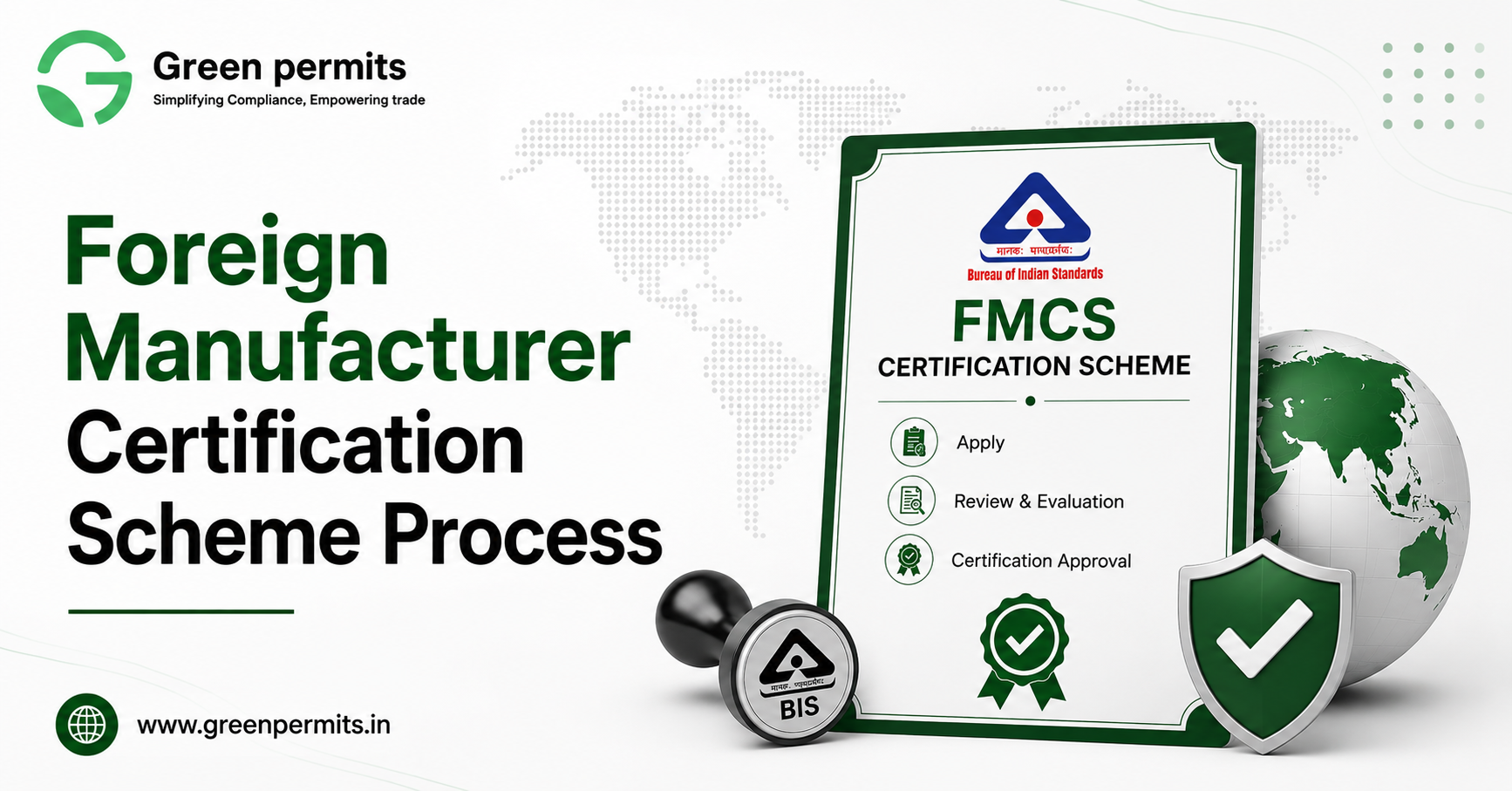
Foreign Manufacturer Certification Scheme Process is an important compliance requirement for overseas manufacturers who want to export regulated products to India. Many products sold in India must comply with Indian Standards and may require BIS approval before import, sale, distribution, or use in the Indian market.
The Foreign Manufacturer Certification Scheme, commonly known as FMCS, is operated by the Bureau of Indian Standards for manufacturers located outside India. Under this scheme, eligible foreign manufacturers can obtain a BIS licence to use the Standard Mark on products that conform to the applicable Indian Standard.
For foreign manufacturers, Indian importers, distributors, brand owners, and international suppliers, understanding the FMCS process is important for smooth market entry, customs clearance, product acceptance, and legal compliance in India.
What is Foreign Manufacturer Certification Scheme?
The Foreign Manufacturer Certification Scheme is a BIS certification scheme for manufacturers located outside India.
Under FMCS, BIS grants a licence to a foreign manufacturer for a specific product manufactured at a specific overseas factory. After the licence is granted, the manufacturer can use the BIS Standard Mark, commonly known as the ISI Mark, on the certified product.
FMCS Certification helps confirm that the product:
- Conforms to the applicable Indian Standard
- Is manufactured under controlled production conditions
- Is tested as per BIS requirements
- Meets quality and safety parameters
- Can be legally supplied in the Indian market
- Follows the Scheme of Inspection and Testing
- Carries the BIS Standard Mark after approval
FMCS is generally applicable to foreign manufacturers of products covered under BIS product certification, except certain electronics and IT products covered separately under the Compulsory Registration Scheme.
Why Foreign Manufacturer Certification is Important
Foreign Manufacturer Certification is important because many regulated products cannot be legally imported or sold in India without BIS approval.
It helps businesses:
- Comply with Indian quality standards
- Meet mandatory certification requirements
- Avoid customs and import delays
- Legally use the BIS Standard Mark
- Improve product credibility in India
- Build confidence among Indian buyers
- Reduce regulatory risks
- Support smooth market entry
- Meet Quality Control Order requirements
- Maintain long-term product compliance
Without FMCS Certification, foreign manufacturers may face shipment rejection, import restrictions, regulatory notices, or loss of business opportunities in India.
Who Needs FMCS Certification?
FMCS Certification may be required for foreign manufacturers producing goods outside India and supplying them to the Indian market.
The following businesses may need FMCS Certification:
- Foreign manufacturers exporting products to India
- Overseas factories producing BIS-covered products
- International brands selling regulated products in India
- Foreign suppliers working with Indian importers
- Overseas producers covered under Quality Control Orders
- Foreign manufacturers of industrial goods
- Foreign manufacturers of construction materials
- Foreign manufacturers of chemicals or metals
- Foreign producers of consumer goods
- Foreign factories manufacturing ISI Mark products
The exact requirement depends on the product category, applicable Indian Standard, and whether BIS certification is mandatory or voluntary for that product.
Products Covered Under FMCS
FMCS applies to various product categories manufactured outside India and covered under BIS certification.
Common product categories may include:
- Steel products
- Cement products
- Chemicals
- Industrial materials
- Pipes and fittings
- Valves and cylinders
- Machinery products
- Building materials
- Household products
- Consumer goods
- Pressure cookers
- Other products covered under Indian Standards
Product applicability should always be checked before applying because different products may fall under different BIS certification schemes.
Role of Authorized Indian Representative
A foreign manufacturer applying under FMCS must nominate an Authorized Indian Representative, commonly known as AIR.
The AIR acts as the official representative of the foreign manufacturer in India for BIS-related communication and compliance.
The AIR may help with:
- Communication with BIS
- Signing required forms and undertakings
- Coordinating application filing
- Responding to BIS queries
- Supporting inspection coordination
- Assisting during licence operation
- Managing compliance communication in India
Proper AIR nomination is important because incorrect or incomplete AIR documents can delay the certification process.
Documents Required for Foreign Manufacturer Certification Scheme
Proper documentation is one of the most important parts of the FMCS process.
Common documents may include:
- Application form
- Factory registration certificate
- Business licence of foreign manufacturer
- Product details
- Applicable Indian Standard details
- Manufacturing process flow chart
- Factory layout
- List of manufacturing machinery
- List of testing equipment
- Calibration certificates
- Quality control documents
- Raw material details
- Product test reports, if available
- Brand authorization, where applicable
- Product label and marking details
- Authorized Indian Representative nomination form
- AIR identity and address documents
- Undertaking and agreement documents
- Previous certification records, if any
Additional documents may be required depending on the product category and BIS requirements.
Foreign Manufacturer Certification Scheme Process
The Foreign Manufacturer Certification Scheme Process includes product applicability assessment, application filing, document review, factory inspection, product testing, fee payment, and grant of licence.
Step 1: Product Applicability Check
The first step is checking whether the product requires BIS FMCS Certification.
Applicability is assessed based on:
- Product category
- Applicable Indian Standard
- Quality Control Order requirement
- Manufacturing location
- Product use in India
- Import and sale requirement
- Certification scheme applicable to the product
Correct applicability assessment helps avoid wrong filing and unnecessary delays.
Step 2: Identify Applicable Indian Standard
After confirming applicability, the correct Indian Standard must be identified.
This step includes checking:
- BIS standard number
- Product specification
- Product grade or variety
- Testing requirements
- Marking requirements
- Sampling requirements
- Scheme of Inspection and Testing
The certification is granted against a specific Indian Standard, so selecting the correct standard is very important.
Step 3: Nominate Authorized Indian Representative
The foreign manufacturer must nominate an Authorized Indian Representative in India.
This step generally includes:
- Selecting an eligible AIR
- Preparing nomination documents
- Getting consent from AIR
- Preparing authorization forms
- Submitting AIR details with the application
The AIR should be capable of handling BIS communication and compliance support in India.
Step 4: Prepare Application and Documents
After selecting the standard and AIR, the manufacturer must prepare the complete application.
The application generally includes:
- Factory details
- Product details
- Manufacturing process details
- Testing facility details
- Quality control system information
- Indian Standard details
- AIR details
- Required declarations
- Supporting documents
Incomplete documentation is one of the most common reasons for delay in FMCS approval.
Step 5: Submit Application to BIS
The application is submitted through the prescribed BIS process. BIS has enabled online application submission through the Manakonline portal.
During application submission, the applicant should ensure:
- Correct product details
- Correct Indian Standard
- Proper factory address
- Complete document upload
- Correct AIR information
- Payment of applicable fees
- Proper declaration and undertaking
Any mismatch in details may lead to BIS queries or delay in application processing.
Step 6: BIS Review and Query Response
After application submission, BIS reviews the documents and information provided by the applicant.
BIS may raise queries related to:
- Missing documents
- Incorrect Indian Standard
- Incomplete AIR nomination
- Insufficient testing equipment details
- Missing calibration certificates
- Incomplete manufacturing process details
- Incorrect product information
- Fee or application-related issues
The applicant must respond to queries with proper clarification and supporting documents.
Step 7: Factory Inspection by BIS
Once the application is found complete, BIS may conduct a factory inspection at the foreign manufacturing location.
During inspection, BIS may verify:
- Manufacturing facilities
- Production process
- Quality control system
- Testing laboratory
- Testing equipment
- Calibration records
- Raw material controls
- Product conformity
- Marking and labeling process
- Compliance with the Scheme of Inspection and Testing
Factory inspection is a major stage in the FMCS certification process.
Step 8: Sample Drawal and Testing
During inspection, BIS may draw product samples for independent testing.
Sample testing may include:
- Safety testing
- Performance testing
- Chemical testing
- Mechanical testing
- Dimensional testing
- Electrical testing, where applicable
- Testing as per applicable Indian Standard
The product must meet the Indian Standard requirements for the certification process to move ahead.
Step 9: Grant of BIS Licence
After satisfactory inspection and successful product testing, BIS processes the case for grant of licence.
Before the licence is granted, the applicant may need to complete:
- Licence fee payment
- Marking fee payment
- Agreement signing
- Indemnity bond submission
- Performance bank guarantee
- Any pending compliance requirement
After approval, BIS grants the FMCS licence and the foreign manufacturer can use the Standard Mark on the certified product as per licence conditions.
Cost of Foreign Manufacturer Certification Scheme
The cost of FMCS Certification depends on several factors.
These include:
- Product category
- Applicable Indian Standard
- Number of products
- Number of factory locations
- Testing requirements
- Inspection cost
- BIS application fee
- Licence fee
- Marking fee
- Performance bank guarantee requirement
- Documentation complexity
- Consultant professional charges
The total cost varies depending on product complexity and certification scope.
Timeline for FMCS Certification Process
The timeline for FMCS Certification depends on document readiness, BIS review, factory inspection, sample testing, and query response.
The general timeline may include:
- Product applicability assessment: 1 to 3 working days
- Document preparation: 1 to 3 weeks
- Application filing: 1 to 2 working days
- BIS review: depends on authority processing
- Factory inspection planning: depends on BIS schedule
- Sample testing: depends on product and laboratory
- Final licence grant: after successful verification
The overall process may take several months depending on inspection coordination, testing time, and document quality.
Common Mistakes During FMCS Process
Many foreign manufacturers face delays due to incorrect filing or poor preparation.
Common mistakes include:
- Applying under the wrong certification scheme
- Selecting the wrong Indian Standard
- Submitting incomplete documents
- Not nominating proper AIR
- Missing calibration certificates
- Poor testing facility readiness
- Incomplete manufacturing process details
- Delayed query response
- Product failure during sample testing
- Not understanding marking fee requirements
- Poor coordination between manufacturer and importer
Proper planning helps reduce delays and improves approval chances.
Benefits of Foreign Manufacturer Certification Scheme
FMCS Certification provides several business and compliance benefits.
It helps businesses:
- Legally sell certified products in India
- Use the BIS Standard Mark
- Meet Quality Control Order requirements
- Improve product credibility
- Reduce import compliance risks
- Build trust with Indian buyers
- Improve brand reputation
- Support long-term market entry
- Demonstrate product quality and safety
- Improve acceptance by government and private buyers
For foreign manufacturers, FMCS Certification is an important step for entering and expanding in the Indian market.
Why Work with an FMCS Consultant?
The Foreign Manufacturer Certification Scheme Process involves technical documentation, Indian Standard identification, AIR nomination, application filing, factory inspection, product testing, fee calculation, and licence compliance.
An experienced consultant can assist with:
- Product applicability assessment
- Indian Standard identification
- Document checklist preparation
- AIR nomination support
- Application filing
- BIS query response
- Factory inspection preparation
- Testing coordination
- Licence grant support
- Renewal and ongoing compliance advisory
Professional support helps foreign manufacturers reduce errors, save time, and complete the process efficiently.
Learn More About Foreign Manufacturer Certification Scheme
If your business manufactures products outside India and wants to export or sell them in the Indian market, understanding the Foreign Manufacturer Certification Scheme Process is essential before starting.
Read the complete guide here:
👉 https://www.greenpermits.in/05/fmcs-bis-certification-for-foreign-manufacturers/
📞 Get Expert Assistance for FMCS Certification
If you need assistance with Foreign Manufacturer Certification Scheme, BIS FMCS Certification, Indian Standard identification, AIR nomination, document preparation, application filing, BIS query response, factory inspection support, sample testing coordination, or complete BIS compliance management, the experts at Green Permits Consulting can guide you throughout the entire process.
🌐 Website: https://www.greenpermits.in/
📞 Phone: +91 78350 06182
📧 Email: wecare@greenpermits.in

 English
 Arabic
 French
 Spanish
 Portuguese
 Turkish
 Dutch
Dutch
 Italiano
 Russian
 Romaian
 Portuguese (Brazil)
 Greek
Greek