


The Logistics of Manufactured Housing: Navigating the Complexities of Transporting Mobile Homes
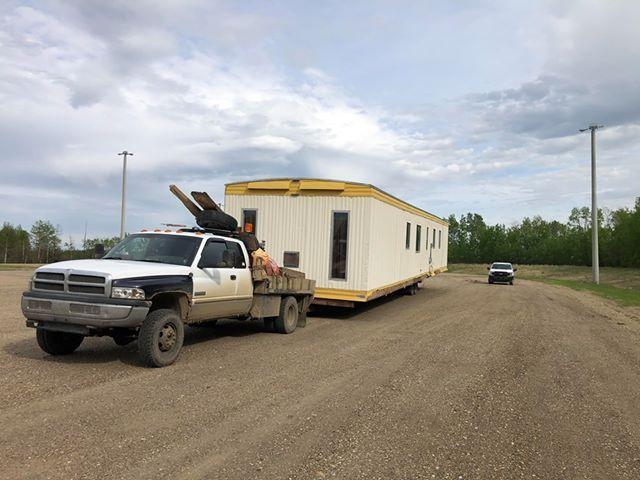
The manufactured housing sector represents a vital portion of the residential market in the United States, offering an accessible path to homeownership for millions of people. Despite the term "mobile home" remaining common in everyday conversation, modern manufactured homes are rarely moved once they are initially installed on a homesite.
However, when a relocation does become necessary—whether moving a vintage single-wide unit or transporting a newly built double-wide from a factory to a permanent residential community—the process requires a highly specialized branch of heavy logistics.
Moving a structure that can weigh anywhere from 15,000 to over 40,000 pounds is not a standard hauling task. It involves an intricate balance of civil engineering, regional highway regulations, specialized heavy-duty transport vehicles, and strict safety guidelines.
Understanding the preparation, equipment, and legal frameworks involved in mobile home towing is essential for any property owner considering a manufactured home relocation.
Unlike standard cargo, a manufactured home exceeds the standard legal size limits for freight vehicles on public roads. Consequently, they are classified as oversized or "superload" shipments under state and federal transportation laws. Navigating the regulatory landscape is often the most time-consuming phase of the relocation process.
Permits and Transit Authorization
Every state department of transportation (DOT) requires specific oversized load permits before a manufactured home can enter public roadways. If a route crosses multiple state lines, individual permits must be secured for each jurisdiction. These permits specify the exact travel window, approved highway routes, and maximum allowable dimensions.
Escort Vehicles and Route Surveys
Depending on the total width of the home—typically 12 to 16 feet for a single section—state laws often mandate the use of certified escort vehicles (pilot cars) equipped with warning signs, flags, and amber flashing lights. For exceptionally large loads, a professional route survey must be conducted beforehand to identify potential road hazards, such as low-clearance bridges, narrow underpasses, sharp highway merges, and low-hanging utility lines.
2. Preparing the Structure for Transit
A manufactured home is engineered to resist static wind loads and vertical gravity forces when permanently secured to its foundation. It is not naturally rigid enough to withstand the continuous vibrations, wind speeds, and physical shocks of highway travel without thorough preparation.
The Structural Checklist: Failing to secure a home before transit can result in catastrophic structural failure, broken windows, or highway accidents.
To ensure the structure arrives intact, transport crews must systematically prepare both the interior and exterior of the home:
-
Interior Stabilization: All loose furniture must be removed or securely anchored to the floor. Cabinet doors, drawers, and closet doors are taped shut, and heavy appliances are strapped down to prevent shifting during transit, which could alter the vehicle's center of gravity.
-
Exterior Reinforcement: Shingles, siding panels, and metal trim must be inspected and secured to prevent them from peeling off under high-speed highway winds. Windows are covered with protective plastic sheeting or plywood panels to shield them from road debris and gravel.
-
Chassis and Axle Inspection: Manufactured homes are built on a permanent steel I-beam frame (chassis). Before transport, the integrated tow bar (tongue) must be securely bolted or welded to the front of the frame. The heavy-duty leaf-spring axles, brakes, and wheels must be thoroughly inspected, greased, and fitted with fresh tires designed to handle the massive load.
3. Specialized Equipment Utilized in Transport
Standard semi-trucks are not designed to tow manufactured homes. The process relies on highly specialized machinery engineered specifically for heavy-duty, low-speed pulling and precise maneuvering.
Toter Trucks
The primary tow vehicle is a specialized tractor known as a "toter." Unlike standard long-haul trucks, a toter is equipped with a short wheelbase for tight turning radiuses, a heavy-duty hitch receiver, and a specialized hitching mechanism—often a ball-hitch or a custom pintle hook—mounted directly to the frame. Many modern toters feature hydraulically adjustable hitches, allowing the driver to raise or lower the front tongue of the home on the fly to navigate steep driveways or clear road humps.
House Cats and Crawler Tugs
Once the home arrives at its destination, maneuvering it from the main road onto a tight, unpaved plot or a concrete foundation pad requires specialized off-road equipment. Crews often utilize compact, remote-controlled crawler tugs (frequently called "house cats"). These low-profile, high-torque tracked machines can slide directly beneath the home's steel frame, lifting it and crawling over soft soil, mud, or gravel to place the structure precisely onto its foundation piers.
4. The Installation and Anchoring Process
The transport process does not end when the home is unhooked from the tow truck. Achieving structural safety and meeting local building codes requires a meticulous installation and stabilization process.
Once the home is positioned over its designated site, it is slowly lowered onto support piers—typically constructed of stacked concrete blocks or adjustable steel jacks placed at engineered intervals along the main steel frame.
To protect the home from high winds, installers must install a heavy-duty anchoring system. High-tensile steel straps are connected to the frame and anchored deep into the ground using helical earth augers or concrete anchors. Finally, if the home is a double-wide or multi-section unit, the individual halves must be structurally joined, weather-sealed, and utilities (water, sewer, gas, and electricity) safely connected by licensed technicians.
5. Factors Influencing Transportation Costs
Relocating a manufactured structure involves various cost factors that go far beyond simple mileage rates:
-
Dimensions and Weight: Double-wide and triple-wide homes require multiple transport vehicles, multiple drivers, and duplicate permits, which significantly increases the total cost compared to a single-wide home.
-
Distance and Route Complexity: Longer distances naturally incur higher fuel costs, driver hours, and permit fees. If a route requires circuitous detours to bypass low-clearance bridges or congested metropolitan zones, the total transit time and cost will rise.
-
Tires and Axles: If the home has sat stationary on a lot for years, its original tires and axles may be rusted or missing entirely. Installing new running gear to make the home roadworthy represents a significant initial hardware investment.
6. Partnering with Experienced Specialists
Given the complex engineering, strict DOT regulations, and significant financial investment involved in manufactured housing logistics, attempting to relocate a home without professional guidance is highly risky. Inexperienced handling can lead to severe structural cracking, costly legal fines, or complete loss of the property during transit.
Engaging with certified, insured transport specialists who possess the right heavy-duty toter trucks, permits, and route-planning experience guarantees that your home is moved safely, legally, and efficiently. For property owners planning a relocation or seeking professional heavy towing support, exploring the dedicated services at the Towing Blogspot provides access to the practical insights and professional assistance needed to ensure a smooth, worry-free relocation.

 English
 Arabic
 French
 Spanish
 Portuguese
 Deutsch
 Turkish
 Dutch
Dutch
 Russian
 Romaian
 Portuguese (Brazil)
 Greek
Greek