


Train Logistics Services Company: A Shipper's Real Guide
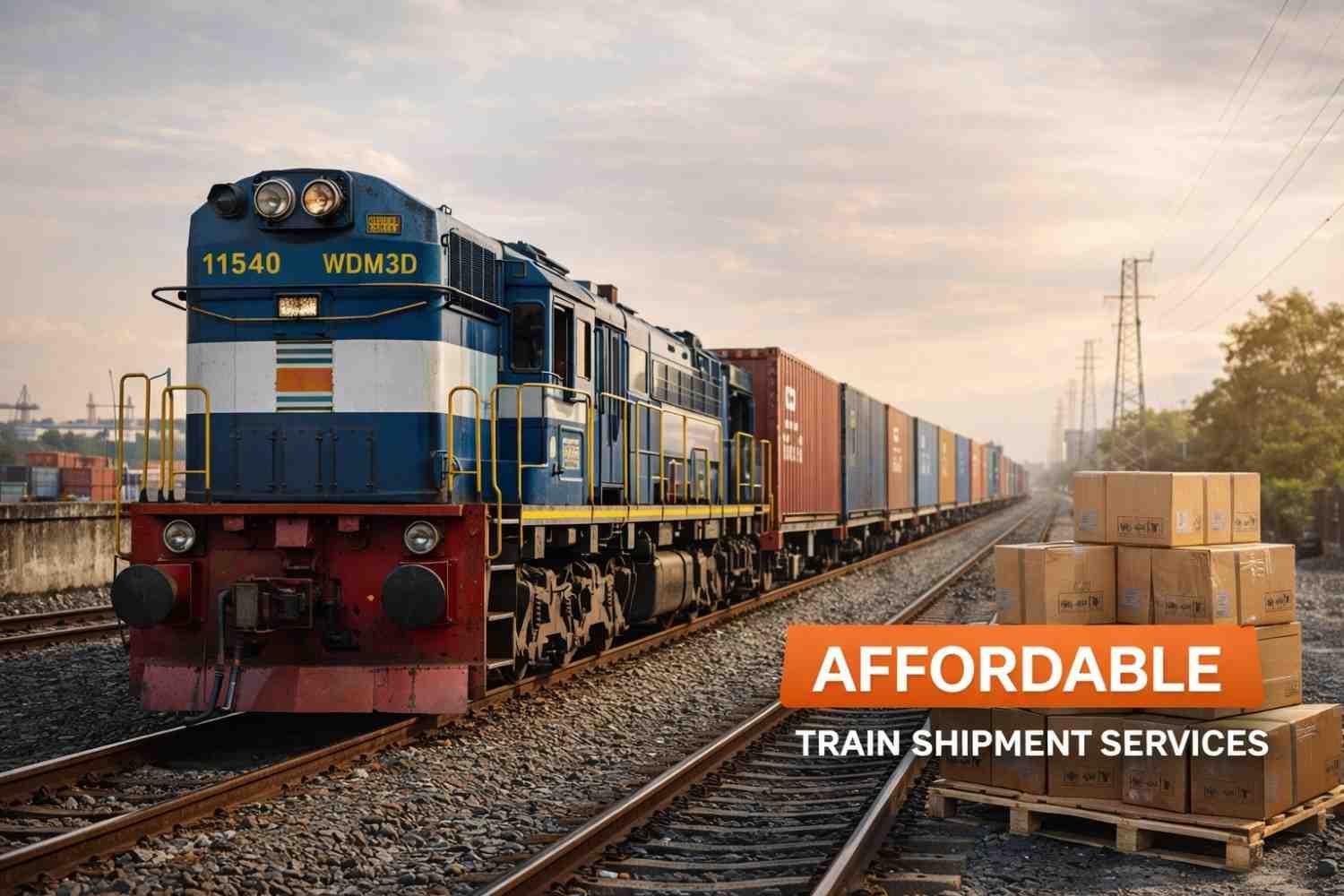
Most companies do not switch to rail freight because someone convinced them it was greener or cheaper on a spreadsheet. They switch because road freight costs kept climbing, driver shortages kept disrupting schedules, or a single high-volume contract made truck logistics financially unworkable. That is usually the real trigger behind hiring a train logistics services company, and it shapes how the decision gets made when nobody has time to fully evaluate every option first.
Rail freight in India has changed noticeably over the past few years. The current commissioned stretch of the Western Dedicated Freight Corridor is used mainly for export-import container movement, cement, petroleum, and truck-on-train services, along with milk transport from Gujarat to northern India. That shift matters to shippers because it means rail is no longer just an option for bulk commodities like coal and steel. It has become a realistic channel for containerized and time-sensitive cargo too, provided the operator managing your shipment actually knows how to work the corridors and terminals well.
Key Takeaways
-
Transit time on rail depends heavily on terminal handling and last-mile connection, not just the train journey itself
-
Cost-effective train shipment delivery only stays cost-effective if volume and scheduling are planned around wagon and rake availability
-
Dedicated Freight Corridor access changes route reliability significantly, and not every rail logistics company has equal access to it
-
Rail suits predictable, high-volume, non-urgent freight better than sudden or fragmented shipments
-
Documentation and terminal coordination failures cause more delays than actual rail transit problems
Why Rail Freight Decisions Are Harder Than They Look on Paper
A train logistics services company can quote an attractive rate per tonne almost immediately, because base rail tariffs are relatively transparent compared to road freight, where pricing shifts with fuel costs and driver availability. What is much harder to judge upfront is how that provider actually performs once your cargo hits a real terminal with real congestion, other shippers competing for wagon space, and last-mile trucking that has to connect the railhead to your actual delivery point.
This is usually where the initial cost advantage narrows. Long-distance rail logistics solutions look financially compelling on a corridor like Delhi to Mumbai, especially now that the near-complete Eastern and Western Dedicated Freight Corridors handle around 391 freight trains a day, support double-stack containers, and have cut Delhi-Mumbai transit time by roughly half compared to earlier rail schedules. But that improvement applies to the trunk route. It says nothing about how quickly your specific shipment gets loaded, whether a rake is available when you need one, or how the last fifty kilometers to your warehouse actually get handled.
What Breaks at the Terminal, Not on the Track
I have seen shippers assume that once cargo is booked onto a train, the hard part is done. In reality, terminal handling is where most delays originate. Loading schedules depend on rake availability, which depends on how well the operator plans traffic across multiple clients, not just yours. A provider managing a handful of large accounts efficiently will often outperform one juggling too many smaller, inconsistent shipments, simply because rake allocation rewards predictability.
Documentation adds another layer of friction that rarely gets mentioned in sales conversations. Rail freight, especially for cross-state or export-linked movement, still involves paperwork that has to align with terminal systems, customs where relevant, and receiving-end procedures. A Train Cargo Services provider that has streamlined this process electronically will move goods noticeably faster than one still relying on manual coordination between terminals.
Where an Affordable Rail Logistics Company in India Actually Saves Money
Affordable train shipment services genuinely do reduce cost per tonne on long hauls, and the newer infrastructure investment is reinforcing that advantage. Indian Railways' own economic modeling estimates close to two billion dollars in annual savings from reduced fuel use and lower inventory dwell time as a result of the corridor upgrades. For a business shipping heavy or bulky freight over 800 kilometers or more, that translates into a real, measurable cost advantage over road transport, particularly once fuel surcharges and driver-related delays are factored into a fair road comparison.
The savings are not automatic, though. They depend on your business being able to plan shipments in advance, consolidate volume, and tolerate rail's less flexible scheduling compared to trucking. A business that needs same-week, small-batch shipments will rarely see the same savings, because rail economics reward scale and predictability, not urgency.
Infrastructure Momentum Is Real, But Regional Coverage Still Varies
The infrastructure story in Indian rail freight is genuinely improving, and it is worth acknowledging honestly rather than dismissing it as marketing. The government has announced a roughly 2,052-kilometer Dankuni-to-Surat freight corridor connecting West Bengal, Jharkhand, Odisha, Maharashtra, and Gujarat, and Indian Railways recently handled a record 892 interchange trains in a single day between the Dedicated Freight Corridor network and its zonal lines. These are not small operational tweaks. They represent a structural shift toward rail becoming a more dependable freight channel across regions that previously had weak coverage.
That said, coverage still varies by region, and a rail logistics company in India that operates well on the Delhi-Mumbai or Delhi-Kolkata corridors may have far less operational depth in regions where dedicated freight infrastructure has not reached yet. Asking a provider directly which corridors they actually run on, rather than which ones they mention in marketing material, tends to reveal a lot about real capability.
How Experienced Shippers Evaluate a Rail Logistics Partner Differently
Businesses that have already been through one disappointing rail freight contract tend to ask sharper questions the second time. They want to know rake turnaround history on their specific route, not general fleet size. They ask how the provider handles peak season congestion when everyone wants wagon space at once. They also check whether last-mile trucking is handled directly by the rail logistics company or subcontracted separately, because that handoff point is where accountability often gets murky during a delay.
A third-party rail logistics service provider that is confident in its operational performance will usually share route-specific transit data without much hesitation. One that stays vague about actual performance on your corridor, and instead leans on generic claims about network size, is often signaling that its strength lies in sales rather than execution. This distinction matters more in rail than in road freight, because switching providers mid-contract is considerably harder once cargo scheduling and terminal relationships are already built around one operator.
The Trade-Off Nobody States Plainly Upfront
Rail freight rewards patience and volume. It does not reward last-minute urgency, and businesses that expect trucking-level flexibility from a train logistics services company are usually disappointed regardless of how good the provider is. The honest way to think about it is that rail is the better tool for consistent, high-volume, cost-sensitive freight, while road remains better suited to speed and flexibility. One repeated mistake companies keep making is choosing a mode based on cost comparisons alone, without weighing how well their own shipping patterns actually fit rail's operational rhythm. As the Dedicated Freight Corridor network expands further east and west over the next few years, the businesses that benefit most will likely be the ones that planned their logistics around rail's strengths early, rather than trying to force rail into a role built for trucking.
Suggested internal links: a page comparing rail versus road freight cost structures, a warehousing and last-mile fulfillment service page, and a page on Dedicated Freight Corridor coverage by route.
Suggested external references: Ministry of Railways / PIB press releases on Dedicated Freight Corridor performance, and Indian Railways' official freight business pages, for readers who want primary-source data.
FAQs
1. Is a train logistics services company cheaper than road freight for all shipments?
Ans. Not always. Rail tends to be more cost-effective for heavy, long-distance, high-volume freight, but short-distance or urgent shipments often still work out cheaper and faster by road once handling and last-mile costs are included.
2. How reliable are long-distance rail logistics solutions in India right now?
Ans. Reliability has improved noticeably on Dedicated Freight Corridor routes, with faster transit times and higher train throughput. Reliability on non-corridor routes still depends heavily on the specific operator and region.
3. What causes most delays with rail cargo shipments?
Ans. Terminal handling, rake availability, and documentation coordination cause more delays than the actual train journey. A provider with strong terminal relationships usually performs better than one relying purely on network size.
4. Can small or mid-sized businesses use train cargo services affordably?
Ans. Yes, particularly if they can consolidate shipments or work with a provider offering shared rake or partial-load options. Rail economics improve significantly with volume and advance planning.
5. How do I check if a rail logistics company in India is actually reliable?
Ans. Ask for route-specific transit performance rather than general company size claims, and clarify whether last-mile trucking is handled directly or subcontracted, since that handoff is a common point of failure.

 English
 Arabic
 French
 Spanish
 Portuguese
 Turkish
 Dutch
Dutch
 Italiano
 Russian
 Romaian
 Portuguese (Brazil)
 Greek
Greek