Precision has become the foundation of modern manufacturing, where even the smallest measurement can influence product quality, safety, and performance. From automotive components to aerospace equipment and industrial machinery, manufacturers rely on advanced measuring tools to maintain strict quality standards. These tools help eliminate errors, improve efficiency, and ensure that every component meets exact specifications. As industries continue to adopt automation and smart manufacturing practices, the demand for accurate measurement solutions continues to grow.
Why Accuracy Matters in Manufacturing
Manufacturing processes require consistency at every stage. A slight deviation in dimensions can lead to assembly issues, increased production costs, and product failures. This is why accurate measuring tools play a critical role in quality assurance.
Modern measurement devices allow technicians to verify dimensions, inspect finished products, and identify defects before products reach customers. By maintaining precise measurements, businesses can reduce material waste, minimize rework, and improve customer satisfaction.
The Evolution of Measuring Tools
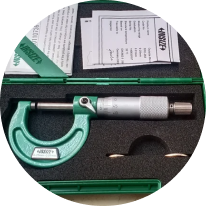
Traditional measuring instruments such as rulers, calipers, and micrometers remain essential in many workshops. However, today's manufacturing environment demands greater precision and faster inspection processes.
Advanced measuring tools now include digital calipers, laser measuring devices, height gauges, coordinate measuring machines (CMMs), digital micrometers, and optical inspection systems. These technologies provide faster readings, improved accuracy, and digital data recording, making them ideal for modern production facilities.
Many of these instruments can also integrate with quality management software, enabling manufacturers to monitor production trends and maintain comprehensive inspection records.
Applications Across Industries
Measuring tools are used in a wide range of industries where precision directly affects product performance.
In automotive manufacturing, they ensure engine parts, gears, and transmission components meet exact tolerances. Aerospace manufacturers rely on precise measurements to maintain aircraft safety and reliability. Electronics companies use advanced measurement equipment to inspect miniature components, while medical device manufacturers depend on accurate dimensions for surgical instruments and implants.
Construction, metal fabrication, machining, and research laboratories also rely heavily on precision measurement to maintain quality and compliance with industry standards.
Benefits of Using Modern Measuring Tools
Investing in advanced measuring tools provides numerous operational advantages. Accurate measurements reduce production errors, improve consistency, and enhance product reliability. Faster inspection processes also help increase productivity while reducing manufacturing downtime.
Digital measurement systems simplify documentation and quality reporting, making audits and compliance procedures more efficient. Additionally, automated measurement solutions minimize human error, allowing manufacturers to maintain consistent quality even during high-volume production.
These benefits contribute to lower operating costs and stronger customer confidence.
Choosing the Right Measuring Equipment
Selecting suitable measuring tools depends on the type of application, required accuracy, environmental conditions, and material being inspected. Manufacturers should consider measurement range, calibration requirements, ease of use, durability, and compatibility with existing quality systems.
Regular calibration and proper maintenance are equally important to ensure long-term accuracy and reliable performance. Investing in high-quality instruments from trusted suppliers also helps maximize productivity and equipment lifespan.
Conclusion
As manufacturing standards continue to evolve, precision remains essential for achieving superior product quality and operational efficiency. Modern measuring tools enable manufacturers to maintain tighter tolerances, reduce costly errors, and streamline quality control processes. By adopting advanced measurement technologies, businesses can improve productivity, meet international quality standards, and remain competitive in an increasingly demanding global manufacturing landscape.




 English
 Arabic
 French
 Spanish
 Portuguese
 Deutsch
 Turkish
 Dutch
Dutch
 Italiano
 Russian
 Portuguese (Brazil)
 Greek
Greek