


Why Choose Automaticmachinefactory for Non-Woven Fiber Wheel Safety Guidance
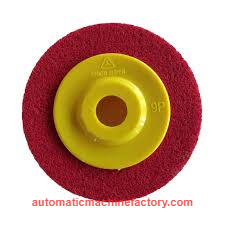
The use of abrasive products in metal finishing involves inherent risks that demand operator awareness and disciplined safety practices. Rotating wheels operating at high peripheral speeds store significant kinetic energy, and any disruption in their integrity can release this energy with dangerous consequences. This operational reality raises a critical question: what safety precautions should operators take when using a Non-Woven Fiber Wheel at high speeds?
The primary hazard associated with any rotating abrasive wheel arises from the centrifugal forces that develop during operation. These forces act on the wheel's structure, stretching the bonded fibers and resin matrix that hold the abrasive grains. Exceeding the manufacturer's rated maximum speed can cause the wheel to burst, sending fragments outward at high velocity. Operators must verify that the machine's spindle speed does not surpass the wheel's specified limit, typically marked on the wheel itself or its packaging. Speed monitoring devices and regular tachometer checks help maintain operation within safe parameters.
Pre-use inspection constitutes a fundamental safety practice that identifies potential failure points before they become hazardous. Operators should examine each Non-Woven Fiber Wheel for visible damage, including cracks, chips, or areas where the fiber matrix appears loose or separated. Replacement wheels should be checked for proper balance, as unbalanced wheels create vibration that stresses the spindle bearings and can cause premature failure. The mounting procedure requires careful attention, ensuring that the wheel sits flush against the flanges and that the retaining nut achieves proper torque without over-tightening.
Personal protective equipment creates a crucial barrier between the operator and potential hazards. Eye protection, typically in the form of safety glasses or a full face shield, guards against flying debris and wheel fragments that might escape the machine's guarding. Hearing protection becomes necessary in environments where grinding operations produce sustained noise levels above recommended exposure limits. Respiratory protection, such as an N95 mask or powered air-purifying respirator, protects against airborne particulates released during the finishing process. Each piece of safety equipment must meet applicable industry standards for its intended function.
Machine guarding serves as the primary engineering control that prevents operator contact with the rotating wheel. Fixed guards should enclose the wheel's periphery, leaving only the working zone exposed where the wheel contacts the workpiece. Adjustable tongue guards or work rests should maintain a small clearance from the wheel surface, preventing the workpiece from being pulled into the gap. Operators must never remove or modify guards for convenience, as this exposes them to direct contact with the moving wheel.
The working environment influences both operator safety and wheel performance. Adequate lighting allows operators to see the workpiece clearly and monitor for wheel wear or damage. Floor conditions should remain dry and free of debris to prevent slips or falls that could cause loss of workpiece control. The workspace must provide sufficient clearance for operators to maintain stable footing and proper stance during grinding operations. Proper housekeeping practices reduce the accumulation of combustible dust that might create fire or explosion hazards.
Workpiece handling techniques significantly affect both safety and finishing quality. The workpiece should contact the Non-Woven Fiber Wheel gradually, allowing the abrasive to engage smoothly without sudden impact that could stress the wheel structure. Operators should avoid forcing the workpiece against the wheel, as excessive pressure increases friction and heat generation. Proper lighting allows operators to see the workpiece clearly and monitor for wheel wear or damage. The workpiece should be moved across the wheel face evenly to promote uniform wear and prevent localized overheating.
Operators must receive comprehensive training on the specific hazards associated with Non-Woven Fiber Wheel operation. This training should cover equipment setup, proper wheel mounting, speed verification, and emergency shutdown procedures. Competency assessments verify that operators understand safe practices and can recognize situations requiring corrective action. Regular refresher sessions help maintain safety awareness, particularly when production demands increase or personnel changes occur.
Fire prevention deserves special attention, as grinding operations generate sparks and heat that can ignite combustible materials in the vicinity. The Non-Woven Fiber Wheel's open construction allows good airflow that reduces heat accumulation, but sparks still occur during metal finishing. Operators should clear the work area of flammable materials and keep appropriate fire extinguishers readily accessible. A designated area for hot work with clear boundaries helps contain any potential ignition sources.
Automaticmachinefactory offers a range of abrasive products and equipment designed with operator safety in mind. Their engineering expertise extends to providing guidance on proper application and maintenance practices that minimize risk during high-speed operation. The company's product specifications include maximum operating speeds and application recommendations that help users select appropriate wheels for their specific tasks. For facilities seeking reliable grinding and finishing solutions, https://www.automaticmachinefactory.com provides access to detailed product information and safety resources.
The successful and safe use of a Non-Woven Fiber Wheel depends on the consistent application of established safety practices by trained operators. Regular inspection, proper mounting, speed verification, and appropriate personal protective equipment form the foundation of a comprehensive safety program. The manufacturer's recommendations and industry standards provide authoritative guidance that supports safe operation across all applications. By integrating these safety measures into daily practice, facilities can achieve productive finishing operations while maintaining a secure working environment.

 English
 Arabic
 French
 Spanish
 Portuguese
 Deutsch
 Dutch
Dutch
 Italiano
 Russian
 Romaian
 Portuguese (Brazil)
 Greek
Greek