


Botox Injections for Sweaty Glands in Dubai: Expert Care
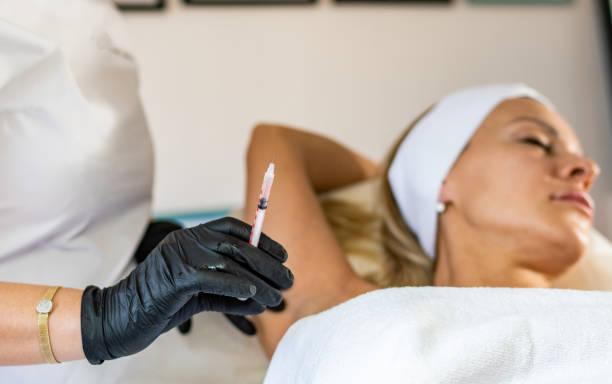
The difference between a good outcome and a disappointing one in hyperhidrosis treatment often comes down to the expertise of the person holding the syringe. Botox is a remarkable medication, but its effectiveness is entirely dependent on the skill with which it is administered. Seeking Botox Injections for Sweaty Glands in Dubai with expert care means understanding what distinguishes a genuinely skilled injector from a merely adequate one, and why this distinction matters for your comfort, safety, and results.
What Expert Care Means in Hyperhidrosis Treatment
Expertise in this specific application of Botox is different from expertise in cosmetic Botox. The injection technique, the anatomical targets, the dosing strategy, and the assessment process are all distinct.
Accurate Diagnosis Before Any Injection
An expert begins not with the syringe but with the diagnosis. Primary focal hyperhidrosis must be distinguished from secondary hyperhidrosis caused by underlying medical conditions. The expert takes a thorough history, asking about the age of onset, the pattern of sweating, the presence or absence of nighttime sweating, the family history, and any medications or medical conditions that could be contributing.
This diagnostic rigor is not academic. Treating secondary hyperhidrosis with Botox without addressing the underlying cause is a failure of care. The sweating may improve temporarily, but the root problem, whether a thyroid disorder, an infection, or a medication side effect, remains unaddressed. The expert knows when to treat and when to refer for further medical evaluation.
Precise Mapping of Affected Areas
The expert does not guess where to inject. A starch-iodine test is performed to map the exact boundaries of the sweating area. This involves applying iodine solution to the skin, allowing it to dry, and dusting with cornstarch. Where sweat is produced, a dark purple color develops, creating a precise map of the overactive glands.
This mapping is essential for two reasons. First, it ensures that the entire affected area is treated. Gaps in coverage leave untreated sweat glands that continue to produce sweat, creating an uneven result. Second, it prevents injecting Botox into non-sweating skin, which wastes product and increases cost without benefit.
Intradermal Injection Technique
The sweat glands and the nerve endings that supply them reside in the dermis, the layer of skin just below the surface. The Botox must be deposited precisely in this layer. Injecting too deep, into the subcutaneous fat or underlying muscle, reduces efficacy and increases the risk of side effects, particularly muscle weakness in the hands.
The expert uses a fine needle, typically 30 or 32 gauge, and places a series of small, superficial injections across the mapped area. The injection is intradermal, creating a small, temporary bleb or wheal in the skin. This technique requires practice and tactile sensitivity. It is different from the intramuscular injections used for cosmetic Botox, and expertise in one does not automatically translate to expertise in the other.
Appropriate Dosing and Distribution
The expert understands the dosing requirements for different body areas. The underarms require a specific dose range per axilla, typically 50 units, distributed across multiple injection points. The palms require a different dose, carefully calculated to balance efficacy against the risk of muscle weakness. The face requires very conservative dosing to avoid affecting the muscles of expression.
The expert also understands that the dose must be distributed evenly across the mapped area. Concentrating too much product in one area does not improve efficacy and increases the risk of local side effects. The grid of injections ensures uniform coverage and a smooth, even result.
The Value of Experience in Complication Avoidance
Experience matters most when things do not go according to plan. The expert has seen complications, managed them, and learned from them.
Managing Pain Effectively
Palmar and plantar treatments are painful, and the expert acknowledges this openly and offers effective pain management. This may involve a nerve block performed by a practitioner trained in the technique, or the use of vibration distraction, cold air, or other comfort measures during the procedure.
The expert does not minimize the discomfort or suggest that you should simply tolerate it. They work with you to make the procedure as tolerable as possible, recognizing that a traumatic experience may prevent you from returning for maintenance treatment.
Recognizing and Addressing Side Effects
If you develop muscle weakness after palmar treatment, the expert recognizes it promptly, explains the expected time course of recovery, and provides reassurance and practical support. If you develop compensatory sweating, the expert discusses management strategies rather than dismissing your concern.
This responsiveness and accountability are the hallmarks of expert care. The expert does not disappear after the procedure. They remain available and engaged, taking responsibility for your outcome.

 English
 Arabic
 Spanish
 Portuguese
 Deutsch
 Turkish
 Dutch
Dutch
 Italiano
 Russian
 Romaian
 Portuguese (Brazil)
 Greek
Greek