


Pakistan Budget 2026-27: Why It Feels Like a Budget for Lenders, Not for Households
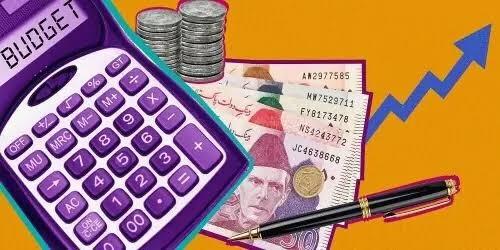
So the government is rolling out its third budget and honestly the mood around it feels different from the usual pre-budget noise. There's less talk about exciting reforms and more talk about whether the country can just get through another year without another crisis.
That tells you something about where things actually stand. The economy isn't collapsing but it isn't really growing either, and a lot of economists are starting to ask the same uncomfortable question. Stable for what, exactly?
Let's break down what's actually going on and why so many people who study this stuff for a living aren't exactly optimistic.
The Basic Problem Nobody's Solving
Pakistan has spent the last three years mostly putting out fires rather than building anything new. Tight monetary policy, cutting government spending, controlling imports, raising energy prices.
All of this was necessary to avoid a full blown balance of payments crisis and to some extent it worked. Reserves stabilized a bit, the twin deficits narrowed, inflation calmed down somewhat.
But here's the thing. None of that actually translates into people feeling better off. Industries are still running below capacity. Businesses are still hesitant to invest because nobody trusts the policy environment to stay consistent. And regular households are dealing with purchasing power that just keeps eroding no matter what the official numbers say.
There's a phrase going around among economists right now, stabilization fatigue, and it captures the mood pretty well. People are tired of being told things are getting better when their actual day to day life doesn't reflect that at all.
Why Growth Keeps Staying Out of Reach
Average growth over the last three years has stayed below 2 percent, which is genuinely low for a country with Pakistan's population and needs. Some analysts think FY27 growth might land somewhere around 3 to 3.5 percent if oil prices stay high because of ongoing tensions in the Middle East. That's still well below the government's own target of 4.1 percent.
Development economist Naved Hamid put it pretty bluntly. There just isn't much room to move under the current IMF program. This budget is going to look like an austerity budget again, similar to what came before it.
Economist Waqar Wadho takes a similar view but goes a bit further into why. He points out that the structural problems in Pakistan's economy haven't actually changed. They're sitting in exactly the same place they were before. Even if the government manages to hit something like 3 to 5 percent growth, that's a small shift, not a real turnaround. And he makes an important point here. Growth was never really the IMF's job in the first place. Their mandate is about stabilizing the external balance, which is a completely different goal from actually growing the economy.
The Revenue Squeeze Is Getting Tighter
One detail that's easy to miss but actually matters a lot. The revenue target for next year has been upgraded by the IMF into something called a quantitative performance criteria. In plain language, that means it's now a binding commitment rather than just a target the government can miss without major consequences. Given that Pakistan has repeatedly fallen short of revenue targets in the past, this tightens things considerably.
Zafar Masud, who chairs the Pakistan Banks Association, frames the whole issue differently than most. He argues the real problem isn't really about how much the government spends. It's about how weak revenue generation is, how much leakage exists through cross subsidies, and how inefficient the whole fiscal system is. He calls this year's budget a real opportunity to break out of what he describes as Pakistan's recurring low growth, high debt cycle.
But he also makes a point that stuck with me. The IMF program buys stability. It does not buy growth. Those are two completely different things and conflating them is part of why people feel like something is missing from the whole conversation.
Is There Any Room for Growth at All
This is where opinions actually start to split a bit.
Masud believes growth is possible even while operating inside an IMF program, but he thinks it has to come from smarter micro-economic interventions rather than relying purely on macro stability. With government fiscal space as limited as it currently is, he sees private sector funding as the real lever that could create meaningful economic multiplier effects.
Hamid is less convinced. He agrees there's theoretically some room to improve things, but when he actually looks at private sector investment levels, early economic indicators, or any clear government strategy on the table, he doesn't see anything substantial happening. Just more of the same.
A recently published Shadow Economic Survey from an Islamabad based think tank backed by a business lobby made a similar point in a slightly different way. Stabilization, they argued, is defensive economics. It might stop the economy from collapsing but it doesn't automatically create jobs, investment, or rising prosperity on its own.
Why This Keeps Happening Over and Over
There's a deeper pattern here that explains why Pakistan keeps ending up back in the same place. Whenever the economy starts growing past a certain modest point, imports spike because local industry depends heavily on imported machinery and raw materials. Exports don't grow fast enough to keep pace. The current account deficit widens again. Foreign exchange reserves come under pressure again. And eventually Pakistan ends up back at the IMF's door asking for another bailout.
This has basically become the default cycle. Masud describes Pakistan's repeated balance of payments crises as downstream symptoms of structural fiscal problems that keep getting patched temporarily rather than actually fixed.
What About Relief for Regular People
There's been talk that the government might offer some limited relief for salaried workers and businesses that comply with tax requirements, despite how tight the fiscal situation already is. But even modest relief measures like this create an additional revenue gap that has to be filled somehow.
Wadho isn't holding his breath on any of this turning into something meaningful. His view is that since the government can't really widen its tax base, there's going to be pressure regardless. They might trim a few visible items for the sake of public perception, but then quietly make up the difference somewhere less visible, like pushing the petroleum levy even higher. And that's the kind of cost everyone ends up feeling eventually, one way or another.
Masud's take is that the real fix isn't raising tax rates further. It's actually expanding who pays taxes in the first place, without making the rates themselves more punitive. He sees that as one of the goals this budget genuinely needs to focus on if Pakistan wants any kind of sustainable path forward.
What Business Leaders Are Actually Saying
A textile exporter quoted in discussions around this budget put something into words that a lot of people seem to feel but rarely say directly. Confidence can't be rebuilt through macroeconomic management alone. People have lost some of their belief that today's sacrifices are actually going to translate into better living standards down the road. That's a trust problem as much as it is an economic one.
The broader argument from a lot of economists right now is that Pakistan doesn't need another stabilization budget dressed up in the language of reform. What's actually needed is a redesign of the entire growth model. Moving away from an economy driven by consumption and import financing toward one that's actually export oriented and built on real productivity gains.
That kind of shift requires reforms that are politically difficult and slow to show results, which is exactly why governments keep putting them off.
So What Happens Now
The way this budget will really be judged isn't going to be about whether it satisfies whatever performance criteria the IMF has set. It's going to be about whether it gives people any real signal that Pakistan is finally moving past just surviving one crisis cycle after another.
Wadho summed up the choice facing budget makers about as clearly as anyone could. Reform, delay, or another lost cycle. Those are basically the three doors available right now, and which one gets chosen says a lot about whether this country is actually trying to build something or just trying to make it to the next IMF review without falling apart.
Learn more: https://globeestatebuilders.com/pakistan-budget-2026-27-just-cut-property-taxes-almost-in-half/

 Arabic
 French
 Spanish
 Portuguese
 Deutsch
 Turkish
 Dutch
Dutch
 Italiano
 Russian
 Romaian
 Portuguese (Brazil)
 Greek
Greek