


Which jiangsuxinfeng Air Compressor Specifications Matter for Your Workshop?
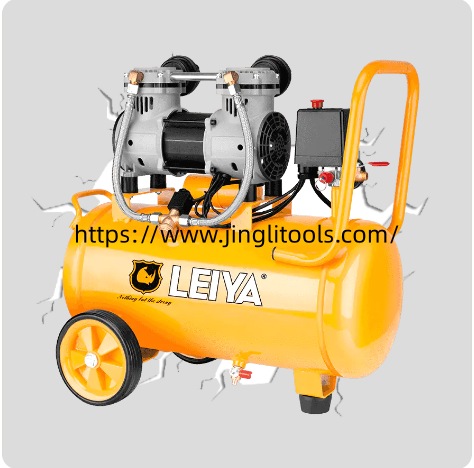
Air Compressor selection should begin with the work your workshop actually performs. A small repair shop, automotive service center, woodworking facility, and industrial assembly area can have very different compressed air requirements. Before comparing models, buyers should identify the pneumatic tools they use, how often those tools operate, the pressure they require, and whether several tools may run at the same time. This approach creates a practical starting point for evaluating equipment.
Start With Your Pneumatic Tools
The tools connected to a compressed air system can tell you a great deal about the required capacity. Impact wrenches, air drills, grinders, nailers, spray equipment, and blow guns can have different airflow requirements.
Make a list of the tools used during a normal working period and check the CFM requirement provided by each tool manufacturer. If several tools may operate simultaneously, their airflow requirements need to be considered together. Current sizing guidance also recommends allowing additional capacity for fluctuations, leaks, and possible future tool additions.
This is more useful than choosing a model simply by motor horsepower. CFM describes the volume of air delivered, while PSI describes pressure. Both specifications should be considered in relation to the tools being operated.
How Much Pressure Does Your Workshop Need?
PSI is another specification that deserves careful attention. Different pneumatic tools can require different operating pressures, so buyers should check the requirements of the equipment they plan to connect.
If a workshop uses several pneumatic devices, the tool with the greatest pressure requirement can help establish the pressure level that the system needs to support. However, pressure should not be considered separately from airflow. A compressor may have a suitable pressure rating but still fail to provide enough air volume for a demanding application.
For this reason, checking both CFM and PSI can provide a clearer picture of whether a particular configuration fits the intended work.
What Does Duty Cycle Mean for Your Workshop?
Another point that is easy to overlook is duty cycle.
Duty cycle refers to the portion of a cycle during which the compressor operates before a rest or cooling period. A workshop using an air tool for short intervals may have different requirements from a facility where equipment consumes compressed air for extended periods.
For example, intermittent fastening work can place a different demand on the system than continuous grinding or sanding. Recent compressor guidance recommends considering actual operating patterns when selecting capacity, rather than assuming that every workshop requires the same duty cycle.
Understanding your working rhythm can therefore help prevent an unsuitable configuration.
Should You Consider Tank Capacity?
The receiver tank stores compressed air and can provide a reserve during periods of demand. Tank capacity can be useful when air consumption rises and falls throughout the work cycle.
A workshop that uses pneumatic tools intermittently may have different storage needs from one with steady air consumption. Tank size should therefore be evaluated alongside CFM, pressure, duty cycle, and tool usage.
It is also important to remember that a larger tank does not automatically solve an airflow shortage. The compressor still needs to produce enough air for the application. Storage and production should be considered as parts of the same system.
Where Will the Equipment Be Installed?
The physical environment can influence the selection just as much as technical specifications.
Measure the available installation area before purchasing. Consider ventilation, electrical access, hose routing, maintenance space, and the distance between the compressor and pneumatic tools.
For a fixed workshop, an electric configuration may fit naturally into an established power system. Portable applications may require a different setup. Buyers should confirm voltage, phase, current requirements, and installation conditions before placing an order. Electrical compatibility is an important part of equipment planning.
Noise can also matter in enclosed workshops, especially where operators spend long periods near the equipment. Checking the stated noise level and installation recommendations can help buyers plan the working environment.
When Does an Oil-Free Model Make Sense?
Some workshops have applications where oil contamination needs to be considered. In these situations, an oil-free configuration may be worth evaluating according to the requirements of the specific process.
The decision should be based on the air quality needed by the application rather than on a general assumption. Buyers should also review maintenance requirements, operating conditions, filtration arrangements, and the manufacturer's technical specifications.
For businesses serving different industries, having oil-free options within a product range can provide additional flexibility when customers have particular air quality requirements.
Why Does the Manufacturer Matter?
Once the technical requirements are clear, the manufacturer becomes another important part of the purchasing decision.
jiangsuxinfeng provides compressor and power tool solutions for workshop and industrial applications. For distributors and professional buyers, useful questions can include available capacities, pressure configurations, motor options, tank sizes, noise specifications, packaging, replacement parts, and customization possibilities.
Clear product documentation can also make it easier for buyers to compare different configurations. Instead of selecting equipment from a single specification, customers can evaluate how each model corresponds with their actual application.
Build the Selection Around Your Daily Work
Choosing the right configuration is ultimately about matching equipment with the way your workshop operates. Start with your pneumatic tools, calculate the required airflow, check pressure requirements, consider duty cycle, and then review tank capacity, power supply, installation space, noise, and maintenance.
This process can also help distributors organize their product range around different customer applications. A repair shop may have different requirements from a woodworking workshop or an industrial assembly facility.
jiangsuxinfeng offers compressor solutions for customers looking at different workshop and industrial applications. Buyers can review product specifications and available solutions at https://www.jinglitools.com/

 English
 Arabic
 French
 Spanish
 Portuguese
 Deutsch
 Turkish
 Italiano
 Russian
 Romaian
 Portuguese (Brazil)
 Greek
Greek