


How to Choose the Right Medical Director for a Telehealth Company
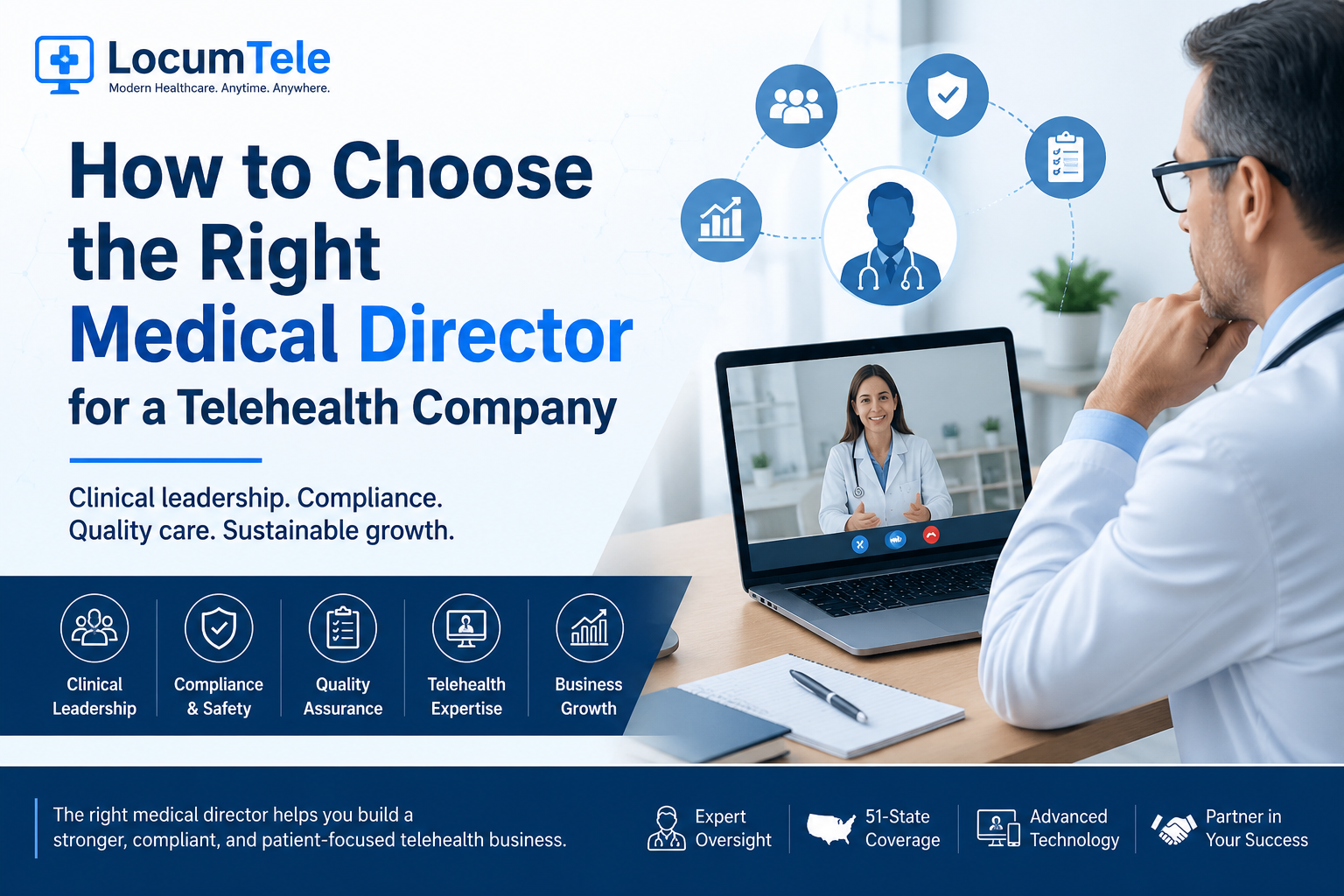
Telehealth has changed the way healthcare organizations deliver medical services. Patients can now connect with providers remotely, while healthcare businesses can serve patients across multiple locations. However, running a telehealth company requires more than technology and qualified providers. Strong clinical leadership is also essential.
A telehealth medical director can help establish clinical standards, oversee providers, support patient safety, and contribute to compliance and quality improvement. Choosing the right physician for this role is therefore an important decision for any growing telehealth company.
What Does a Telehealth Medical Director Do?
A medical director provides clinical leadership and oversight for a healthcare organization. Depending on the company's structure and services, responsibilities may include reviewing clinical protocols, supporting provider teams, overseeing quality standards, and helping establish appropriate patient-care processes.
For telehealth businesses, the role can also involve understanding virtual care workflows, electronic health records, remote consultations, prescribing processes, and state-specific requirements.
Because telehealth regulations can differ between states, companies operating across state lines need to carefully evaluate their clinical and compliance structure.
1. Check Medical Credentials and Licensing
The first step when selecting a medical director is verifying the physician's qualifications.
Review their:
- Medical license and current status
- Board certification and specialty
- Clinical experience
- Professional background
- Malpractice coverage
- Experience with healthcare organizations
If your business operates in multiple states, determine whether the physician has the appropriate licenses or experience relevant to your operating model.
Telehealth providers may need to meet requirements based on where the patient is located, making state-specific licensing an important consideration.
2. Look for Telehealth Experience
A physician with excellent traditional clinical experience may not automatically have the skills needed to oversee a telehealth organization.
Look for experience with:
- Virtual patient consultations
- Telehealth platforms
- Electronic medical records
- Remote patient monitoring
- Digital patient intake
- E-prescribing
- Virtual follow-up
- Telehealth provider networks
A physician who understands both clinical care and digital healthcare operations can better support your organization's workflows.
3. Match Their Expertise to Your Services
Your medical director should understand the services your company provides.
For example, a telehealth company offering primary care may have different clinical oversight needs than a business providing:
- Weight management
- GLP-1 programs
- Hormone therapy
- IV hydration
- Aesthetic services
- Mental health
- Men's health
- Women's health
The physician does not necessarily need to specialize in every service. However, they should have appropriate clinical knowledge and understand when additional expertise or referrals may be necessary.
4. Evaluate Compliance Knowledge
Compliance is another important factor when choosing a medical director for telehealth.
Healthcare organizations may need to consider licensing, documentation, privacy, informed consent, prescribing practices, professional liability, and other regulatory requirements.
Ask potential medical directors how they stay informed about changing regulations and how they approach clinical protocol reviews and quality assurance.
A strong medical director should be able to work with your compliance and operational teams to establish appropriate clinical processes.
5. Define Their Responsibilities Clearly
Before hiring a medical director, establish exactly what the role includes.
Responsibilities may involve:
- Reviewing clinical protocols
- Supporting provider oversight
- Establishing quality standards
- Reviewing treatment procedures
- Supporting patient safety
- Handling clinical escalations
- Participating in quality improvement
- Reviewing documentation standards
These responsibilities should be clearly documented in the medical director agreement.
Clear expectations help prevent confusion between the physician, providers, operations team, and business leadership.
6. Consider Multi-State Experience
If your company plans to expand nationally, experience with multi-state telehealth operations can be extremely valuable.
Different states can have different rules involving medical licensing, telehealth practice, prescribing, informed consent, and healthcare business structures.
A medical director who understands multi-state operations can help your organization develop more consistent clinical processes while accounting for applicable state requirements.
However, businesses should always obtain appropriate legal and compliance guidance for their specific structure and locations.
7. Evaluate Communication and Availability
A medical director needs to be accessible enough to perform their responsibilities effectively.
Before signing an agreement, establish expectations for:
- Communication
- Scheduled meetings
- Provider questions
- Clinical escalations
- Protocol reviews
- Quality assurance
- Response times
A highly qualified physician may not be the right fit if their availability does not match your organization's operational needs.
8. Think About Scalability
Your medical director should ideally support your company's future growth—not just its current operations.
If you plan to expand into additional states or add new services, consider whether the physician has experience managing growing provider networks and evolving clinical protocols.
A scalable clinical oversight model can make expansion more organized and sustainable.
Why the Right Medical Director Matters
The right medical director can become an important part of your telehealth infrastructure.
They can help create consistent clinical standards, support provider teams, improve patient safety processes, and contribute to quality management.
The goal should not simply be to find a physician who can fill a position. Instead, look for a medical leader who understands your business model, clinical services, technology, providers, and growth plans.
How LocumTele Can Help
Finding and managing appropriate medical oversight can be challenging for growing telehealth businesses. LocumTele provides medical director oversight and healthcare infrastructure designed to support organizations operating in the telehealth and healthcare space.
Its services include medical director oversight, provider staffing, telehealth technology, and other infrastructure and compliance support.
For companies building or expanding telehealth operations, the right combination of physician leadership, technology, provider resources, and clinical processes can create a stronger foundation for long-term growth.
Conclusion
Choosing the right telehealth medical director requires more than reviewing a physician's credentials. Businesses should consider clinical experience, telehealth knowledge, licensing, compliance awareness, communication, service expertise, and scalability.
A well-qualified medical director can provide valuable clinical leadership while helping a telehealth organization establish stronger processes for quality, safety, and provider oversight.
As virtual healthcare continues to grow, investing in effective medical leadership can help businesses build a more organized and sustainable telehealth operation.
Frequently Asked Questions
Is a medical director required for every telehealth company?
Not necessarily. Requirements can depend on the company's structure, services, providers, prescribing activities, and applicable state laws.
What should I look for in a telehealth medical director?
Look for appropriate medical credentials, telehealth experience, relevant clinical expertise, compliance knowledge, availability, and experience with your type of healthcare operation.
Can a medical director work remotely?
Depending on the business structure and applicable requirements, many medical director responsibilities can be performed remotely.
Why is multi-state experience important?
Telehealth requirements can vary between states. Experience with multi-state operations can help organizations better manage licensing, clinical workflows, and compliance considerations.

 English
 Arabic
 French
 Spanish
 Portuguese
 Deutsch
 Turkish
 Dutch
Dutch
 Italiano
 Russian
 Portuguese (Brazil)
 Greek
Greek