


SIP Trunk UAE: Complete Guide to Business Communication
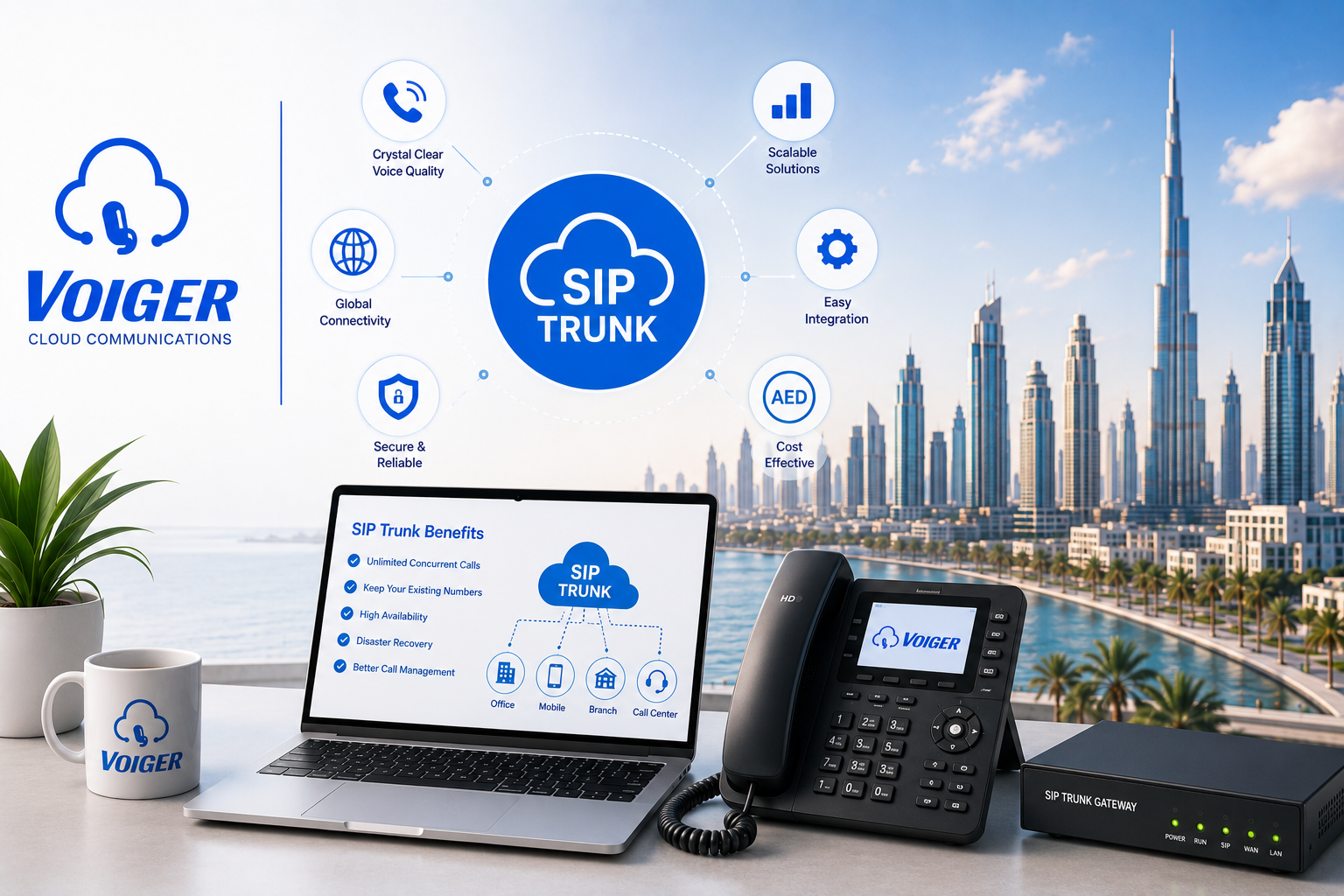
Business communication is changing rapidly as companies move away from traditional telephone infrastructure toward flexible, internet-based solutions. For organizations that still rely on physical phone systems but want the benefits of modern cloud communication, SIP Trunk UAE provides a practical way to modernize business calling.
SIP Trunking connects a company's existing PBX or IP-PBX system to the public telephone network using an internet connection. Instead of maintaining separate physical phone lines for every conversation, businesses can use SIP technology to manage multiple voice channels through a single connection.
For UAE businesses, SIP trunking can support scalable calling, business continuity, remote communication, and integration with modern cloud contact centre platforms.
This guide explains what SIP trunking is, how it works, its benefits, implementation considerations, and how it fits into a modern business communication strategy.
What Is SIP Trunking?
SIP stands for Session Initiation Protocol. It is a communication protocol used to establish, manage, and terminate voice and multimedia sessions over IP networks.
A SIP trunk is essentially a virtual connection between a business phone system and a telecommunications provider.
Traditional phone systems may require physical telephone lines. SIP trunking replaces many of those physical connections with IP-based communication.
A business can use SIP trunks for:
-
Inbound calls
-
Outbound calls
-
Business numbers
-
Internal communication
-
Call forwarding
-
Unified communications
-
Contact centre operations
This makes SIP trunking particularly useful for companies that want to retain their existing phone infrastructure while adding modern communication capabilities.
How Does SIP Trunking Work?
SIP trunking works by connecting a company's PBX or IP-PBX to a SIP-enabled telecom provider through an internet or private IP connection.
The basic process looks like this:
Customer → Telecom Network → SIP Trunk → Business PBX → Employee
For an outbound call, the PBX sends the call through the SIP trunk to the provider, which then connects it to the destination number.
For an inbound call, the provider receives the call and routes it through the SIP trunk to the company's phone system.
This allows businesses to manage multiple calls without requiring an individual physical line for every employee.
Benefits of SIP Trunk UAE Solutions
Lower Communication Costs
SIP trunking can reduce the need for multiple physical telephone lines and associated infrastructure.
Businesses can manage voice channels through an IP connection instead of installing separate lines for every user.
Actual savings depend on the provider, call volumes, existing infrastructure, and connectivity costs, so businesses should evaluate their complete communication setup before switching.
Scalable Business Calling
Businesses don't always have the same call requirements.
A growing company may need additional channels during expansion, while a seasonal business may require more capacity during peak periods.
SIP trunking makes it easier to increase communication capacity without rebuilding the entire phone infrastructure.
Keep Existing Phone Systems
One major advantage is that businesses may not need to replace their existing PBX immediately.
Companies with compatible IP-PBX infrastructure can connect their existing system to SIP services and gradually introduce newer cloud communication technologies.
Business Continuity
SIP-based communication can support business continuity strategies by enabling calls to be redirected to alternative locations, numbers, or cloud-based systems when required.
This can be useful when offices are temporarily unavailable or employees need to work remotely.
Support for Multiple Locations
Companies operating across Dubai, Abu Dhabi, Sharjah, or other locations can use IP-based communication to connect offices under a unified communication environment.
Instead of maintaining completely separate phone systems, businesses can centralize communication management.
SIP Trunking and Cloud Communication
SIP trunking is often associated with traditional IP-PBX systems, but it also plays an important role in modern cloud communication.
Businesses can combine SIP connectivity with:
-
Cloud telephony
-
Contact centre platforms
-
CRM systems
-
AI voice automation
-
Call analytics
-
Business phone systems
This creates a more flexible communication infrastructure.
For example, a business can use SIP connectivity for its existing telephony while introducing Cloud call centre software UAE capabilities for customer service teams.
SIP Trunking for Contact Centres
Contact centres can have significantly higher calling requirements than ordinary office environments.
A contact centre may need to handle:
-
Large inbound call volumes
-
Outbound sales calls
-
Customer support
-
IVR
-
Call queues
-
Call recording
-
Agent extensions
-
Call routing
SIP trunking can provide the voice connectivity required to support these workflows.
When combined with Call centre software UAE, businesses can manage calls through a centralized platform while using SIP infrastructure for voice connectivity.
SIP Trunking and AI Voice Technology
Artificial intelligence is becoming an important part of business communication.
An organization can connect SIP-based voice infrastructure with an AI-powered platform to automate customer conversations.
For example:
-
A customer calls the business.
-
The SIP trunk delivers the call to the communication platform.
-
An AI voice bot answers.
-
The AI identifies the customer's intent.
-
The request is resolved or transferred to a human agent.
-
The interaction is recorded and analyzed.
This type of architecture can support AI call centre UAE strategies while allowing businesses to maintain control over their existing telephony environment.
SIP Trunking and Business Phone Systems
A modern Business phone system UAE can use SIP technology to provide flexible business calling.
Common capabilities include:
-
Direct inward dialing
-
Call forwarding
-
Auto attendants
-
Voicemail
-
Conference calling
-
Call recording
-
Call queues
-
Extension management
Businesses can also connect their phone system with CRM platforms and customer communication tools.
SIP Trunking and CRM Integration
Connecting telephony with CRM software can improve the information available to sales and support teams.
For example, when a customer calls, the system may identify the number and display the relevant customer record to an agent.
This can help teams access:
-
Customer details
-
Previous interactions
-
Sales information
-
Support history
-
Call notes
When SIP connectivity is integrated into a broader communication platform, it can support a CRM integrated call centre UAE environment.
SIP Trunk Security Considerations
Security should be an important part of any SIP implementation.
Businesses should consider:
Encryption
Where supported, secure signaling and media encryption can help protect communications.
Authentication
Strong authentication helps prevent unauthorized access to SIP accounts.
Firewall Configuration
Proper firewall and network configuration is essential for protecting VoIP infrastructure.
Fraud Monitoring
Businesses should monitor unusual calling patterns that could indicate unauthorized usage.
Access Controls
Only authorized users and systems should be able to access communication services.
Security requirements vary depending on the architecture, provider, and business environment, so professional configuration is recommended.
What Businesses Need Before Implementing SIP Trunking
Before choosing a SIP provider, businesses should evaluate several factors.
Reliable Internet Connectivity
SIP calls depend on network quality. Businesses should have stable connectivity with sufficient bandwidth for expected call volumes.
Compatible PBX
The existing PBX or IP-PBX should support SIP connectivity.
Number Requirements
Determine how many business numbers and concurrent calling channels are required.
Call Volume
Estimate peak inbound and outbound call volumes rather than only average usage.
Provider Support
Technical support is important during setup, troubleshooting, and future expansion.
Business Continuity
Ask how calls can be redirected if the primary office or network connection becomes unavailable.
SIP Trunking vs Cloud Telephony
These technologies are related but not identical.
SIP trunking primarily provides IP-based connectivity between a business phone system and a telecom network.
Cloud telephony generally provides a broader hosted communication environment where the provider manages much of the telephony infrastructure.
A business with an existing IP-PBX may prefer SIP trunking, while a company looking to replace its entire phone infrastructure may prefer a cloud communication platform.
In some cases, businesses can use both technologies together.
Who Should Consider SIP Trunking?
SIP trunking can be useful for businesses that:
-
Already have an IP-PBX
-
Need multiple voice channels
-
Want to modernize existing telephony
-
Operate multiple locations
-
Have significant inbound or outbound call volumes
-
Want greater flexibility than traditional phone lines
It can be particularly relevant for contact centres, sales organizations, healthcare providers, financial services, logistics companies, and growing SMEs.
SIP Trunking and Call Routing
Once calls enter a business communication platform, intelligent routing can determine where they should go.
Modern Call routing software UAE can route customers based on:
-
Department
-
Agent availability
-
Business hours
-
Language
-
Customer type
-
Call purpose
This helps reduce unnecessary transfers and improve customer response times.
SIP Trunking and Call Analytics
Voice connectivity provides more value when businesses can measure how their communication performs.
Modern platforms can track:
-
Call volume
-
Missed calls
-
Call duration
-
Agent performance
-
Peak calling periods
-
Call outcomes
Call tracking software UAE can provide additional visibility into customer interactions and help management identify areas for improvement.
Frequently Asked Questions
What is SIP Trunk UAE?
SIP Trunk UAE refers to SIP-based telecommunications services that allow businesses in the UAE to connect their PBX or IP-PBX systems to telephone networks using IP connectivity.
Is SIP trunking better than traditional phone lines?
SIP trunking can provide greater scalability and flexibility, but the right choice depends on the company's existing infrastructure, call volumes, connectivity, and business requirements.
Can SIP trunks work with an existing PBX?
Yes, if the PBX or IP-PBX supports SIP connectivity and is compatible with the chosen provider.
Does SIP trunking support multiple calls?
Yes. A SIP trunk can support multiple concurrent voice sessions depending on the number of channels provisioned and the available network capacity.
Can SIP trunking support remote employees?
SIP can support remote communication, but the exact setup depends on the PBX, network configuration, security controls, and provider.
Can SIP trunking work with AI voice bots?
Yes. SIP connectivity can be integrated with communication platforms that provide AI voice automation, depending on the technical architecture and supported interfaces.
Is SIP trunking suitable for small businesses?
Yes. SIP can be useful for SMEs that need professional business calling and scalable voice capacity without relying on numerous traditional phone lines.
Conclusion
SIP Trunk UAE provides businesses with a flexible way to modernize voice communication while continuing to use compatible PBX infrastructure. By replacing multiple physical telephone connections with IP-based voice connectivity, organizations can improve scalability, support multiple locations, and integrate telephony with modern business applications.
SIP trunking becomes even more valuable when combined with technologies such as AI voice bot UAE, AI call centre UAE, Business phone system UAE, Call centre software UAE, Call routing software UAE, Cloud call centre software UAE, Call tracking software UAE, and Call centre for SMB UAE.
For businesses planning their next communication upgrade, the right approach depends on existing infrastructure, call requirements, security needs, and future growth plans. A well-designed SIP strategy can provide a practical foundation for moving from traditional telephony toward a more flexible, software-driven communication environment.

 English
 Arabic
 French
 Spanish
 Portuguese
 Deutsch
 Turkish
 Dutch
Dutch
 Russian
 Romaian
 Portuguese (Brazil)
 Greek
Greek