


Advanced Materials in Modern Hydraulic Damping Technology
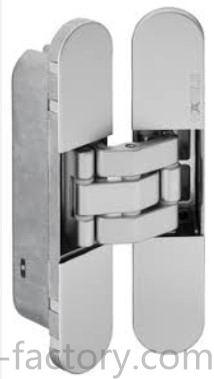
Modern architectural projects increasingly rely on mechanical hardware that can provide controlled movement while maintaining structural stability and long-term reliability. From commercial offices and residential developments to hospitality and institutional facilities, doors are operated repeatedly throughout the day and require components capable of managing movement effectively. In these environments, Hydraulic Damping Hinges combine hydraulic resistance with carefully engineered mechanical structures to reduce abrupt movement and create a more controlled interaction between the door and its frame.
Material engineering forms the foundation of a dependable hydraulic hinge. Manufacturers evaluate metals according to strength, fatigue behavior, corrosion resistance, surface stability, and compatibility with machining processes. Alloy materials can provide a useful balance between rigidity and durability, while corrosion-resistant options help protect components against moisture and environmental exposure. Matching material characteristics to specific structural roles also helps maintain consistent performance between the hinge body, rotating elements, and internal hydraulic mechanism.
Manufacturing processes have a direct influence on material performance. Forming, heat treatment, machining, and surface finishing can alter the physical characteristics of individual components. Controlled processing helps reduce unwanted variation and supports consistent structural behavior. For hydraulic mechanisms, accurate processing is especially important because internal components must cooperate smoothly as movement energy is transferred through the system.
Surface engineering adds another layer of protection. Architectural hardware can be exposed to moisture, dust, cleaning substances, and frequent physical contact. Protective coatings help reduce oxidation and environmental deterioration, while precision polishing improves the quality of contact surfaces. A well-engineered surface can reduce friction and support smoother mechanical interaction without changing the fundamental structure of the component.
Precision machining is central to the production of reliable hydraulic hardware. Computer-controlled manufacturing equipment allows complex components to be produced with consistent geometry and stable interfaces. Inspection systems can evaluate components throughout the production process, helping manufacturers detect deviations before final assembly. Accurate manufacturing is particularly important for hydraulic mechanisms because small inconsistencies between interconnected parts can affect overall movement quality.
Hydraulic damping technology works by introducing controlled resistance into the movement process. As the door moves toward its closed position, the hydraulic mechanism manages the transfer of energy rather than allowing unrestricted motion. This gradual control can reduce sudden contact between the door and frame while minimizing vibration within the hardware assembly. The resulting movement is smoother and can contribute to a quieter environment in areas where doors are frequently operated.
Different architectural environments create different mechanical demands. Office buildings may experience continuous movement during working hours, requiring stable operation across repeated use. Residential interiors often prioritize smooth movement and compatibility with design concepts. Hospitality facilities may focus on quiet operation and refined user experience, while educational and institutional environments require hardware that can maintain dependable performance under frequent daily activity.
Structural optimization supports the development of more efficient hydraulic systems. Engineers can use digital modeling and simulation to examine component interaction, force distribution, and movement behavior before production begins. This process helps identify opportunities to refine internal geometry and distribute mechanical forces more effectively. Better structural coordination can reduce unnecessary stress and support more consistent operation throughout the product lifecycle.
Manufacturing automation has further improved the consistency of architectural hardware production. CNC machining systems provide repeatable processing, while automated inspection technologies help monitor component quality during manufacturing. Digital production management can also improve workflow efficiency by providing manufacturers with better control over material usage and process stability. Combining automated technology with experienced engineering supports a more controlled production environment.
Sustainable production is becoming increasingly important within the hardware industry. Efficient machining can improve material utilization, while durable construction can reduce the need for frequent replacement. Manufacturers are also evaluating surface treatment technologies and production workflows to reduce waste and improve resource efficiency. These approaches allow product development to consider both mechanical performance and the broader lifecycle of architectural hardware.
The continuing development of Hydraulic Damping Hinges demonstrates how material engineering, hydraulic technology, precision machining, and structural optimization can work together to improve door movement. Lanxi Maya Hardware Co., Ltd. applies these engineering principles to professional architectural hardware development, with further product resources and catalogue information available through https://www.hinges-factory.com/product/catalogue-download/ for customers evaluating suitable door hardware solutions.

 English
 Arabic
 French
 Spanish
 Portuguese
 Deutsch
 Turkish
 Dutch
Dutch
 Italiano
 Romaian
 Portuguese (Brazil)
 Greek
Greek