


Custom Precision Machining: What Buyers Should Know Before Order
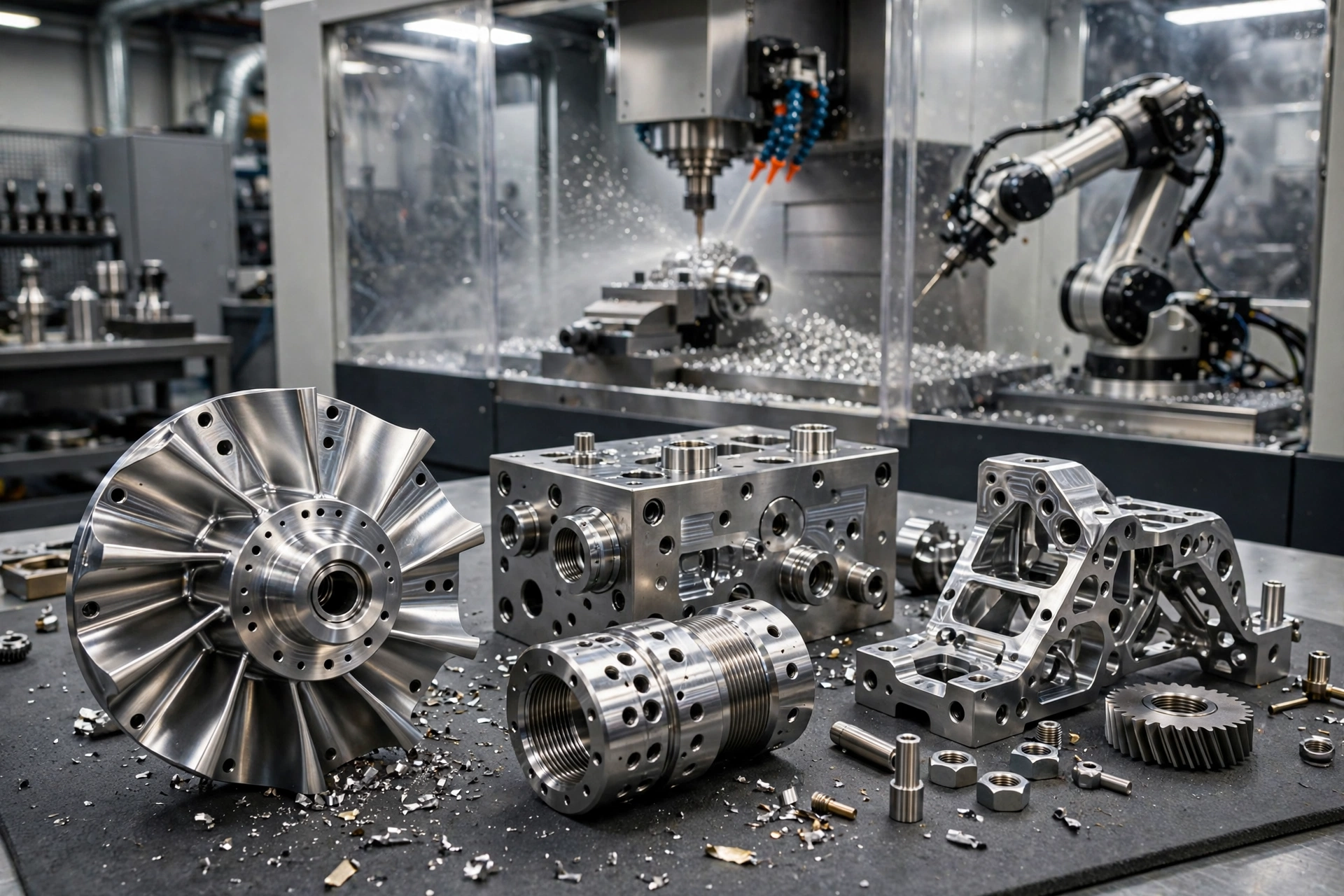
Off-the-shelf components don't always fit, and that's exactly where custom precision machining earns its keep, producing parts built to exact specifications rather than the nearest available standard size. For engineers working on anything from a one-off prototype to a low-volume production run, understanding how the process actually works makes it far easier to get a usable quote and a part that fits right the first time.
This guide covers what buyers should understand before sending a drawing out for quotes, including where costs actually come from and how to avoid the most common sourcing mistakes.
When Custom Precision Machining Makes More Sense Than Standard Parts
Standard catalog components work fine until a design requires a specific bore diameter, an unusual mounting pattern, or a material combination that simply isn't stocked anywhere. That's the point where a made-to-spec machining approach becomes the practical choice rather than forcing a design to compromise around whatever's available off the shelf.
It also matters for legacy equipment repair, where an original part is long out of production and the only option is reverse-engineering it from measurements or an old drawing. A shop experienced in this kind of work can usually reconstruct a functional replacement from a worn sample part alone, without needing a full engineering drawing to start, though a drawing always helps confirm critical tolerances before the first cut is made.
Prototyping is another common driver. Engineers testing a new design often need a handful of functional parts before committing to a full production tooling investment, and machining a small batch directly from CAD files is usually faster and cheaper than building dedicated molds or dies for a design that may still change after the first round of testing.
What a Quote for Custom CNC Machining Actually Depends On
Pricing on custom cnc machining work isn't a flat rate, it moves based on several factors that are worth understanding before comparing quotes across suppliers. Material cost and machinability play a major role, since harder alloys take longer to cut and wear tooling faster. Part complexity, including the number of setups and axes required, adds machine time. Tolerance requirements matter too, since holding a tighter tolerance generally means slower cutting speeds and more inspection time.
Order quantity affects per-piece pricing significantly on jobs like this, since programming and setup costs get spread across the batch. A single prototype piece will always carry a higher per-unit cost than the same part ordered in a run of fifty, which is worth factoring into project budgets from the start rather than being surprised by it later. Surface finish and secondary processes such as anodizing or heat treating add further cost layers that should be itemized separately in any serious quote.
Questions to Ask Before Committing to a Machining Partner
A few pointed questions during the quoting process tend to reveal whether a shop is genuinely equipped for this level of made-to-order work:
-
What tolerance range can they hold consistently on the specific material you're using
-
Do they provide first-article inspection reports before running a full batch
-
What's their typical lead time from approved drawing to finished part
-
Can they handle secondary processes like heat treating, anodizing, or plating in-house or through a managed subcontractor
Avoiding Common Mistakes When Sourcing Custom Parts
The most common costly mistake is specifying tolerances tighter than the application actually requires, which drives up cost without adding real functional value. Work with the machinist to identify which dimensions are truly critical and which can carry a looser, more economical tolerance. Overspecifying every dimension as precision-critical is a habit that inflates quotes for no real benefit.
Another frequent issue is incomplete drawings, missing surface finish callouts, material specifications, or thread standards. Ambiguity in a drawing gets resolved somehow, but usually by the machinist making an assumption that may not match what the buyer actually needed, leading to a rejected part and a repeat run. A clear, fully dimensioned drawing is the single best way to avoid that outcome on any machining order, and it's a small upfront investment of time that pays for itself many times over across a project's lifespan.
Conclusion
Precision machining gives engineers a way to solve fit and function problems that standard parts simply can't, but getting good results depends on clear specifications and a machining partner who asks the right questions before cutting starts. Whether you're ordering a single prototype or setting up a repeat custom cnc machining run, take the time to confirm tolerances, lead times, and inspection practices up front. A short conversation before quoting usually saves far more time than sorting out a mismatched part after the fact, and it's a habit worth building into every new project rather than only the complicated ones.
FAQs
1. How much more expensive is custom machining than standard parts?
Custom parts tend to be more expensive per part when compared to off-the-shelf parts, particularly at low volumes. This is largely attributed to time taken for programming, setting up machines and creating tools. The price difference becomes relatively smaller with increasing quantity ordered.
2. Can a machining shop reproduce a part without an engineering drawing?
Many professional shops are able to reverse engineer a part by having a physical sample measured using accurate instruments. However, it is better to have a drawing to verify dimensions.
3. What's the minimum order quantity for a custom job?
Most shops will give a quote for one prototype part. The price per part becomes better with increased quantity ordered, although there is no absolute minimum quantity needed.
4. How long does a typical made-to-spec order take?
A simple part is likely to be finished within a week. The completion time may vary from two to four weeks for complex parts that require multiple setups or secondary machining.

 English
 Arabic
 French
 Portuguese
 Deutsch
 Turkish
 Dutch
Dutch
 Italiano
 Russian
 Romaian
 Portuguese (Brazil)
 Greek
Greek