


Arabic AI Voice Agent UAE: A Practical Buyer’s Guide
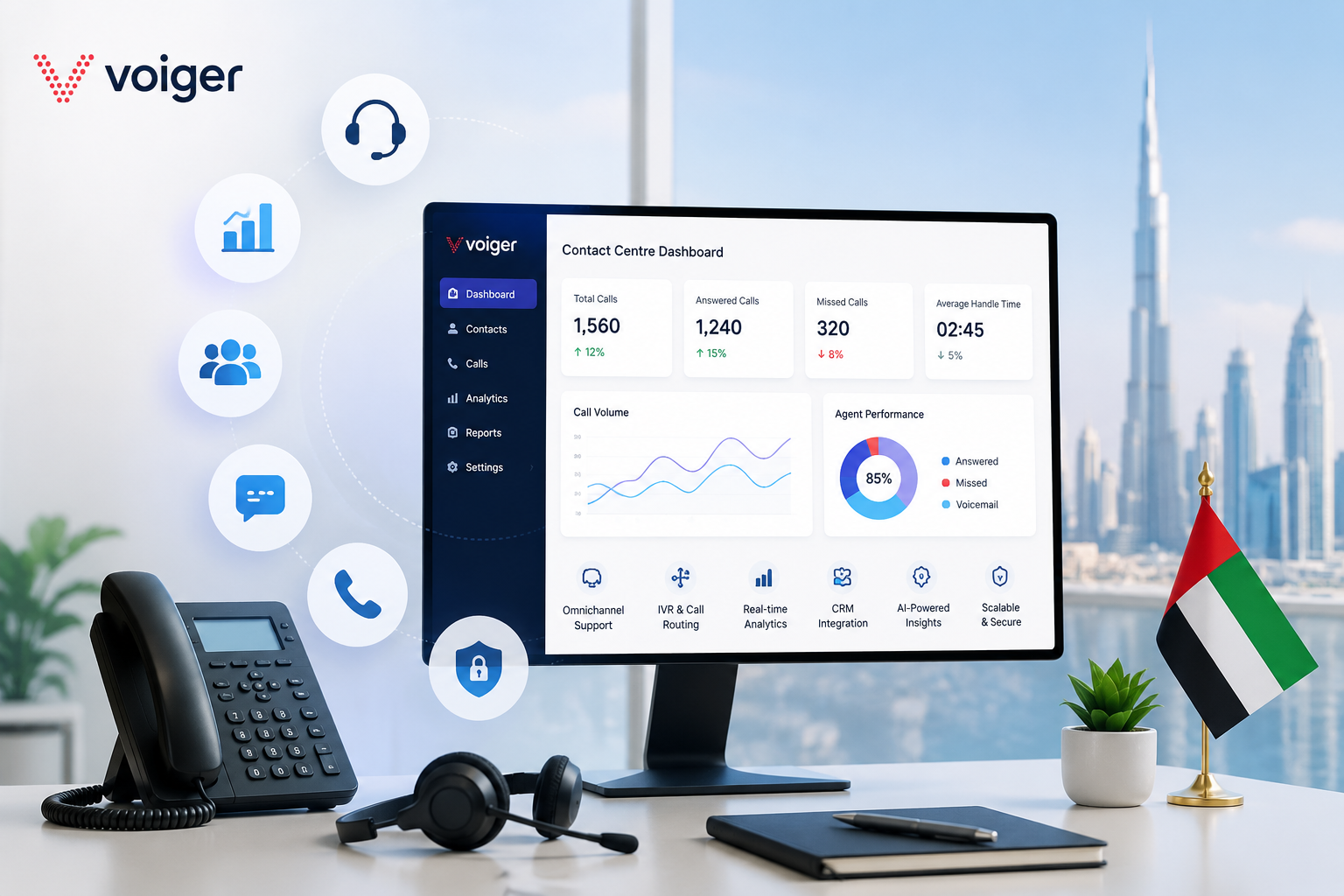
AI voice agents are becoming an increasingly visible part of customer communication.
Businesses are exploring them for inbound enquiries, appointment handling, lead qualification, reminders, customer support and after-hours calls.
For UAE businesses, however, one requirement often becomes more important than the rest:
Can the AI handle Arabic conversations properly?
That question is more complicated than simply asking whether Arabic appears on a provider’s language list.
Customers may speak different dialects, change their sentence structure, use local expressions or move between Arabic and English during the same conversation. Competitor research in the region increasingly focuses on dialect awareness, natural spoken Arabic and intelligent escalation when the system is uncertain.
A strong Arabic AI voice agent UAE setup therefore needs more than translation.
It must understand caller intent, respond naturally, complete useful actions and know when a human agent should take over.
Here is what UAE businesses should evaluate before automating customer calls.
What Is an Arabic AI Voice Agent?
An Arabic AI voice agent is an automated voice system that can listen to callers, interpret their requests, respond conversationally and carry out defined business tasks.
Depending on the workflow, it may help businesses:
-
answer common enquiries
-
collect customer information
-
qualify incoming leads
-
book appointments
-
confirm or reschedule appointments
-
provide order or request updates
-
route callers to the correct team
-
capture after-hours enquiries
-
transfer complex conversations to human agents
Unlike a traditional IVR, which usually asks callers to select numbered menu options, an AI voice agent is designed to understand spoken requests.
The objective is not simply to play recorded information.
The objective is to move the conversation towards a useful outcome.
Why Arabic Voice Automation Requires Careful Evaluation
Arabic is used differently across markets, communities and business situations.
A customer may use:
-
Modern Standard Arabic
-
Gulf Arabic
-
Emirati expressions
-
Egyptian Arabic
-
Levantine Arabic
-
South Asian-accented Arabic
-
a mixture of Arabic and English
A caller may begin in English, move into Arabic and use an English product name or location halfway through the sentence.
That creates challenges around:
-
speech recognition
-
dialect handling
-
intent detection
-
names and location recognition
-
pronunciation
-
sentence structure
-
code-switching between languages
Therefore, businesses should not evaluate an Arabic AI voice agent only through a polished demonstration.
It should be tested against real customer scenarios.
1. Test Real Spoken Arabic, Not Only Scripted Sentences
A controlled demonstration normally uses clean audio, predictable phrases and a clear caller.
Real customer calls are different.
Callers may:
-
speak quickly
-
interrupt the system
-
change their mind
-
use incomplete sentences
-
pronounce names differently
-
call from noisy locations
-
switch languages unexpectedly
Ask the provider to test the system using realistic conversations from your industry.
For example, a property enquiry may involve:
-
a project name
-
a community name
-
a preferred property type
-
a price range
-
a request for a particular agent
An appointment enquiry may involve:
-
a service name
-
preferred date and time
-
staff preference
-
rescheduling
-
cancellation
The AI should be evaluated on whether it understands the business request, not only whether it recognises individual Arabic words.
2. Check Whether the AI Understands Intent
A caller may express the same intention in several ways.
For example:
-
“I want to book an appointment.”
-
“Do you have anything available tomorrow?”
-
“Can someone see me in the evening?”
-
“I need to change my existing booking.”
These are related, but they do not all require the same next action.
A useful voice agent should identify:
-
what the caller wants
-
what information is missing
-
which workflow should be triggered
-
whether the request can be completed automatically
-
whether the caller needs a human agent
Good automation is built around intent and outcomes, not only keywords.
3. Evaluate Arabic and English Language Switching
Language switching is common in UAE business communication.
A caller may speak Arabic but use English words for:
-
product names
-
job titles
-
property developments
-
medical or technical terms
-
service packages
-
locations
-
company names
The AI should not force the customer to restart the conversation every time the language changes.
Ask:
-
Can the system recognise the language automatically?
-
Can it continue when the caller changes languages?
-
Can it preserve the information already collected?
-
Can it transfer the call without losing context?
-
Can it support the languages commonly used by our customers?
A multilingual voice agent should make the conversation easier, not create another barrier.
4. Check the Quality of the Voice Experience
Language recognition is only one side of the experience.
The AI must also sound clear, professional and appropriate for the brand.
Businesses should assess:
-
voice clarity
-
pronunciation
-
response speed
-
speaking pace
-
tone
-
interruption handling
-
silence handling
-
repeated-question behaviour
Long pauses can make callers think the call has disconnected.
Responses that are too fast may feel unnatural.
Responses that are too long can frustrate customers who simply want an answer or transfer.
The best voice voiger experience is usually clear, direct and designed around the caller’s objective.
5. Define Where Human Handover Must Happen
An AI voice agent should not try to handle every conversation.
Some calls require human judgment, negotiation, empathy or authority.
Human handover may be needed when:
-
the caller asks for an agent
-
the AI cannot understand the request
-
the customer repeats the question several times
-
the caller becomes frustrated
-
the enquiry involves a complaint
-
the request falls outside the approved workflow
-
the conversation becomes commercially sensitive
-
the customer is ready to make a high-value decision
A strong deployment clearly defines when the AI should continue and when it should transfer.
The handover should include the context already collected so the customer does not need to repeat everything.
6. Start with the Right Business Use Case
Businesses sometimes try to automate too much at the beginning.
A better approach is to start with one narrow, high-volume workflow.
Strong starting points can include:
After-Hours Lead Capture
The AI answers enquiries when the sales team is unavailable, collects the customer’s information and schedules follow-up.
Appointment Booking
The agent collects service, date, time and customer details before confirming or passing the request to the relevant system.
Basic Enquiry Handling
The AI answers common questions about business hours, locations, services or request status.
Lead Qualification
The agent captures the customer’s requirement, location, budget, urgency or preferred callback time.
Support Triage
The AI identifies the problem and routes the customer to the correct team or queue.
Starting with one measurable workflow makes it easier to assess quality and business value.
7. Check Integrations Before Deployment
The voice conversation should connect with the rest of the business process.
Depending on the use case, the AI may need to interact with:
-
CRM systems
-
appointment platforms
-
customer databases
-
helpdesk systems
-
order-management tools
-
internal APIs
-
call routing
-
agent queues
-
reporting dashboards
Without integration, the AI may collect useful information but still leave teams with manual work.
For example, a qualified lead should ideally be created or updated in the CRM.
An appointment request should connect with the booking process.
A support issue should reach the right queue with the relevant context.
Voiger positions its platform around AI voice, intelligent routing, CRM and helpdesk connectivity, human call handling and post-call analytics within one broader communication environment.
8. Decide How Performance Will Be Measured
An AI voice agent should have clear success measures.
Depending on the workflow, businesses may track:
-
percentage of calls answered
-
successful intent recognition
-
completed enquiries
-
qualified leads captured
-
appointments booked
-
transfer rate
-
failed-conversation rate
-
repeat-question rate
-
average conversation duration
-
customer satisfaction
-
calls recovered after business hours
-
cost per completed interaction
A high automation rate does not automatically mean success.
If customers are being automated but not helped, the deployment is not working.
The best measurement combines efficiency with customer outcome.
9. Review Conversations and Improve the Workflow
An AI voice agent is not a one-time setup.
Teams should regularly review:
-
misunderstood requests
-
common caller expressions
-
abandoned conversations
-
frequent transfers
-
missing knowledge
-
language-switching issues
-
unnecessary questions
-
new customer intents
These reviews help improve the conversation design over time.
The system should become more useful as the business learns how customers actually speak and what they ask for.
10. Protect the Customer Experience
Automation should not make the business feel less accessible.
Customers should understand:
-
that they are speaking with an automated assistant
-
what the assistant can help them with
-
how to reach a human
-
what information is required
-
what will happen next
The conversation should remain transparent and easy to exit.
The aim is not to trap customers inside automation.
The aim is to resolve simple requests quickly while preserving access to human support.
Questions to Ask an Arabic AI Voice Agent Provider
Before choosing a provider, ask:
-
Which Arabic dialects and speaking patterns have been tested?
-
Can callers move between Arabic and English?
-
How does the system handle names, locations and industry terms?
-
What happens when the AI is uncertain?
-
How quickly can the caller reach a human?
-
Is the collected context passed to the agent?
-
Which CRM, helpdesk and business systems can be connected?
-
Can we begin with one workflow?
-
How are conversations reviewed and improved?
-
Which performance reports are available?
-
Can the solution support inbound and outbound use cases?
-
How is pricing calculated?
These questions are more useful than asking only whether the platform “supports Arabic.”
The Bottom Line
An Arabic AI voice agent UAE deployment can improve responsiveness, reduce repetitive work and help businesses serve customers outside normal working hours.
But success depends on more than language availability.
Businesses should evaluate:
-
real spoken Arabic
-
dialect and language switching
-
intent recognition
-
voice quality
-
human handover
-
workflow integration
-
reporting
-
continuous improvement
The strongest approach is to start with one practical use case, measure the outcome and expand after the workflow is working well.
Ready to Explore Arabic and Multilingual Voice Automation?
Voiger helps UAE businesses combine AI voice automation with cloud calling, intelligent routing, human-agent handover and real-time analytics.
Book a demonstration to explore how an AI voice agent could support your sales, support or after-hours call workflows.
FAQs
What is an Arabic AI voice agent?
An Arabic AI voice agent is an automated calling system that understands spoken Arabic, responds to callers and completes defined tasks such as answering enquiries, collecting information or routing calls.
Can an AI voice agent understand different Arabic dialects?
Capability varies by provider and deployment. Businesses should test the system using real callers, regional expressions and industry-specific conversations before rollout.
Can callers switch between Arabic and English?
Some multilingual AI voice systems can support language switching, but this should be tested carefully because mixed-language conversations can create recognition challenges.
Can an AI voice agent transfer calls to a person?
Yes. Human handover should be built into the workflow for complex, sensitive or unsuccessful conversations.
What are the best first use cases?
Common starting points include after-hours enquiries, lead qualification, appointment booking, basic customer questions and support triage.
Does an AI voice agent replace a contact centre team?
Not necessarily. It is often most effective when it handles repetitive first-line conversations while human agents manage complex or high-value interactions.
How should AI voice performance be measured?
Businesses can track completed requests, successful transfers, lead capture, booking completion, failed conversations, customer satisfaction and cost per resolved interaction.

 English
 Arabic
 French
 Spanish
 Portuguese
 Deutsch
 Turkish
 Dutch
Dutch
 Italiano
 Russian
 Romaian
 Portuguese (Brazil)