


Wastewater Upgrades and Water Reuse Are Reshaping Pumping Needs Across Italy
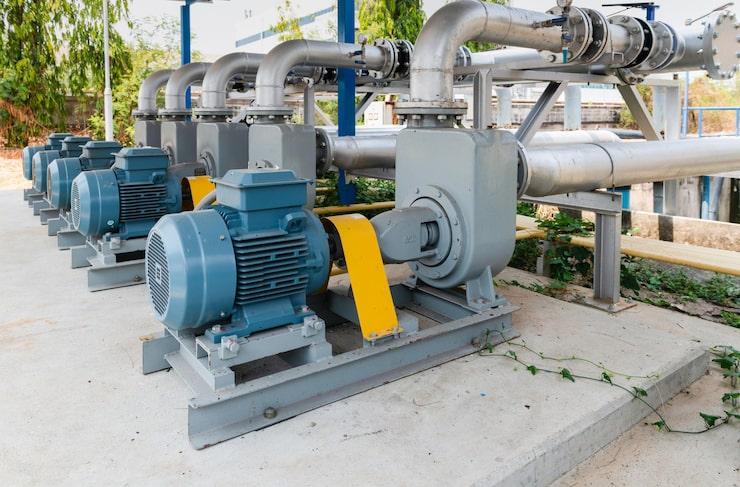
Italy’s water and wastewater infrastructure is undergoing an important period of modernization. Aging networks, climate pressures, wastewater-treatment requirements, water scarcity, and the need to improve resource efficiency are encouraging investment across the country’s water cycle. Pumps are central to this infrastructure, moving drinking water, raw sewage, sludge, stormwater, and treated effluent through collection networks, treatment facilities, storage systems, and distribution infrastructure.
According to a Vyansa Intelligence report, the Italy water & wastewater pump market was valued at USD 385 million in 2025 and is projected to reach USD 455 million by 2032, representing a 2.42% CAGR during 2026–2032.
Water Infrastructure Modernization Creates Pumping Requirements
Italy continues to strengthen infrastructure responsible for water storage, transportation, and distribution. In July 2026, the Italian Ministry of Infrastructure and Transport reported that approximately €1 billion in National Recovery and Resilience Plan resources had financed 124 interventions involving reservoirs and water-supply systems.
For an Italy water & wastewater pump market analysis, such investment is relevant because infrastructure modernization can require transfer pumps, booster systems, motors, controls, valves, monitoring equipment, and associated maintenance services.
Wastewater Treatment Depends on Reliable Fluid Movement
Wastewater treatment requires pumps at multiple stages. Sewage must first travel through collection networks before reaching treatment plants, while pumps within facilities can support influent handling, sludge movement, circulation, and treated-water transfer.
Wastewater presents demanding operating conditions because it can contain solids, fibres, abrasive particles, and other materials. Equipment consequently needs to combine hydraulic performance with clog resistance, durable construction, suitable materials, and convenient maintenance.
These detailed industry insights show why wastewater pumps often require different engineering characteristics from equipment designed primarily for clean-water applications.
New European Rules Are Raising Treatment Expectations
The revised EU Urban Wastewater Treatment Directive entered into force on January 1, 2025. It introduces stricter treatment requirements, addresses additional pollutants, encourages water reuse and resource recovery, and places greater attention on greenhouse-gas emissions and the energy performance of treatment plants.
Italy is now working on national implementation of the revised framework. The Ministry of Environment and Energy has specifically listed activities related to transposing Directive 2024/3019 on urban wastewater treatment.
For the latest industry analysis, these regulatory developments matter because more advanced treatment processes can require additional or upgraded pumping equipment.
Water Reuse Can Add New Pumping Stages
Circular water management is becoming more relevant as Italy responds to periods of water scarcity. Properly treated wastewater can provide an alternative resource for suitable applications rather than being treated solely for discharge.
Reclaimed-water infrastructure can create additional pumping requirements. Water may need to be transferred from treatment facilities into storage systems and subsequently distributed toward agricultural, industrial, or other permitted uses.
This expands the role of pumps beyond traditional wastewater collection and treatment, connecting wastewater infrastructure with broader water-resource management.
Energy Performance Is Becoming a Lifecycle Priority
Pumps can operate for thousands of hours annually, making electricity consumption an important part of total ownership costs. Treatment-plant operators therefore have incentives to evaluate equipment according to lifecycle efficiency rather than acquisition price alone.
High-efficiency motors, variable-frequency drives, correct pump sizing, and hydraulic optimization can reduce unnecessary electricity use. Automated systems can also adjust pumping output according to actual flow conditions rather than continuously operating equipment at maximum capacity.
Digital Monitoring Can Strengthen Equipment Reliability
Digitalization is changing how utilities manage pumping assets. Sensors can continuously measure variables such as pressure, flow, vibration, temperature, water level, and electricity consumption.
This information can help operators recognize abnormal performance before equipment experiences significant failure. Condition-based maintenance can therefore complement traditional scheduled servicing.
For a water & wastewater pump industry report, digital capability is increasingly relevant because modern pump value can include monitoring and automation alongside mechanical performance.
Climate Resilience Requires More Flexible Systems
Italy’s water infrastructure must respond to contrasting climatic conditions. Drought can increase pressure on available water resources, while intense rainfall can create drainage and stormwater-management challenges.
The Italian government’s water-infrastructure program explicitly connects current investments with improved resilience to climate change while seeking to reduce losses and waste.
Pumping infrastructure consequently needs flexibility. Equipment may need to handle changing flows efficiently while remaining dependable during periods of unusually high demand.
Wastewater Pumps Need Maintenance-Friendly Designs
Unexpected wastewater-pump failures can create significant operational difficulties. Blockages, worn components, damaged seals, and motor problems can interrupt sewage movement and require emergency intervention.
Maintenance accessibility therefore becomes an important design consideration. Pumps that allow easier inspection, cleaning, component replacement, and condition monitoring can reduce downtime.
For water & wastewater pump market research, lifecycle service is important because Italy already operates an extensive installed base that requires continuing maintenance, refurbishment, and eventual replacement.
Infrastructure Investment Extends Beyond New Equipment
Italy’s modernization requirements involve more than constructing new facilities. Existing networks, reservoirs, pumping stations, treatment systems, and other assets require rehabilitation and efficiency improvements.
The Ministry of Infrastructure and Transport has previously outlined billions of euros in investment intended to improve the efficiency, safety, and climate resilience of Italian water infrastructure.
This creates a broad environment for equipment suppliers because modernization can involve replacement pumps, motors, digital controls, electrical systems, and aftermarket services.
Intelligent Pumping Will Support Italy’s Water Transition
Italy’s water and wastewater pump sector is increasingly influenced by infrastructure renewal, advanced wastewater treatment, water reuse, climate resilience, energy efficiency, and digital asset management.
The transition creates requirements extending beyond conventional mechanical pumping. Utilities increasingly benefit from systems combining reliable hydraulic performance with efficient motors, variable-speed control, clog-resistant designs, monitoring technologies, and accessible maintenance.
As Italy strengthens its water infrastructure and adapts wastewater treatment to evolving European requirements, dependable and efficiently controlled pumping systems will remain fundamental to collection, treatment, transfer, and reuse operations.

 English
 Arabic
 French
 Spanish
 Portuguese
 Deutsch
 Turkish
 Dutch
Dutch
 Russian
 Romaian
 Portuguese (Brazil)
 Greek
Greek