


Manual Sliding Door vs. Swing Door: Which One Is Better?
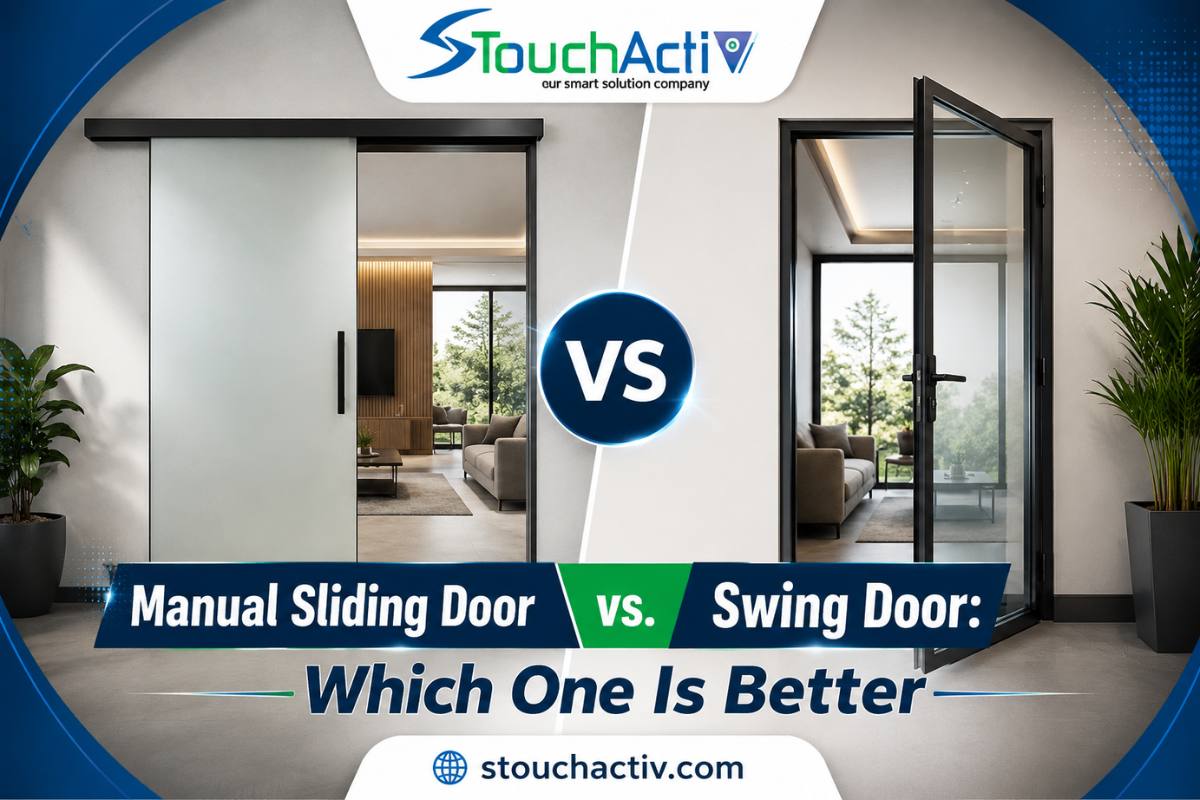
Choosing the right door is not simply about appearance. The available space, traffic level, privacy needs, accessibility, ventilation, and daily use all affect whether a sliding or swing door makes more sense. When comparing Manual Sliding Door vs. Swing Door, the better option depends on where the door will be installed and how people will use it.
A manual sliding door moves horizontally along a track, while a swing door opens inward or outward around hinges. Both work well in homes, villas, apartments, offices, hotels, and commercial spaces, but their practical advantages are different. This guide compares space requirements, convenience, safety, maintenance, privacy, installation, and cost so you can make a sensible buying decision rather than choosing based only on appearance.
What Is a Manual Sliding Door?
A manual sliding door opens by moving the door panel sideways along a track. It does not require a motor, sensor, or automatic opening system. The user simply pushes or pulls the panel to open it.
Glass is commonly used for these doors because it allows natural light to pass between rooms while maintaining a clean, modern appearance. They are particularly useful where floor space is limited.
For apartments and smaller offices, the main advantage is straightforward: the door does not need a clear swinging area.
What Is a Swing Door?
A swing door is attached to a frame using hinges and opens through an arc. Depending on the design, it can swing inward, outward, or in both directions.
Swing doors remain one of the most practical choices for bedrooms, bathrooms, offices, kitchens, meeting rooms, and villa interiors. They are familiar, easy to operate, and available in glass, wood, aluminium, and other materials.
For many traditional room layouts, a swing door is still the simpler solution.
Manual Sliding Door vs. Swing Door: Key Differences
|
Factor |
Manual Sliding Door |
Swing Door |
|
Opening method |
Slides sideways |
Opens on hinges |
|
Floor space |
Requires little clearance |
Requires swing clearance |
|
Installation |
Requires a suitable track |
Requires hinges and frame |
|
Traffic flow |
Good for controlled movement |
Convenient for frequent entry |
|
Space efficiency |
Excellent |
Moderate |
|
Cleaning |
Track needs attention |
Generally simpler |
|
Design |
Modern and minimal |
Traditional and versatile |
|
Privacy |
Depends on glass and seals |
Generally good with suitable construction |
|
Best suited for |
Compact spaces and modern interiors |
Bedrooms, offices and general rooms |
The biggest practical difference is the space required to operate each door. A swing door needs enough room for its panel to move through an arc. A sliding system uses the wall-side area instead.
Pros and Cons of Manual Sliding Doors
Advantages
-
Better use of limited space: Furniture can often be positioned closer to the doorway because there is no swinging panel.
-
Modern appearance: Frameless or slim-framed glass options create a clean architectural look.
-
Good for wide openings: Large openings can be divided without requiring a large swing area.
-
Natural light: Glass panels help maintain visual openness between rooms.
-
Useful for partitions: They work particularly well for offices, meeting rooms, wardrobes, bathrooms, and interior divisions.
Disadvantages
-
Track maintenance: Dust, hair, and debris can collect in the bottom track.
-
Wall space is required: The panel needs somewhere to slide when opened.
-
Installation needs accuracy: Poor alignment can cause resistance, noise, or uneven movement.
-
Not ideal for every opening: A narrow wall beside the doorway may not provide enough room for the panel.
Pros and Cons of Swing Doors
Advantages
-
Simple operation: Opening and closing is familiar to almost everyone.
-
Easy maintenance: Hinges and handles are generally straightforward to inspect and clean.
-
Flexible placement: They do not need a long wall section beside the opening.
-
Strong sealing options: Proper frames and seals can provide better control of sound, air, and light.
-
Wide range of designs: They can suit minimalist, classic, industrial, or luxury interiors.
Disadvantages
-
Needs swing clearance: Furniture or another door can interfere with its movement.
-
Can obstruct circulation: In busy areas, an open door may become an obstacle.
-
Less efficient in compact rooms: The required opening area can reduce usable floor space.
-
Potential collision risk: Doors opening into corridors or busy areas need careful planning.
Which Door Is Better for a Home or Villa?
For a villa, the decision should depend on the room rather than using one door style throughout the property.
A sliding glass door can work well between living rooms and dining areas, for wardrobes, bathrooms, or areas where you want an open visual connection. It is especially useful when floor space is limited.
A swing door is often more practical for bedrooms, utility rooms, storage areas, and bathrooms where straightforward operation and privacy are priorities.
If your villa has large interior openings and a contemporary design, sliding doors can provide a cleaner transition between spaces. For conventional room layouts, swing doors are usually easier to accommodate.
Which Door Is Better for Apartments?
Apartments often have tighter floor plans, making space efficiency important. This is where the Manual Sliding Door vs. Swing Door decision becomes more significant.
A sliding door can save the floor area that would otherwise be occupied by a swinging panel. It can work particularly well for bathrooms, wardrobes, kitchens, study areas, and compact rooms.
However, if there is insufficient wall space beside the opening, a swing door may be the more practical choice.
Which Door Is Better for Offices?
Offices have different requirements because doors may experience frequent daily use.
Sliding glass doors are useful for meeting rooms, private cabins, reception areas, and internal partitions where a modern appearance and efficient space usage matter.
Swing doors can be preferable for rooms with heavy traffic, especially where users need quick and familiar access. They can also provide a tighter closed position when acoustic separation or controlled airflow is important.
For an office, the Manual Sliding Door vs. Swing Door choice should therefore consider traffic patterns rather than aesthetics alone.
Manual Sliding Door vs. Swing Door: Cost Comparison
The following figures can be used as a rough planning estimate, not as a fixed quotation.
|
Door Type |
Typical Estimated Cost |
Suitable Applications |
|
Basic manual sliding glass door |
AED 700–1,300 per door |
Apartments, offices, internal rooms |
|
Premium manual sliding glass door |
AED 1,300–2,500+ per door |
Villas, executive offices, premium interiors |
|
Basic glass swing door |
AED 500–1,000 per door |
Offices, apartments, internal rooms |
|
Premium glass swing door |
AED 1,000–2,000+ per door |
Villas, hotels, premium offices |
|
Custom-size or heavy-duty system |
AED 2,000–3,500+ |
Large openings and high-use areas |
Safety, Accessibility and Maintenance
Safety should be considered before selecting either system. Door size, glass specification, hardware quality, installation accuracy, and surrounding circulation space all matter.
For glass doors, use appropriate safety glass and professionally installed hardware. Marking or visibility features may also be useful where transparent panels could be difficult to notice.
Sliding doors require regular track cleaning and hardware inspection. Swing doors need checks on hinges, handles, closers, and alignment.
For accessibility, avoid creating narrow passages or difficult opening forces. The final configuration should suit the people using the building, including elderly users and people with mobility limitations.
Manual Sliding Door vs. Swing Door: Which Should You Choose?
There is no universal winner.
Choose a manual sliding door when:
-
Floor space is limited.
-
You want a contemporary glass appearance.
-
The opening connects two interior spaces.
-
You need a door that does not swing into furniture or circulation areas.
-
Space-saving is more important than having a compact wall-side footprint.
Choose a swing door when:
-
There is enough clearance for the door arc.
-
You want a simple, familiar mechanism.
-
The opening has limited wall space beside it.
-
You need stronger sealing options.
-
The room layout already accommodates a hinged door.
In a Manual Sliding Door vs. Swing Door comparison, the correct choice is the one that fits the building layout and actual usage. Choosing a sliding door simply because it looks modern can be a mistake if there is no suitable wall space. Likewise, installing a swing door in a small room can unnecessarily waste usable floor area.
Final Buying Advice
Before ordering, measure the opening, check the available wall space, identify furniture locations, and consider how frequently the door will be used. For glass installations, also confirm the glass type, hardware, track or hinge quality, and installation method.
For a modern office, apartment, or villa with limited floor space, a sliding system can offer a noticeable practical advantage. For bedrooms, utility areas, and conventional rooms, a swing door may provide a simpler and more dependable solution.
The best Manual Sliding Door vs. Swing Door decision is therefore based on function first and appearance second.
Frequently Asked Questions
Are manual sliding doors better than swing doors for small rooms?
Usually, a sliding door is more space-efficient because it does not need a floor area for the door panel to swing. The wall beside the opening must still provide enough space for the panel.
Which door is easier to maintain?
A swing door is generally simpler to maintain because it has fewer track-related cleaning requirements. Sliding doors need regular cleaning of their tracks and inspection of rollers and guides.
Are sliding glass doors suitable for offices?
Yes. They can work well for meeting rooms, cabins, reception areas, and internal partitions where space efficiency and visual openness are important.
Are swing doors suitable for villas?
Yes. Swing doors remain practical for bedrooms, bathrooms, kitchens, storage rooms, and other areas where there is sufficient opening clearance.
Which door provides better privacy?
Neither style automatically provides better privacy. Privacy depends largely on the glass type, seals, frame design, configuration, and surrounding construction.
Which one costs more?
The final price depends on dimensions, glass specification, hardware, framing, installation complexity, and customization. A quotation based on the actual opening is more reliable than comparing door types by price alone.
Can glass be used for both door types?
Yes. Glass panels can be designed for both sliding and swing systems, provided the selected glass and hardware are suitable for the application.

 English
 French
 Spanish
 Portuguese
 Deutsch
 Turkish
 Dutch
Dutch
 Italiano
 Russian
 Romaian
 Portuguese (Brazil)
 Greek
Greek