


How to Make a Solar System Project for Beginners at Home
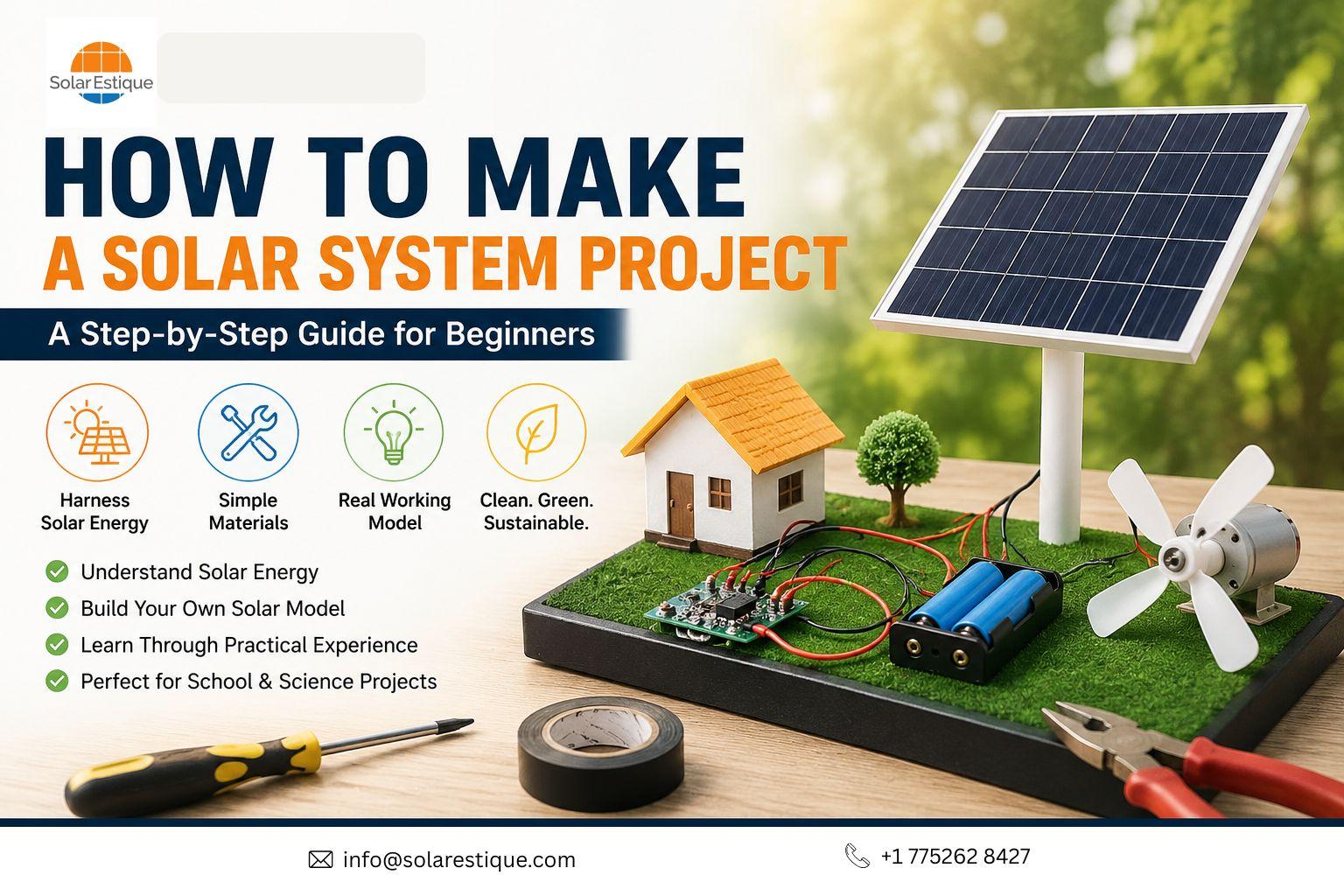
A solar system project can be much more interesting when it demonstrates how sunlight is converted into usable energy instead of simply displaying a miniature panel. Whether the goal is a school science project, a beginner's experiment, or a practical home demonstration, the basic concept is the same: capture sunlight with a photovoltaic cell and use the electricity to operate something measurable. Learning how to make a solar system project becomes easier when the project is built around a clear question, such as how light intensity affects power output or how a solar cell can operate a small motor.
What Does a Solar System Project Actually Demonstrate?
A small solar project demonstrates the photovoltaic effect, where solar cells convert light energy directly into electrical energy. The electricity produced can power a small motor, LED, fan, buzzer, or other low-power device.
The project becomes more meaningful when the output can be observed or measured. Instead of simply showing that a solar panel produces electricity, you can investigate what happens when the light source, panel angle, shading, or electrical configuration changes.
The University of Oregon's solar-energy lesson plans, for example, include experiments measuring current and voltage, comparing series and parallel PV connections, and investigating how shading affects solar-cell output.
What Materials Are Needed?
The materials depend on the type of project being created. A simple educational setup can use a small photovoltaic panel, connecting wires, a low-voltage motor or LED, and a base for holding the components.
For a more advanced demonstration, a multimeter can be added to measure voltage and current. A small rechargeable battery and charge controller may also be appropriate for projects designed to demonstrate energy storage.
The important point is to match every component to the electrical output of the solar cell. A small educational panel should be used with compatible low-voltage components rather than connected directly to household electrical systems.
How Does a Basic Solar Project Work?
The operating principle is straightforward. Sunlight reaches the photovoltaic cells, the cells generate electrical energy, and the electrical output powers a connected load.
For example, a small panel can be connected to a DC motor. When sufficient light reaches the panel, the motor begins rotating. Moving the panel into shade can reduce the available electricity and change the motor's behavior.
This simple setup creates an immediate visual demonstration of the relationship between sunlight and electricity.
Why Is the Panel Angle Important?
The angle at which sunlight reaches a panel can influence the amount of energy it produces. When the light reaches the photovoltaic surface more directly, the available output can change compared with a poorly positioned panel.
This makes panel angle an excellent variable for a science project. Rather than simply constructing the system, students can test different angles and record voltage or current measurements.
The experiment then becomes a small investigation into solar system performance rather than a basic model.
Can You Build Solar Power Projects Without a Large Panel?
Yes. Many educational solar power projects use small photovoltaic cells rather than full-size residential modules.
A small panel can demonstrate the same fundamental concept while being easier to handle and measure. Possible projects include a solar-powered fan, miniature solar house, solar-powered vehicle, small water pump, or solar charging demonstration.
The U.S. Department of Energy recommends hands-on solar activities for students and describes projects such as solar ovens as ways to experience solar energy directly.
A Real Solar Project Started With Students
A useful real-world example comes from West Bloomfield High School in Michigan. More than 40 members of the school's EARTH Club worked with students from physics, engineering, computer science, art, and video classes on a project designed to power the school's science department with solar electricity.
The students ultimately installed a 20 kW solar array in 2018, achieving their original goal two years ahead of schedule. The project shows how a solar experiment can develop into a real energy project when students combine technical knowledge, planning, teamwork, and a clearly defined objective.
This example is particularly useful because it demonstrates that solar projects do not have to remain classroom demonstrations. A well-planned educational project can become an introduction to real renewable-energy system design.
How Can DIY Solar Projects Be Made More Interesting?
A basic solar panel connected to an LED is easy to demonstrate, but adding measurable variables makes the project much more useful.
For example, you can compare the electrical output under different conditions:
-
Direct sunlight versus shade
-
Different panel angles
-
Morning versus midday sunlight
-
Series versus parallel connections
-
Different distances from an artificial light source
These comparisons create actual observations that can be recorded in a table or displayed as a graph.
This approach is similar to educational solar experiments developed by universities and energy organizations, where students investigate photovoltaic output under changing conditions.
Can Solar Projects Be Used for Home Demonstrations?
Small systems can also be used around the home for educational purposes. A solar-powered garden light, miniature water feature, small fan, or portable charging demonstration can show how renewable electricity works in everyday applications.
However, a small DIY experiment should not be confused with a residential solar installation. A grid-connected home system requires professional electrical design, appropriate equipment, permitting, inspections, and utility coordination.
For homeowners interested in moving from an educational project toward actual solar generation, understanding this distinction is important.
What Are Solar Panel Installation Renovation Ideas?
Existing outdoor areas can provide opportunities to incorporate small solar applications without installing a complete rooftop system. Solar lighting can be integrated into gardens, pathways, sheds, patios, and other areas where running electrical wiring may be inconvenient.
Solar panel installation renovation ideas can also involve small solar-powered ventilation, water features, outdoor charging stations, or educational displays.
The most suitable option depends on available sunlight, energy requirements, installation conditions, and the intended use of the system.
How Can Beginners Move Beyond a Simple Solar Project?
Once the basic photovoltaic concept is understood, a project can become more advanced. A beginner might start with a solar-powered motor and then add a battery, charge controller, monitoring device, or energy meter.
This progression helps demonstrate another important concept: solar generation and energy consumption do not always occur at the same time. Solar panels produce electricity when light is available, while stored energy can potentially be used later.
For students and beginners, this creates opportunities to explore electricity generation, energy storage, efficiency, and system design in a practical way.
Why Are DIY Solar Projects for Beginners Valuable?
DIY solar projects for beginners provide a practical introduction to concepts that can otherwise feel abstract. Instead of only reading about photovoltaic cells, users can physically observe electricity being generated and used.
The U.S. Department of Energy has also developed solar education programs that combine classroom learning with hands-on activities, including solar system design and installation concepts.
This type of learning can help students understand not only how solar panels work but also how renewable energy systems are designed, tested, monitored, and eventually integrated into buildings.
From a Small Experiment to a Real Solar System
Learning how to make a solar system project is ultimately about understanding the relationship between sunlight, photovoltaic cells, electrical output, and energy use. A small working model can demonstrate these principles clearly, while measurements and controlled experiments can turn it into a meaningful science project.
For people interested in exploring more solar power projects, Solarestique provides ideas ranging from simple DIY applications to projects involving solar lighting, charging, water systems, and other practical uses. Its resource can help beginners explore different possibilities before deciding whether a larger solar installation makes sense.

 English
 Arabic
 French
 Spanish
 Portuguese
 Deutsch
 Turkish
 Italiano
 Russian
 Romaian
 Portuguese (Brazil)
 Greek
Greek