


How Does Compositemould Prepreg Mould Fit Modern Manufacturing
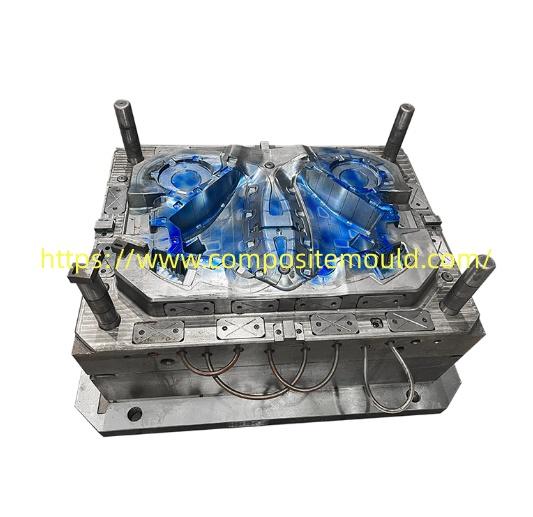
Prepreg Mould is a tooling solution used to shape and cure composite laminates containing reinforcement and a partially cured resin system. During manufacturing, prepared layers are arranged on a tool according to the required fiber orientation and thickness, followed by consolidation and controlled curing. The tooling provides the surface that defines the final geometry while helping manufacturers manage dimensional accuracy, surface appearance, release, and thermal conditions throughout production.
What Is The Material Used In This Process?
The material used for this type of manufacturing generally consists of reinforcement that has already been combined with resin under controlled conditions. Carbon fiber and glass fiber are common reinforcement choices, although the actual composition depends on the application and required properties.
During production, individual layers can be cut and positioned according to the component drawing. Different fiber orientations can then be combined to create the required laminate structure.
This approach allows manufacturers to control layer arrangement before the curing stage rather than introducing resin separately during final forming.
How Does The Tool Shape The Component?
The tooling surface establishes the geometry of the finished part. Depending on the manufacturing method, layers may be placed on an open tool and covered with a vacuum bag, or positioned between matched surfaces.
Before layup begins, the working surface is normally cleaned and treated with a suitable release system. This helps the cured component separate from the tooling after processing.
Matched tooling can provide a defined cavity around the laminate. This arrangement can be useful for components where dimensional control, surface appearance, and two-sided geometry are important.
Why Does Tool Design Matter?
Tooling affects much more than the external shape. Engineers also need to consider layer positioning, fiber direction, thickness distribution, dimensional stability, surface requirements, thermal expansion, and component release.
Complex parts may contain curved areas, recesses, mounting features, ribs, openings, or changing thicknesses. These details can influence how the laminate is positioned and how the cured component is removed.
For this reason, tooling design should begin with the finished component and its manufacturing requirements. Drawings, material information, curing conditions, production quantity, and surface expectations can all contribute to the design decision.
What Happens During Curing?
After the laminate has been arranged, a vacuum bag system may be applied over the assembly. Vacuum helps remove trapped air and consolidate the layers before and during curing.
For autoclave production, the bagged component is placed inside a pressure vessel where controlled heat and external pressure are applied. The combination of temperature, vacuum, and pressure supports consolidation and resin curing.
Other manufacturing methods use controlled heating without an autoclave. The appropriate approach depends on the resin system, component structure, equipment, and production requirements.
The tooling must therefore tolerate the intended processing environment while maintaining the required component geometry.
Which Industries Use This Manufacturing Approach?
This composite manufacturing method is associated with applications requiring controlled laminate structures and carefully defined component shapes. Aerospace, transportation, motorsport, sporting equipment, industrial machinery, and specialized engineering products can all use related techniques.
A curved panel, for example, may require several reinforcement orientations to provide the desired structural arrangement. A housing may require mounting areas, openings, or integrated features within the same molded structure.
The tooling approach should be selected according to the component rather than simply its industry category.
What Should Buyers Provide Before Tooling Begins?
A successful tooling discussion should begin with complete technical information. Buyers can provide 2D drawings, 3D models, laminate schedules, material specifications, dimensions, surface requirements, and information about inserts or core materials.
The curing cycle should also be discussed early. Tooling materials and construction need to correspond with the intended temperature and pressure conditions.
Production volume is another consideration. Prototype tooling can have different requirements from tooling intended for repeated manufacturing. Discussing expected quantities helps manufacturers consider appropriate construction methods and production planning.
How Can Compositemould Support Custom Projects?
Compositemould provides composite tooling solutions for projects requiring customized geometry and manufacturing arrangements. Buyers can provide component drawings, material information, production conditions, and surface expectations so the tooling design can be coordinated with the intended manufacturing process.
Engineering discussions can include cavity geometry, surface treatment, release requirements, thermal considerations, dimensional references, and production conditions.
This approach is useful for components containing unusual curves, multiple reinforcement orientations, integrated features, or specific surface requirements.
Why Is Tooling Important For Composite Manufacturing?
Modern composite production involves several connected stages, including material preparation, layer placement, consolidation, curing, demolding, trimming, and inspection.
The tooling connects many of these stages by providing the physical surface that defines the finished component. A change in geometry can affect layer placement, while changes in resin characteristics or curing conditions can influence tooling requirements.
Treating the mold as part of the complete manufacturing system can therefore make engineering communication more organized and help production teams consider potential issues before manufacturing begins.
How Should A Tooling Project Be Evaluated?
Buyers can compare tooling manufacturers according to engineering communication, material knowledge, cavity design, thermal considerations, surface treatment, release arrangements, inspection procedures, trial production, and delivery planning.
It is also useful to review whether the manufacturer can work from detailed drawings and adapt the tooling concept to the intended production process. Clear communication at the beginning can reduce misunderstandings when complex geometries or customized requirements are involved.
Compositemould supports composite tooling projects with solutions developed around customer requirements and component applications. For manufacturers planning customized composite parts, the available product information can be reviewed at https://www.compositemould.com/product/

 Arabic
 French
 Spanish
 Portuguese
 Deutsch
 Turkish
 Dutch
Dutch
 Italiano
 Russian
 Romaian
 Portuguese (Brazil)
 Greek
Greek