


Transport Management System for Logistics Companies: Complete Guide
Managing transportation operations becomes more challenging as a logistics company grows. More vehicles, drivers, shipments, customers, routes, and delivery locations mean more data and more coordination.
Many logistics companies still depend on spreadsheets, phone calls, WhatsApp messages, and manual paperwork to manage daily transportation activities. While these methods may work for smaller operations, they can quickly create delays, communication gaps, billing errors, and poor fleet visibility as the business expands.
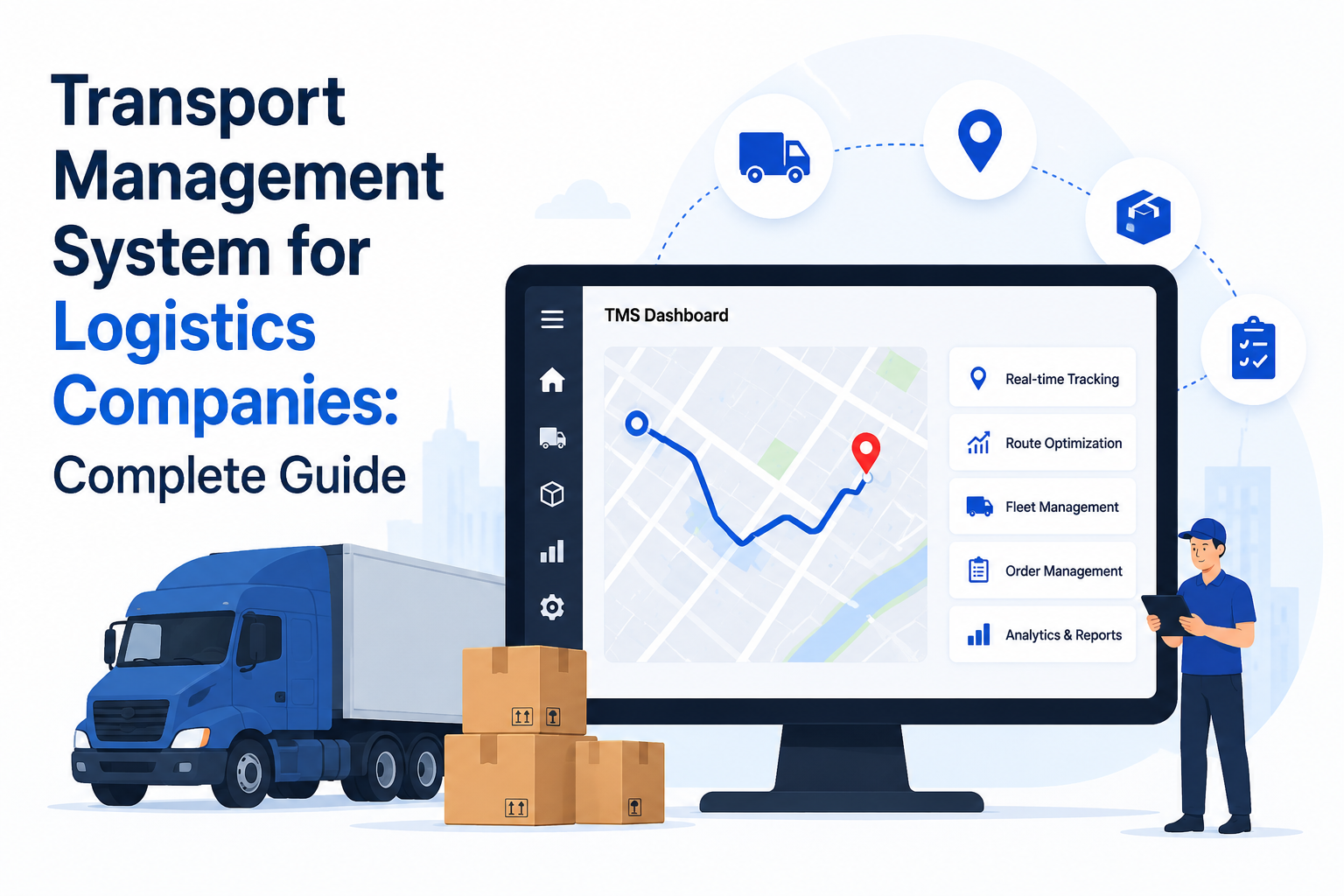
A Transport Management System (TMS) helps solve these challenges by bringing transportation activities into one centralized platform. Businesses can manage trips, vehicles, drivers, shipments, routes, billing, documentation, and delivery operations more efficiently.
For logistics companies looking to reduce operational costs and improve transportation visibility, a TMS can become an important part of their digital transformation strategy, especially when integrated with fleet management software.
What is a Transport Management System?
A Transport Management System is software designed to help businesses plan, execute, monitor, and optimize their transportation operations.
A modern TMS connects different transportation activities through a centralized system. Instead of maintaining separate records for vehicles, drivers, trips, shipments, and billing, businesses can manage these operations from one platform.
A TMS can typically help with:
-
Trip planning and dispatch
-
Vehicle management
-
Driver management
-
Shipment tracking
-
Route optimization
-
GPS tracking
-
Digital POD management
-
Billing and invoicing
-
GST and E-Way Bill management
-
Transportation reporting
-
Customer communication
This centralized approach gives logistics teams better visibility and helps managers make faster operational decisions.
Why Logistics Companies Need a Transport Management System
Transportation involves many activities that need to happen at the right time. A vehicle must be available, the right driver must be assigned, the shipment must be loaded, documents must be ready, and the delivery must reach its destination on schedule.
When these activities are managed manually, even a small mistake can affect the entire transportation process.
For example, a delayed vehicle assignment can delay pickup. A route deviation can increase fuel costs. A missing POD can delay billing. Poor communication can result in customer complaints.
A TMS connects these activities and provides real-time information to the people responsible for managing transportation.
Common Transportation Challenges Without a TMS
Manual Trip Planning
Planning multiple trips using spreadsheets and phone calls can consume significant time. Dispatch teams may also struggle to identify the most suitable vehicle for each shipment.
Lack of Real-Time Visibility
Without GPS-based tracking, managers may not know the exact location of vehicles or whether deliveries are progressing according to schedule.
Poor Route Planning
Inefficient routes increase fuel consumption, travel time, and delivery delays.
Fuel and Vehicle Misuse
Unauthorized vehicle movement, excessive idling, and route deviations can increase transportation expenses.
Billing Delays
When trip information and POD documents are managed manually, invoice generation can take longer and may contain errors.
Driver Coordination
Managing drivers across different locations becomes difficult when communication depends mainly on phone calls and messages.
Customer Communication Gaps
Customers increasingly expect shipment updates and accurate delivery information. Manual tracking makes it difficult to provide timely updates.
How Does a Transport Management System Work?
A TMS generally connects transportation activities from trip planning to final delivery.
The process starts when a transportation request or shipment is created. The operations team plans the trip and assigns a suitable vehicle and driver.
Once the trip begins, GPS tracking provides live vehicle visibility. The operations team can monitor the vehicle's location, route, and trip progress.
During transportation, the system can generate alerts for delays, route deviations, or other operational issues.
After delivery, the driver can submit proof of delivery digitally. The completed trip information can then be used for billing and reporting.
This creates a connected workflow instead of separate manual processes.
Key Features of a Transport Management System
Trip and Dispatch Management
A TMS allows logistics teams to create trips, assign vehicles, allocate drivers, and monitor transportation activities from a centralized dashboard.
This reduces manual coordination and improves dispatch efficiency.
Real-Time GPS Tracking
GPS tracking provides live visibility into vehicle movement. Managers can monitor active trips and identify delays or route deviations quickly.
Route Optimization
Route optimization helps businesses identify efficient routes based on transportation requirements and delivery locations.
Better route planning can reduce fuel consumption and improve delivery timelines.
Vehicle Management
Businesses can maintain vehicle records, monitor utilization, and manage important transportation information from one platform.
This helps improve fleet productivity and planning.
Driver Management
A TMS provides better visibility into driver assignments, trip activity, and performance.
Businesses can use this information to improve driver accountability and transportation efficiency.
Digital Proof of Delivery
Digital POD features allow drivers to capture delivery confirmation using signatures, photos, OTPs, or other digital records.
This reduces paperwork and makes completed delivery information available to the operations and billing teams faster.
Billing and Invoicing
A TMS can automate freight calculations, invoice generation, and transportation billing workflows.
This reduces manual errors and can help businesses speed up payment cycles.
GST and E-Way Bill Management
For Indian logistics companies, compliance is an important part of transportation operations.
A GST-integrated TMS can simplify E-Way Bill management and transportation documentation while reducing repetitive manual work.
Reporting and Analytics
Transportation dashboards provide information about fleet utilization, trip performance, delivery timelines, fuel expenses, and other operational metrics.
Managers can use these insights to identify inefficiencies and improve transportation planning.
Benefits of Using a Transport Management System
Better Transportation Visibility
A centralized TMS gives managers a clearer view of vehicles, shipments, trips, and deliveries.
Instead of collecting updates from multiple sources, teams can access transportation information from one system.
Reduced Transportation Costs
Route optimization, better fleet utilization, and fuel monitoring can help businesses control transportation expenses.
Faster Operations
Automated workflows reduce repetitive administrative tasks and help teams complete transportation activities faster.
Improved Fleet Utilization
Businesses can identify vehicle availability and improve how their fleet is assigned to different trips.
Better Customer Service
Real-time tracking and accurate shipment information allow businesses to provide better delivery updates to customers.
Faster Billing
Digital POD and automated billing workflows reduce the time between delivery completion and invoice generation.
Reduced Manual Errors
Centralized digital records reduce dependency on spreadsheets and manual data entry.
Scalable Operations
A TMS helps businesses handle increasing transportation volumes without relying entirely on additional administrative staff.
Who Should Use a Transport Management System?
A TMS can benefit different types of transportation and logistics businesses.
Transport Companies
Transporters can use a TMS to manage vehicles, drivers, trips, shipments, billing, and customer operations.
Fleet Operators
Fleet owners can improve vehicle visibility, utilization, and driver management.
3PL Logistics Providers
Third-party logistics providers can manage transportation operations for multiple customers from a centralized platform.
E-commerce Logistics Companies
E-commerce businesses can use transportation technology to improve shipment tracking, dispatch coordination, and last-mile delivery operations.
Manufacturing Companies
Manufacturers can use a TMS to coordinate inbound and outbound transportation and improve shipment visibility.
Freight and Cargo Companies
Cargo operators can manage long-distance trips, shipment tracking, documentation, and delivery processes more efficiently.
How to Choose the Right Transport Management System
Choosing a TMS should be based on the actual requirements of your logistics business.
Before selecting a platform, businesses should consider:
-
Real-time GPS tracking
-
Trip and dispatch management
-
Route optimization
-
Vehicle and driver management
-
Digital POD
-
Billing automation
-
GST and E-Way Bill integration
-
Mobile application support
-
Reporting and analytics
-
Multi-location management
-
Integration with existing systems
-
Scalability
Ease of use is also important. A system may have many features, but if operations teams find it difficult to use, adoption can become a challenge.
Businesses should choose a platform that provides the right combination of functionality, usability, integration, and scalability.
Why LogiBrisk is a Suitable TMS for Logistics Companies
LogiBrisk provides a centralized transportation management platform designed to help logistics and transport businesses manage their daily operations more efficiently.
The platform brings together important transportation functions such as trip management, fleet management, GPS tracking, billing, shipment tracking, digital POD, and compliance-related workflows.
By managing these activities through one system, logistics businesses can reduce manual work, improve operational visibility, and maintain better control over transportation processes.
For growing Indian transport businesses, a centralized TMS can provide the technology foundation needed to manage increasing shipment volumes and operational complexity.
Future of Transport Management Systems
Transportation management is becoming increasingly data-driven. Logistics companies are moving beyond basic vehicle tracking and adopting systems that provide deeper operational insights and automation.
Artificial intelligence, predictive analytics, real-time tracking, automated documentation, and advanced route optimization are expected to play a greater role in transportation management.
The future of logistics will focus not only on knowing where a vehicle is, but also on understanding why delays happen, how costs can be reduced, and how transportation resources can be used more efficiently.
Businesses that adopt digital transportation systems early can build more organized and scalable logistics operations by using solutions such as Full Truckload Management Software to streamline truckload planning, dispatch, and shipment management.
Conclusion
A Transport Management System helps logistics companies bring transportation activities into one centralized digital environment.
From trip planning and vehicle tracking to route optimization, digital POD, billing, and compliance management, a TMS can improve visibility and reduce the manual workload involved in daily logistics operations.
As transportation networks become more complex, relying only on spreadsheets, phone calls, and manual processes can limit business growth.
For logistics companies looking to improve efficiency, reduce costs, provide better customer service, and scale operations, implementing the right Transport Management System can be an important step toward building a smarter and more efficient transportation business.

 English
 Arabic
 French
 Spanish
 Portuguese
 Deutsch
 Turkish
 Dutch
Dutch
 Italiano
 Russian
 Portuguese (Brazil)
 Greek
Greek