


Hair Transplant in Dubai: FUE, FUT & Modern Techniques
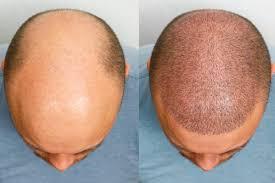
Hair loss can affect people at different stages of life and may appear as a receding hairline, thinning crown, widening part, or noticeable bald patches. When hair loss becomes persistent, many people begin exploring long-term restoration options rather than relying only on temporary styling products.
A Hair Transplant in Dubai can help restore hair in selected areas by relocating healthy follicles from a suitable donor region to areas affected by thinning or baldness. Modern hair restoration offers several techniques, and understanding the differences between them can make it easier to have a productive consultation and establish realistic expectations.
FUE, FUT, and DHI are among the approaches commonly discussed during hair restoration planning. Although they share the basic goal of moving hair follicles, the way follicles are harvested and implanted can differ considerably. The right approach depends on individual hair characteristics, donor availability, the extent of hair loss, and the desired result.
What Is a Hair Transplant?
A hair transplant is a surgical procedure that relocates hair follicles from one part of the scalp to another. The donor area usually contains follicles that are more resistant to common forms of pattern hair loss.
During treatment, follicles are carefully harvested and prepared before being placed into areas where additional hair coverage is required.
The objective is not simply to increase the number of hairs. Proper transplantation also considers:
- Hairline design
- Hair direction
- Graft distribution
- Natural angles
- Existing hair density
- Donor hair preservation
- Future hair-loss patterns
These factors can contribute to a result that blends more naturally with the surrounding hair.
Why Are Different Hair Transplant Techniques Available?
Every person's hair-loss pattern is different. One person may have a receding frontal hairline, while another may have significant crown thinning. Some individuals may have strong donor density, whereas others have limited donor resources.
Because of these differences, there is no universal transplantation method that is ideal for everyone.
During an assessment, factors such as scalp condition, hair thickness, donor density, the number of grafts required, and personal goals may be evaluated before selecting a technique.
Understanding FUE Hair Transplantation
Follicular Unit Extraction, commonly known as FUE, involves harvesting individual follicular units from the donor area.
Each graft can contain one or several hairs. Once extracted, the follicles are prepared and placed into the recipient region.
How FUE Works
The process generally involves:
- Examining and preparing the donor area.
- Extracting individual follicular units.
- Preparing and preserving the harvested grafts.
- Preparing the recipient sites.
- Implanting the grafts according to the planned design.
- Providing post-treatment care instructions.
Because individual grafts are extracted, there is no long linear strip removed from the scalp as occurs with FUT.
Potential Advantages of FUE
FUE may be attractive to individuals who prefer a technique involving individual follicular extraction. The small extraction points can heal over time, and the technique may be suitable for people who prefer to wear shorter hairstyles.
However, FUE is still a surgical procedure and requires careful handling of the donor follicles.
Understanding FUT Hair Transplantation
Follicular Unit Transplantation, or FUT, uses a different harvesting approach.
Instead of extracting follicles individually, a strip of donor scalp is removed. Individual follicular units are then separated from this tissue and prepared for implantation.
How FUT Works
The process typically includes:
- Selecting the donor region
- Removing a strip of scalp tissue
- Separating follicular units
- Preparing the recipient area
- Implanting the grafts
- Closing the donor area
- Providing aftercare instructions
One important distinction is that FUT leaves a linear scar in the donor region. The visibility of the scar can vary according to healing, scar characteristics, and hairstyle.
Why Might FUT Be Considered?
FUT may be considered in situations where a significant number of grafts are needed and the patient's donor characteristics make strip harvesting appropriate.
The technique can allow efficient harvesting of a large number of follicular units while preserving individual grafts for transplantation.
What Is DHI Hair Transplantation?
Direct Hair Implantation, often referred to as DHI, is an implantation approach that uses a specialized device to place prepared follicular units into the recipient area.
The follicles are harvested and prepared before being implanted into selected areas.
Potential Features of DHI
DHI may offer controlled placement of individual grafts and can be useful when detailed attention to implantation direction and positioning is required.
It is important to understand that DHI is not necessarily a completely separate concept from follicular extraction. The harvesting method and implantation method are two different parts of hair transplantation, and terminology can vary between providers.
FUE vs. FUT: What Is the Difference?
The main distinction is how the donor follicles are obtained.
FUE: Individual follicular units are extracted from the donor area.
FUT: A strip of donor scalp is removed and divided into follicular units.
FUE generally produces multiple small extraction marks rather than one linear scar. FUT produces a linear scar but can be useful for certain patients requiring a larger graft harvest.
Neither technique should automatically be considered superior for every person. Suitability depends on individual circumstances.
How Is the Best Technique Selected?
Choosing a technique should begin with a detailed evaluation rather than simply selecting the newest or most popular option.
Several factors may influence the recommendation.
Hair Loss Pattern
Someone with frontal recession may require a different plan from someone with extensive crown thinning.
Donor Density
The quantity and quality of donor follicles can influence which technique is practical.
Hair Thickness
Thicker hair may provide greater visual coverage, while fine hair may require more careful graft placement.
Desired Hairstyle
People who prefer very short hairstyles may have different considerations regarding donor-area scarring.
Number of Grafts
The estimated number of follicles required can affect technique selection and treatment planning.
Hairline Design and Graft Placement
Regardless of the technique, the design of the recipient area remains extremely important.
A natural hairline usually has irregularity and gradual transitions rather than a perfectly straight edge.
Single-hair grafts may be strategically placed toward the frontal edge, while multi-hair grafts can be positioned farther behind to increase density where appropriate.
The direction of hair growth also needs to be considered. Hair that is implanted at an incorrect angle may appear unnatural even if sufficient grafts are used.
What Happens During the Procedure?
The exact sequence depends on the selected technique, but treatment generally begins with preparation of the scalp and donor and recipient areas.
Local anesthesia is commonly used to help maintain comfort.
The donor follicles are then harvested using the chosen method. Grafts are handled carefully before being implanted into the recipient sites.
The duration depends on the number of grafts and the complexity of the treatment.
Recovery After Hair Transplantation
Temporary redness, swelling, sensitivity, and small crusts can occur after treatment.
Patients are usually given instructions regarding:
- Washing the scalp
- Sleeping position
- Physical activity
- Sun exposure
- Hair products
- Touching or scratching the treated area
Following these instructions carefully can help support the healing process.
When Will New Hair Grow?
One of the most important things to understand about transplantation is that visible growth takes time.
Some transplanted hairs may shed temporarily after treatment. This does not necessarily mean the procedure has failed.
The follicles can remain within the scalp and gradually enter a new growth cycle. New hair typically becomes more noticeable over the following months.
The final appearance should therefore be assessed over a longer period rather than immediately after treatment.
Who May Be a Candidate?
Potential candidates may include people experiencing permanent pattern hair loss who have sufficient donor hair.
Candidates may have:
- Receding hairlines
- Crown thinning
- Localized bald patches
- Generalized thinning
- Certain forms of post-traumatic hair loss
However, transplantation may not be suitable for everyone. A consultation is necessary to determine whether enough donor hair exists and whether the underlying hair-loss pattern is appropriate for surgery.
Can Women Have a Hair Transplant?
Yes. Hair transplantation can also be considered for women with suitable patterns of hair loss.
Female hair loss may have different causes and patterns than male pattern baldness. Therefore, identifying the reason for thinning is particularly important before deciding on transplantation.
How to Maintain Your Hair After Transplantation
A transplant restores follicles to selected areas, but it does not necessarily prevent existing non-transplanted hair from becoming thinner.
Long-term hair management may therefore be recommended according to individual needs.
Helpful habits can include:
- Maintaining good scalp hygiene
- Eating a balanced diet
- Managing stress
- Following professional hair-care recommendations
- Monitoring changes in hair density
- Seeking assessment if continued thinning occurs
Frequently Asked Questions
Is FUE better than FUT?
Neither technique is universally better. The appropriate option depends on donor characteristics, hair loss, graft requirements, hairstyle preferences, and individual goals.
Does FUT leave a scar?
Yes. FUT creates a linear scar in the donor area, although its appearance varies between individuals.
Does FUE leave scars?
FUE produces numerous small extraction marks rather than a single linear scar. Their visibility depends on healing and individual characteristics.
Is DHI different from FUE?
DHI primarily describes an implantation approach, while FUE describes a follicular harvesting technique. They can therefore be used as parts of the same overall transplantation process.
Are hair transplant results immediate?
No. Hair growth occurs gradually, and temporary shedding can happen during the early stages.
Can transplanted hair be styled?
After complete healing and maturation, transplanted hair can generally be treated similarly to naturally growing hair.
Conclusion
Understanding the differences between FUE, FUT, DHI, and other hair restoration approaches can make the process of choosing a Hair Transplant in Dubai much clearer. Each technique has its own method of harvesting or implanting follicles, and the most appropriate option depends on the individual's hair-loss pattern, donor supply, hair characteristics, and restoration goals.
Rather than choosing a procedure based only on popularity, patients should focus on personalized assessment, natural hairline planning, careful graft handling, appropriate placement, and realistic expectations.
Tajmeels Clinic can be considered when researching hair restoration options and learning about personalized approaches to hair transplantation. A thorough consultation can help determine the most suitable strategy for achieving natural-looking and long-lasting hair restoration.

 English
 Arabic
 French
 Spanish
 Portuguese
 Deutsch
 Turkish
 Dutch
Dutch
 Italiano
 Russian
 Romaian
 Greek
Greek