


How Battery Recycling Services Support India’s EV Future
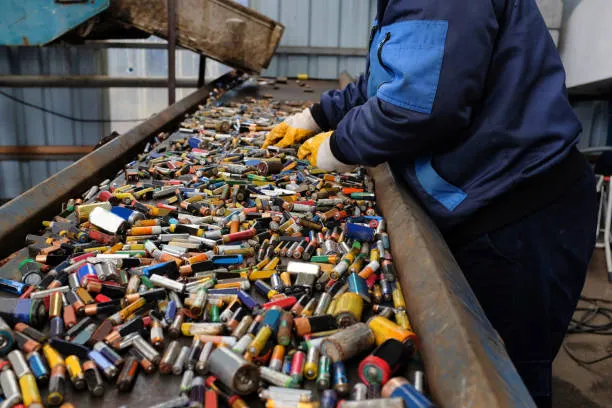
India’s transition toward cleaner mobility and renewable energy is transforming the way batteries are manufactured, used, and eventually disposed of. As electric vehicles become more common and energy storage applications expand, the country is also witnessing a sharp rise in discarded batteries. Managing this growing waste stream responsibly has become essential for conserving valuable resources, reducing environmental risks, and strengthening domestic supply chains for critical minerals.
The India Battery Recycling Services Market is evolving rapidly as policymakers, manufacturers, and recycling companies work together to build a sustainable battery ecosystem. According to a study published by MarkNtel Advisors, the battery waste recycling ecosystem was valued at USD 0.531 billion in 2025 and is projected to grow from USD 0.616 billion in 2026 to USD 1.49 billion by 2032, registering a CAGR of 15.85% during the forecast period. The expansion reflects increasing electric vehicle adoption, stricter battery waste regulations, and continued investments in advanced recycling infrastructure.
India’s Battery Waste Management Rules, 2022, operating under the Extended Producer Responsibility (EPR) framework, have encouraged manufacturers, importers, and recyclers to establish organized collection and processing systems. These initiatives are helping recover valuable materials while supporting the country's long-term sustainability objectives and reducing dependence on imported raw materials.
Growing EV Adoption Is Increasing Recycling Demand
The rapid growth of electric mobility is directly influencing the demand for battery recycling services. Every electric vehicle battery has a limited operational life before requiring replacement or recycling. As EV sales continue to rise across passenger cars, two-wheelers, commercial fleets, and public transportation, the number of end-of-life lithium-ion batteries is expected to increase significantly.
Instead of treating used batteries as waste, recycling enables valuable metals such as lithium, cobalt, nickel, copper, and manganese to be recovered and reintroduced into battery manufacturing. This circular approach reduces mining requirements while supporting long-term resource availability for India's expanding clean energy sector.
Advanced Recycling Technologies Are Improving Material Recovery
Modern recycling facilities are moving beyond conventional processing techniques by adopting advanced hydrometallurgical technologies. These processes offer higher recovery rates while minimizing environmental impact compared to traditional methods.
Hydrometallurgical recycling uses chemical solutions to separate and recover high-purity battery materials, making them suitable for reuse in manufacturing new batteries. Continuous investment in these facilities is helping India develop stronger domestic capabilities for recovering critical minerals needed across electric mobility and energy storage applications.
Industry participants are also investing in automation, digital tracking systems, and quality monitoring to improve operational efficiency throughout the recycling value chain.
Government Policies Continue to Strengthen the Circular Economy
The Battery Waste Management Rules have created greater accountability across manufacturers, producers, importers, and recyclers by establishing clear responsibilities for battery collection and recycling. The Extended Producer Responsibility framework encourages businesses to ensure batteries are safely collected and processed after reaching the end of their lifecycle.
These regulations are encouraging greater investment in organized collection networks, formal recycling facilities, and environmentally responsible disposal practices. The regulatory framework also promotes transparency while reducing the role of informal recycling operations that often create environmental and health concerns. As noted by the Ministry of Environment, Forest and Climate Change, effective battery waste management plays an important role in supporting resource efficiency and environmental protection.
Critical Mineral Recovery Supports Domestic Manufacturing
Recovering valuable minerals from discarded batteries offers significant economic advantages beyond waste reduction. India currently imports many of the raw materials required for battery manufacturing, making recycled materials an increasingly strategic resource.
By extracting reusable lithium, cobalt, nickel, and other essential metals, recycling companies help reduce supply chain risks while improving resource security. These recovered materials can be reintroduced into battery production, lowering dependence on international markets and supporting domestic manufacturing capabilities.
This approach aligns with broader efforts to strengthen local value chains while supporting the country's ambitions in electric mobility, renewable energy storage, and sustainable industrial development. The International Energy Agency also highlights battery recycling as a critical component for securing future supplies of essential minerals needed for clean energy technologies.
Future Outlook
The coming years are expected to witness continued investment across battery collection infrastructure, organized recycling networks, advanced recovery technologies, and critical mineral processing capabilities. As electric vehicle ownership expands and renewable energy installations continue growing, battery recycling will become an increasingly important component of India's clean energy ecosystem.
Collaboration among policymakers, automotive manufacturers, battery producers, recycling companies, and technology providers will remain essential for building an efficient circular economy. Strong regulatory implementation, technological innovation, and responsible resource recovery are expected to position battery recycling as one of the key pillars supporting India's sustainable industrial transformation.

 English
 French
 Spanish
 Portuguese
 Deutsch
 Turkish
 Dutch
Dutch
 Italiano
 Russian
 Romaian
 Portuguese (Brazil)
 Greek
Greek