


How Do Stand Up Pouch Machines Maintain Accurate Filling and Reliable Sealing?
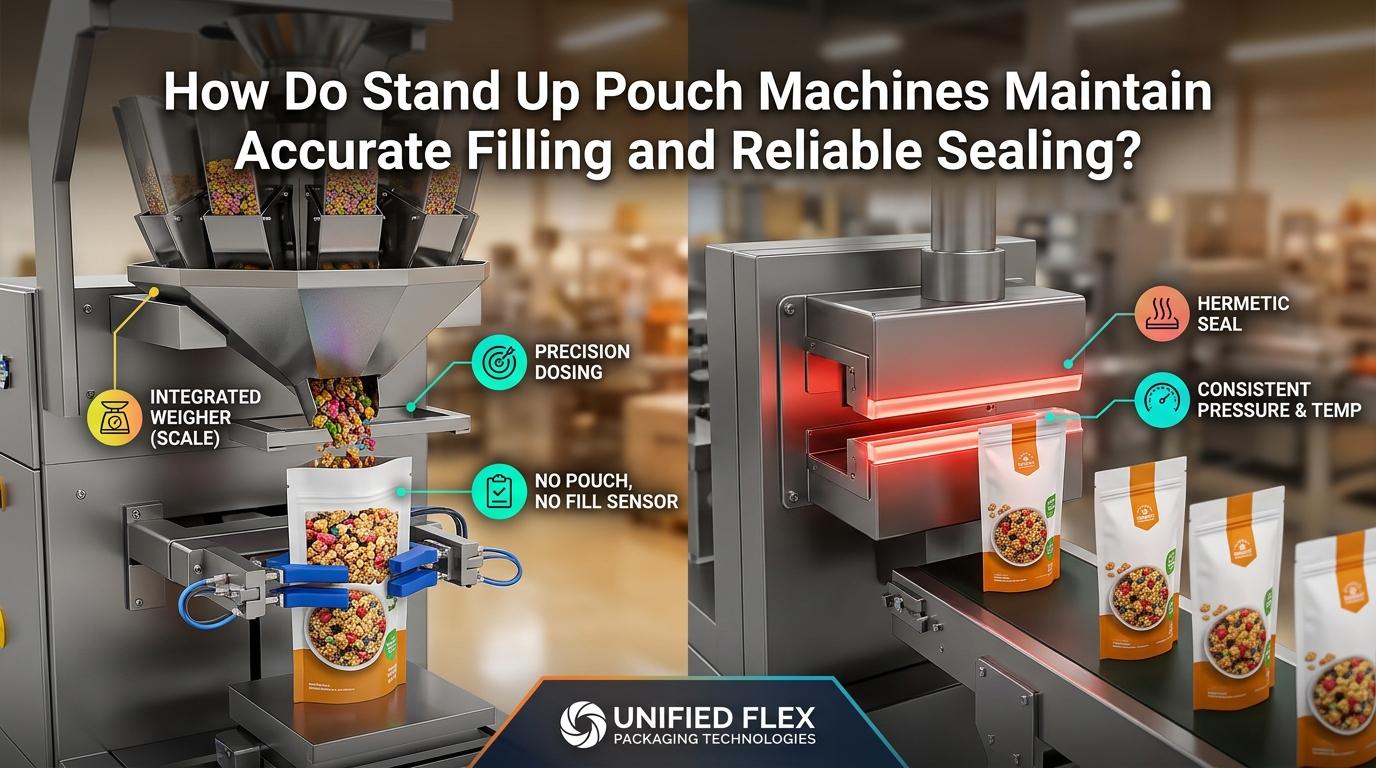
When products are packed in stand-up pouches, filling accuracy and sealing quality directly affect the final package. An underfilled pouch may create product inconsistencies, while an overfilled pouch can increase material use and create sealing problems. A weak or contaminated seal can also lead to leakage, product loss, or packaging failure during storage and transportation.
This is where a Stand Up Pouch Packaging machine plays an important role. These machines are designed to handle pre-made pouches through a series of controlled packaging steps, including pouch feeding, opening, filling, sealing, and discharge. Depending on the product and production requirements, different filling systems can be integrated into the machine.
Unifiedflex provides stand-up pouch bagging solutions such as the Doy 100, Doy Rotary, Doy Sigma, and Doy Sigma Bulk systems for different packaging applications. These systems can be used with products such as coffee, snacks, powders, liquids, pet food, dairy products, and other packaged goods.
But how do these machines maintain filling accuracy and reliable sealing? Let’s look at the process in detail.
What Is a Stand Up Pouch Packaging Machine?
A Stand Up Pouch Packaging machine is an automated system designed to fill and seal pre-formed stand-up pouches. Unlike packaging systems that form the pouch from a roll of film, stand-up pouch machines generally work with pouches that have already been manufactured.
The machine moves each pouch through several stations. Depending on the machine configuration, these stages can include:
- Pouch feeding
- Pouch opening
- Product filling
- Optional gas flushing
- Top sealing
- Cooling or seal checking
- Finished pouch discharge
Each stage has a specific function. Coordinating these operations helps maintain a consistent packaging cycle.
Stand-up pouches are used for many products because they can provide a convenient format for storage, handling, and retail presentation. The exact machine configuration depends on the pouch dimensions, product characteristics, filling weight, closure type, and required production speed.
How Does a Stand Up Pouch Machine Maintain Filling Accuracy?
Filling accuracy depends on more than simply placing a certain quantity of product into a pouch. The filling system must be matched to the characteristics of the product.
For example, coffee beans, powders, granules, liquids, and sticky products do not behave in the same way during filling. A machine therefore needs an appropriate dosing or filling system for the product being packaged.
1. Product-Specific Filling Systems
Different products require different methods of measurement and dosing.
For powder products, an auger filler can be used to control the amount of powder entering each pouch. Granular products may use volumetric or multihead weighing systems, while liquids can require pump-based filling systems.
Selecting the right filling method helps maintain consistency from one pouch to another.
2. Controlled Product Dosing
An Automatic Packaging Machine can control the filling cycle according to the programmed quantity. Instead of relying on manual filling, the system can deliver a defined amount of product into each pouch.
This reduces variation caused by manual handling and helps maintain a repeatable production process.
For products sold by weight, consistent dosing is particularly important because even small differences can affect product cost and package specifications.
3. Machine Settings Can Be Adjusted
Different pouch sizes and product weights may require different machine settings. Operators can adjust parameters according to the packaging application.
These settings can include filling quantity, filling time, pouch dimensions, sealing temperature, and other process parameters depending on the machine configuration.
Proper setup is important because accurate filling depends on both the filling equipment and the product itself.
Why Is Pouch Opening Important Before Filling?
Before the product can be filled, the pouch needs to be opened correctly.
A stand-up pouch may have a narrow opening, zipper, spout, or other closure feature. If the pouch does not open correctly, the filling process can become inconsistent.
A properly designed Stand Up Pouch Packaging machine uses controlled pouch handling to position and open the pouch before filling. This creates a more consistent path for the product to enter the package.
Correct pouch positioning also matters during sealing. If the top area is folded, misaligned, or contaminated with product, the sealing process can be affected.
How Does the Machine Maintain Reliable Sealing?
Filling the pouch correctly is only one part of the packaging process. The pouch must also be sealed properly to protect the product inside.
During the sealing stage, the machine brings the pouch's top layers together and applies controlled heat and pressure according to the packaging material and machine settings.
1. Controlled Sealing Temperature
Different pouch films require different sealing conditions. The temperature needs to be appropriate for the material being used.
If the temperature is too low, the seal may not close properly. If it is too high, the film can become damaged or distorted.
A properly configured machine allows operators to set the sealing conditions according to the packaging material.
2. Consistent Sealing Pressure
Heat alone does not create a reliable seal. Pressure is also required to bring the pouch layers together.
Consistent pressure across the sealing area helps produce a more uniform seal from pouch to pouch.
3. Controlled Sealing Time
The sealing jaws need to remain in contact with the pouch for an appropriate period. This dwell time works together with temperature and pressure to create the required seal.
The correct combination depends on factors such as film structure, pouch design, product type, and operating conditions.
What Happens If Product Gets Into the Sealing Area?
Product contamination around the pouch opening can interfere with sealing.
For example, if powder, coffee particles, or food material gets between the pouch layers, the sealing surfaces may not come together properly. This can result in weak points or incomplete seals.
A well-configured packaging process helps reduce this issue by controlling the filling and pouch-handling stages. The filling system should place the product inside the pouch while keeping the sealing area as clean as possible.
This is particularly important when packaging powders and fine products because small particles can easily move toward the top of the pouch.
Can Stand Up Pouch Machines Handle Different Products?
Yes. The machine configuration can be selected according to the product being packaged.
Stand-up pouch systems can be used for a wide range of applications, including:
Coffee
Coffee products can be packed in stand-up pouches using suitable filling systems. Depending on the product, the packaging process may also include gas flushing or other features designed around coffee packaging requirements.
Powder Products
Powdered products require controlled dosing because their flow characteristics can vary. An auger-based filling system can be suitable for many powder applications.
Snacks and Granular Products
Snacks, grains, seeds, and other granular products can require weighing or volumetric filling systems. The appropriate system depends on the product size, density, and target weight.
Liquid Products
Liquid products require filling systems designed to control flow and prevent unnecessary spillage. Pump-based filling equipment can be configured for suitable liquid applications.
Pet Food
Dry pet food and treats can also be packaged in stand-up pouches. The filling system needs to accommodate the product size and required package weight.
How Does an Automatic Packaging Machine Improve Production Consistency?
Manual packaging involves repeated handling of pouches and products. As production volumes increase, maintaining the same filling and sealing process manually can become difficult.
An Automatic Packaging Machine coordinates multiple stages of the packaging cycle. Once the system is properly configured, each pouch follows a defined sequence.
This can help maintain consistency in:
- Pouch positioning
- Product dosing
- Filling sequence
- Sealing temperature
- Sealing pressure
- Sealing time
- Finished pouch discharge
Automation can also reduce repetitive manual tasks and provide a more organized production workflow.
However, automation does not remove the need for proper machine setup. Product characteristics, pouch materials, and operating parameters still need to be considered.
Which Stand Up Pouch Machine Is Suitable for Your Application?
The right machine depends on several factors rather than production volume alone.
Before selecting a Stand Up Pouch Packaging machine, consider:
Product Type
Is the product a powder, liquid, granule, coffee product, snack, pet food, or another material? The filling method should match the product's characteristics.
Pouch Size
The machine should accommodate the required pouch dimensions. Different pouch sizes may require different configurations or adjustments.
Target Fill Weight
A 50-gram pouch and a 1-kilogram pouch have different filling requirements. The dosing system should be selected according to the required weight range.
Pouch Features
Consider whether the pouch includes a zipper, spout, special film structure, or other features. These details can influence the packaging process.
Production Requirements
The required number of pouches per minute can influence the machine configuration and number of operating stations.
Unifiedflex offers different stand-up pouch bagging configurations, including Doy 100, Doy Rotary, Doy Sigma, and Doy Sigma Bulk, allowing packaging requirements to be matched with different machine setups.
Why Is Proper Machine Setup Important?
Even a capable packaging system can produce inconsistent results if it is not correctly configured.
Before production begins, operators should check the pouch dimensions, filling quantity, product flow, sealing temperature, pressure, and timing. Trial runs can help identify problems before full-scale production starts.
Regular inspection is also important. Sealing jaws, pouch grippers, filling components, and other machine parts should be checked according to the manufacturer's maintenance recommendations.
A consistent maintenance routine can help reduce unexpected interruptions and maintain stable machine operation.
How Do Filling and Sealing Work Together?
Filling and sealing should not be viewed as two completely separate processes.
An accurate filling process helps ensure that the correct quantity reaches the pouch while minimizing product around the sealing area. The sealing system then closes the pouch under controlled conditions.
If filling is inconsistent, the pouch may not have the correct shape or headspace for sealing. If sealing conditions are incorrect, accurate filling alone cannot prevent packaging problems.
That is why the complete packaging sequence matters.
A Stand Up Pouch Packaging machine coordinates these stages so that pouch handling, filling, and sealing work as part of one continuous process.
Final Thoughts
Accurate filling and reliable sealing are two important parts of stand-up pouch packaging. The filling system needs to match the product, while sealing conditions need to suit the pouch material and design.
A properly configured Stand Up Pouch Packaging machine can coordinate pouch feeding, opening, filling, and sealing to create a consistent packaging process. An Automatic Packaging Machine can further reduce repetitive manual handling and support a more controlled production workflow.
For businesses packaging coffee, powders, snacks, liquids, pet food, and other products, choosing the right filling system and machine configuration is an important part of achieving consistent pouch quality.
Unifiedflex's range of stand-up pouch bagging machines provides different configurations for packaging applications with varying product types, pouch sizes, and production requirements.
Frequently Asked Questions
What is a Stand Up Pouch Packaging machine?
A Stand Up Pouch Packaging machine is an automated system used to fill and seal pre-made stand-up pouches. It can handle different products, including powders, coffee, snacks, liquids, and pet food.
How does a Stand Up Pouch Packaging machine maintain filling accuracy?
The machine uses a suitable filling system based on the product type and required fill weight. Controlled dosing helps deliver a consistent quantity into each pouch.
Can an Automatic Packaging Machine handle different pouch sizes?
Yes. Depending on the machine model and configuration, an Automatic Packaging Machine can accommodate different pouch dimensions and packaging requirements.
What products can be packed in stand-up pouches?
Stand-up pouches can be used for coffee, powders, snacks, grains, pet food, liquids, dairy products, and other packaged goods.
How does a stand-up pouch machine create a reliable seal?
The machine applies controlled heat, pressure, and sealing time to close the pouch. These settings are adjusted according to the pouch material and packaging requirements.
Can powder products be packed using stand-up pouch machines?
Yes. Powder products can be packed using suitable filling systems, such as auger fillers, depending on the powder's characteristics and required fill weight.
What should be considered when selecting a stand-up pouch machine?
Important factors include product type, pouch size, fill weight, pouch features, required production speed, and the type of filling system needed.

 Arabic
 French
 Spanish
 Portuguese
 Deutsch
 Turkish
 Dutch
Dutch
 Italiano
 Russian
 Romaian
 Portuguese (Brazil)
 Greek
Greek