Lord Krishna Idols is one of the most beloved and widely worshipped deities in Hinduism. Known as the eighth avatar of Lord Vishnu, Krishna is celebrated for his divine wisdom, playful childhood, compassion, love, and teachings in the Bhagavad Gita. Across India and around the world, devotees keep Lord Krishna idols in temples, homes, offices, and meditation spaces as symbols of devotion, peace, prosperity, and divine protection.
A Krishna idol is much more than a decorative object. For devotees, it represents the presence and blessings of the Lord. The beautiful form of Krishna, often shown playing the flute, standing gracefully with one leg crossed over the other, or accompanied by Radha, carries deep spiritual and cultural meaning. Different forms of Krishna idols are associated with different stories and aspects of his divine personality.
The Spiritual Importance of Lord Krishna Idols
In Hindu tradition, an idol used for worship is known as a murti. The murti provides devotees with a tangible form through which they can express their faith, prayers, and devotion. While God is believed to be formless and infinite, a murti allows worshippers to focus their minds and hearts on a particular divine form.
Lord Krishna idols are especially popular because Krishna represents many qualities at once. He is regarded as a loving child, a charming young cowherd, a wise teacher, a powerful protector, and a divine guide. His teachings encourage people to perform their duties sincerely, remain devoted to God, and maintain balance in life.
For many families, placing a Krishna idol in the home is also a way of creating a peaceful spiritual environment. Daily prayers, lighting a diya, offering flowers, or simply spending a few moments in front of the idol can become meaningful parts of a person's routine.
Popular Forms of Lord Krishna Idols
There are many beautiful forms of Krishna idols, each inspired by different episodes and traditions associated with the life of Lord Krishna.
1. Laddu Gopal Idol
Laddu Gopal represents Krishna in his adorable child form. Usually depicted as a small child, the idol is often shown holding or reaching for a laddu. Laddu Gopal is particularly popular in homes where devotees lovingly treat the deity as a member of the family.
Devotees may dress the idol in colorful clothes, decorate it with jewelry, and offer food as bhog. Festivals such as Janmashtami are especially important occasions for worshipping Bal Krishna.
2. Krishna Playing the Flute
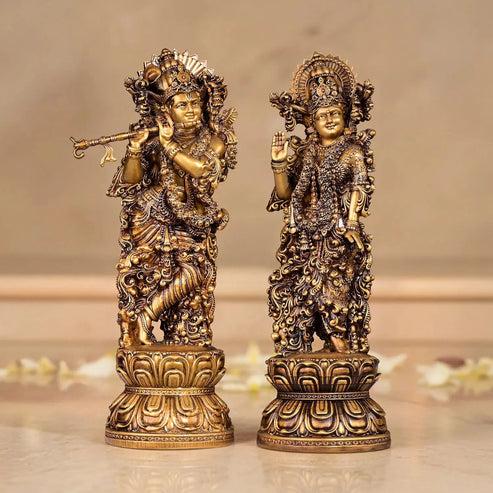
One of the most recognizable forms of Lord Krishna is the flute-playing Krishna. He is commonly depicted standing gracefully with a flute near his lips. This form is closely connected with the stories of Krishna's youth in Vrindavan.
The flute is highly symbolic. It is often interpreted as representing complete surrender to the divine. A flute is hollow and produces music when Krishna plays it, reminding devotees that humility and surrender can allow divine grace to flow through a person.
3. Radha Krishna Idols
Radha Krishna idols represent divine love and devotion. Radha is traditionally regarded as Krishna's greatest devotee and a symbol of pure, unconditional love for the Divine.
Radha Krishna idols are commonly placed in homes, temples, wedding venues, and spiritual spaces. They are often associated with harmony, affection, devotion, and emotional balance. Their presence can also serve as a reminder that genuine love involves trust, dedication, compassion, and spiritual connection.
4. Krishna with Cows
Krishna is traditionally associated with cows and his life as a cowherd in Vrindavan. Idols depicting Krishna with cows reflect his affectionate relationship with nature and living beings.
This form is particularly meaningful for devotees who admire Krishna's connection with rural life, simplicity, compassion, and the natural world.
5. Govardhan Krishna
Another important form is Krishna lifting Govardhan Hill. According to Hindu tradition, Krishna lifted the hill on his little finger to protect the people of Vrindavan from devastating rain.
This image symbolizes courage, protection, faith, and divine intervention. A Govardhan Krishna idol can therefore represent the belief that sincere devotion and righteousness provide strength during difficult times.
Materials Used for Krishna Idols
Lord Krishna idols are made from a variety of materials, and each material gives the idol a distinctive appearance and character.
Brass idols are among the most traditional choices. Brass has a warm golden appearance and is widely used for Hindu religious statues. Brass Krishna idols can be found in many sizes, from small household murtis to large temple sculptures.
Panchaloha idols are traditionally made using a combination of five metals. They are valued in many Hindu traditions for their religious and artistic significance.
Marble idols are admired for their elegant white appearance. Marble Radha Krishna and Laddu Gopal idols are especially popular because they can feature intricate details and colorful decorations.
Wooden idols have a natural and traditional appearance. Different styles of wooden Krishna sculptures can be found in various parts of India, reflecting regional artistic traditions.
Clay idols are also important, particularly during festivals and temporary devotional celebrations. They can be beautifully painted and decorated according to local customs.
Choosing a Krishna Idol for Your Home
Selecting a Krishna idol is often a personal and devotional decision. People may choose an idol based on its form, artistic style, material, size, and the space where it will be placed.
For a small prayer room, a compact idol may be convenient. A larger Krishna sculpture can become a central feature of a spacious puja room, living area, or temple.
The expression and craftsmanship of an idol are also important. A well-made Krishna idol typically features carefully detailed facial expressions, clothing, jewelry, posture, and accessories. Many devotees prefer idols that create a feeling of peace and happiness when viewed.
Rather than choosing an idol solely because it matches a particular interior design, devotees may consider whether its form has personal spiritual meaning.
Placement of Lord Krishna Idols
Many Hindu families follow traditional practices when placing religious idols. A clean, peaceful, and respectful location is generally preferred for a home shrine.
The idol should be placed securely on a clean platform or altar. Devotees may decorate the space with flowers, lamps, incense, and other traditional items. Regular cleaning and respectful care of the idol are also considered important.
For specific religious practices, families may follow the customs of their particular tradition or consult a knowledgeable priest. Practices can differ among regions, communities, and spiritual lineages, so there is no single arrangement followed by every Hindu family.
Lord Krishna Idols and Janmashtami
Janmashtami, the festival celebrating the birth of Lord Krishna, is one of the most important occasions for Krishna devotees. During the festival, homes and temples are decorated with flowers, lights, colorful fabrics, and images of Krishna.
Laddu Gopal idols often receive special attention during Janmashtami. Devotees may dress the idol in new clothing, prepare special offerings, sing devotional songs, and participate in midnight prayers.
The festival transforms Krishna idols into a central focus of celebration and devotion. Families often involve children in decorating the altar and learning stories about Krishna's childhood, helping pass cultural and spiritual traditions from one generation to another.
The Symbolism Behind Krishna's Appearance
Every element of a traditional Krishna idol can carry symbolic meaning.
The flute represents divine music and surrender. Its hollow structure is often seen as an example of how a person can become an instrument of divine purpose by letting go of ego.
The peacock feather is one of Krishna's most recognizable adornments. It adds beauty to his appearance and is strongly associated with his playful and youthful personality.
His yellow clothing, traditionally called pitambara, is another characteristic feature of many Krishna depictions. His graceful posture and gentle smile convey joy, confidence, and compassion.
When Krishna is shown with Radha, the image emphasizes divine love and devotion. When he is shown as a child, the image highlights innocence and affection. When he is shown teaching Arjuna, he represents wisdom, duty, and spiritual guidance.
Krishna Idols as Decorative and Spiritual Art
In modern homes, Krishna idols can serve both spiritual and artistic purposes. Skilled Indian artisans create sculptures with remarkable attention to detail. Intricate crowns, ornaments, clothing, facial expressions, and postures demonstrate India's long tradition of religious art.
However, for devotees, the spiritual meaning remains more important than decoration alone. A Krishna idol may become a focal point for meditation and prayer while also adding a sense of traditional beauty to a room.
The growing popularity of Krishna art around the world has also introduced these traditional forms to people from many cultural backgrounds. Contemporary artists sometimes combine classical Indian sculpture techniques with modern materials and artistic styles.
Caring for a Krishna Idol
A religious idol should be handled respectfully. The appropriate method of care depends on the material and the religious tradition being followed.
Metal idols can generally be cleaned carefully with suitable methods, while marble, painted, wooden, and decorated idols may require gentler treatment. Harsh chemicals should be avoided unless they are specifically suitable for the material.
Devotees who perform daily puja may clean the altar regularly and replace flowers or other offerings as needed. The important principle is to maintain cleanliness, respect, and devotion.
The Deeper Message of Krishna
Perhaps the greatest significance of a Lord Krishna idol is the message it represents. Krishna's teachings in the Bhagavad Gita encourage people to perform their responsibilities without becoming excessively attached to the results of their actions. He teaches devotion, self-knowledge, discipline, and the importance of following one's righteous path.
Thus, looking at a Krishna idol can be more than an act of worship. It can also be a reminder to remain calm during challenges, act with integrity, show compassion toward others, and maintain faith.
Conclusion
Lord Krishna idols hold a special place in Hindu spirituality, art, and culture. From the charming Laddu Gopal to the graceful flute-playing Krishna and the devotional beauty of Radha Krishna, each form tells a story and conveys a unique spiritual message.
Whether made of brass, marble, wood, clay, or traditional metals, a Krishna idol can become a meaningful part of a home or temple. Its beauty may attract the eye, but its deeper value lies in the devotion, peace, wisdom, and cultural traditions it represents.
For millions of devotees, Lord Krishna is not simply a figure from ancient scriptures. He is a source of guidance, love, courage, and hope. A Krishna idol provides a beautiful way to keep that spiritual connection present in everyday life. Through prayer, devotion, and remembrance of Krishna's teachings, devotees are encouraged to live with greater faith, kindness, responsibility, and inner peace.




 English
 Arabic
 French
 Spanish
 Portuguese
 Deutsch
 Turkish
 Italiano
 Russian
 Romaian
 Portuguese (Brazil)
 Greek
Greek