


What Makes Kids Electric Bikes Different from Regular Kids Bikes
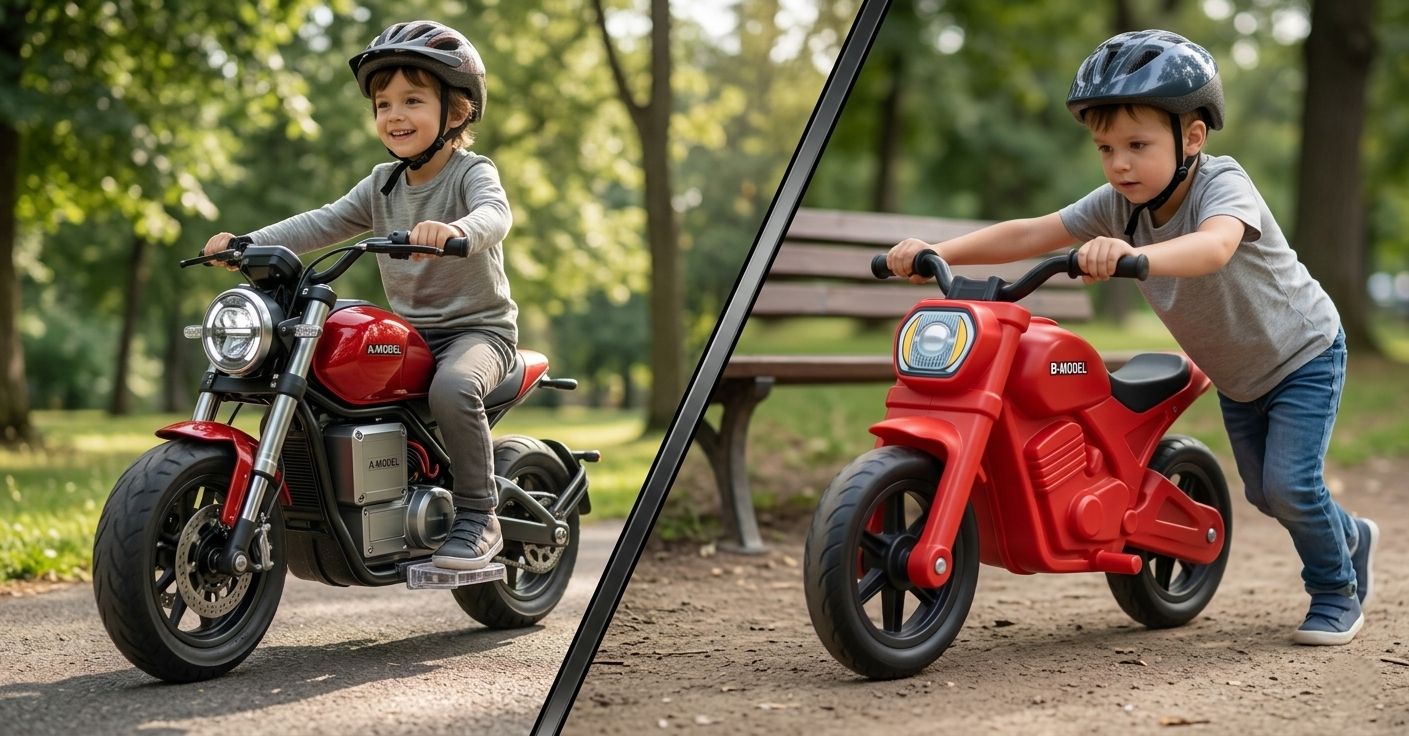
When parents begin looking for the perfect bike for kids, one important question often comes up: should they choose traditional Kids Bikes, or go for modern options like a Kids Electric Motorcycle. While both types are designed for fun and learning, they offer completely different experiences for children.
At first, the difference may seem simple. One uses pedals, and the other uses a battery. But when you look deeper, the impact on learning, confidence, safety, and development becomes much more meaningful.
For a child, riding is not just about movement. It is about understanding control, building coordination, and feeling independent. The type of bike they use shapes how they experience all of this.
Understanding How Each Bike Works
Before comparing benefits, it is important to understand how both types function in real use.
How Regular Kids Bikes Operate
Traditional Kids Bikes depend entirely on the child’s physical effort. The child must pedal to move forward, maintain balance, and control speed using brakes.
This means every movement is directly connected to the child’s strength and coordination. If they stop pedaling, the bike slows down. If they pedal faster, the speed increases.
How Kids Electric Motorcycle and Electric Bikes Work
A Kids Electric Motorcycle or electric bike uses a battery-powered motor. Instead of pedaling, the child uses a throttle or button to move forward.
This changes the riding experience completely. The bike provides movement automatically, allowing children to focus on steering and balance rather than physical effort.
Learning Curve for Beginners
One of the biggest differences between these bikes is how children learn to ride them.
Learning on Regular Kids Bikes
When a child starts with traditional Kids Bikes, they must learn multiple skills at the same time. They need to balance, pedal, steer, and control speed all together.
This can be challenging in the beginning. Many children struggle with coordination because they are trying to manage too many actions at once. However, once learned, these skills become very strong.
Learning on Kids Electric Bikes
Electric bikes simplify this process. Since there is no need to pedal, children can focus only on balance and steering in the early stages.
This makes learning feel easier and less stressful. Children often gain confidence faster because they are not overwhelmed.
Over time, this confidence encourages them to try more advanced riding skills.
Physical Effort and Energy Use
The level of physical effort required is another major difference.
Effort in Traditional Bikes
Regular Kids Bikes require continuous pedaling. This builds leg strength, stamina, and endurance. Children naturally get exercise while riding.
It also teaches them how effort connects to movement. They understand that pedaling harder increases speed, which builds physical awareness.
Effort in Electric Bikes
Electric bikes reduce physical effort significantly. A Kids Electric Motorcycle allows children to ride without using much strength.
This can be helpful for younger children who may not yet have the stamina for long rides. However, it also means they are less physically active compared to using traditional bikes.
Speed and Control Differences
Speed plays a major role in safety and confidence.
Speed in Electric Bikes
Most electric bikes are designed with controlled speed settings. This ensures that beginners are not exposed to sudden or excessive speed.
The acceleration is usually smooth, which helps children stay balanced and calm while riding.
Speed in Regular Bikes
In traditional Kids Bikes, speed depends entirely on pedaling. Some children may pedal too fast without realizing it, making it harder to control the bike.
Learning to manage speed manually is an important skill, but it takes time to master.
Balance and Coordination Development
Both types of bikes help children develop balance, but in different ways.
Balance in Electric Bikes
Electric bikes allow children to focus only on staying upright and steering. This makes balance easier to learn in the beginning.
Because there is less effort involved, children can practice longer without getting tired.
Balance in Regular Bikes
Regular Kids Bikes require children to balance while pedaling. This builds stronger coordination but takes more practice.
Once mastered, this type of balance is more complete because it combines multiple skills.
Confidence and Emotional Experience
The emotional side of learning to ride is just as important as the physical side.
Confidence with Electric Bikes
Children often feel more confident on electric bikes because they are easier to control. A Kids Electric Motorcycle gives them immediate success, which motivates them to keep riding.
When children feel successful early, they are more likely to enjoy the learning process.
Confidence with Regular Bikes
Learning traditional bikes can take longer, but it brings a strong sense of achievement. When a child finally balances and pedals on their own, it becomes a proud moment.
This builds resilience and patience.
Safety Considerations
Safety depends not only on the bike but also on how it is used.
Safety in Electric Bikes
Electric bikes often include built-in safety features such as limited speed and smooth acceleration. These features reduce sudden movements and make riding more predictable.
However, since they are motorized, supervision is important, especially for younger children.
Safety in Regular Bikes
Safety in traditional Kids Bikes depends more on the child’s skill level. Beginners may fall more often as they learn balance and control.
Protective gear and practice in safe environments help reduce risks.
Design and Comfort
The design of each bike affects how children interact with it.
Electric Bike Design
Electric motorcycles are often constructed with comfort in mind. They may include wider seats, stable frames, and easy-to-use controls.
These features make them feel secure, especially for beginners.
Regular Bike Design
Traditional bikes are usually lighter and simpler. They are easy to carry and maintain, but they require more effort from the child.
Their simplicity encourages skill development rather than comfort.
Maintenance and Practical Use
Parents also consider maintenance when choosing a bike for kids.
Maintenance of Electric Bikes
Electric bikes require battery charging and occasional motor checks. This adds a level of responsibility for parents.
Maintenance of Regular Bikes
Regular Kids Bikes are simpler to maintain. They do not require charging and usually only need basic care such as checking brakes and tires.
Comparison Table: Electric vs Regular Kids Bikes
| Feature | Kids Electric Bikes | Regular Kids Bikes |
|---|---|---|
| Power Source | Battery-powered motor | Pedal-powered |
| Effort Required | Low | High |
| Learning Focus | Balance and steering | Balance, pedaling, coordination |
| Speed Control | Consistent and limited | Depends on pedaling |
| Beginner Friendly | Very easy | Takes time |
| Physical Activity | Moderate | High |
| Maintenance | Requires charging | Minimal maintenance |
This table clearly shows how both types of bikes for kids offer different advantages depending on the child’s needs.
Which Option Is Better for Different Age Groups
Choosing between electric and regular bikes depends largely on age and ability.
Younger Children
For younger kids, electric bikes can be a great introduction. They remove the difficulty of pedaling and allow children to focus on basic control.
Growing Children
As children grow, transitioning to regular Kids Bikes helps them build strength and coordination.
Some parents choose to start with electric bikes and later move to traditional ones for a balanced learning experience.
Role of Parents in Choosing the Right Bike
Parents play a key role in selecting the right option.
They must consider the child’s confidence, physical ability, and interest. Some children prefer active play, while others may feel more comfortable starting with easier controls.
Choosing from reliable toys for kids collections ensures quality and safety, which further supports the learning process.
Long-Term Development Impact
Both types of bikes contribute to a child’s growth in different ways.
Electric bikes help children gain early confidence and coordination. They make riding accessible and enjoyable from the start.
Regular bikes build physical strength, endurance, and advanced coordination. They prepare children for more active and challenging activities.
When used together over time, they create a balanced development path.
Real-Life Riding Experience
Imagine a child using a Kids Electric Motorcycle for the first time. The smooth movement and easy control allow them to enjoy riding immediately. They smile, explore, and feel confident.
Now imagine the same child learning on a traditional bike. The first few attempts may include falls and hesitation. But with practice, they begin to balance, pedal, and ride independently.
Both experiences are valuable. One provides instant confidence, while the other builds long-term strength and resilience.
Conclusion
The difference between Kids Bikes and electric options like a Kids Electric Motorcycle goes far beyond how they move. It shapes how children learn, how they feel, and how they grow.
Electric bikes make riding easier and more accessible, especially for beginners. They provide smooth control and quick confidence.
Regular bikes offer a more physically engaging experience, helping children build strength, coordination, and endurance over time.
Choosing the right bike for kids depends on understanding your child’s needs. With proper guidance and a safe environment, both types can provide a fun, meaningful, and rewarding riding experience that supports development and confidence for years to come.

 English
 Arabic
 French
 Spanish
 Portuguese
 Deutsch
 Dutch
Dutch
 Italiano
 Russian
 Romaian
 Portuguese (Brazil)
 Greek
Greek