


ZFCERA ALUMINA CERAMICS for Industrial Components
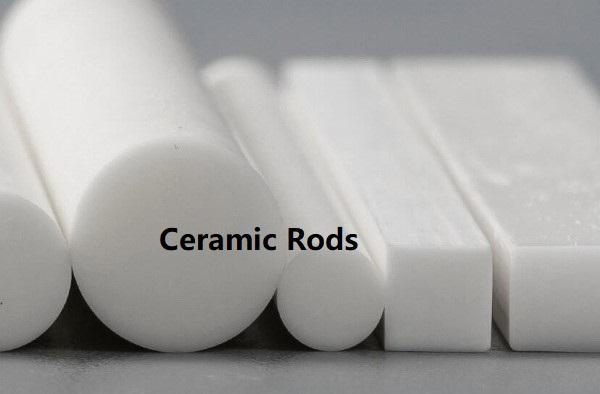
When manufacturers need materials that combine mechanical strength with electrical insulation and stable performance, ceramic solutions can provide valuable options for specialized equipment. Alumina Ceramics are widely considered for components that require hardness, wear resistance, and electrical insulation, while carefully manufactured Alumina Ceramics products can be adapted to different engineering conditions across industrial applications. ZFCERA develops ceramic components for businesses seeking practical material solutions for equipment and technical systems.
Understanding the Value of Alumina-Based Materials
Material selection is an important part of engineering design, particularly when components must operate for long periods under demanding conditions.
Alumina-based ceramic materials are known for a combination of useful characteristics. Depending on the grade and manufacturing process, they can offer good hardness, electrical insulation, dimensional stability, and resistance to wear.
These properties make them suitable for applications where components need to maintain their function while exposed to repeated mechanical contact or electrical environments.
The material can also be produced in various shapes and sizes, allowing manufacturers to develop components for different equipment structures.
However, material selection should always be based on the actual application. Engineers should evaluate operating temperature, mechanical loading, surface requirements, electrical conditions, and environmental exposure before confirming a material grade.
A careful evaluation can help ensure that the selected component provides the required performance without unnecessary material or production costs.
ZFCERA Processing and Component Manufacturing
Producing ceramic components requires careful control of several manufacturing stages. The process may include raw material preparation, forming, drying, sintering, machining, grinding, and surface finishing.
Sintering is particularly important because it affects the final density and structural characteristics of the ceramic material.
For components requiring precise dimensions, additional machining may be necessary after sintering. Grinding and polishing can help achieve specific dimensional tolerances or surface requirements.
Complex components may require customized tooling during the forming stage. Engineers should consider manufacturing limitations when designing the original component geometry.
Prototype development can be helpful for customized projects. Testing an initial sample allows manufacturers to evaluate fit, dimensions, surface quality, and application performance before moving into larger production.
Clear technical communication between customers and manufacturers can make the development process more efficient.
Applications in Electrical and Mechanical Equipment
Alumina-based components can be used in different industrial fields because of their combination of mechanical and electrical properties.
In electrical equipment, ceramic components may be selected for their insulating characteristics. They can be used in systems where electrical separation and dimensional stability are important.
Mechanical applications may take advantage of hardness and wear resistance. Components exposed to repeated contact or movement can sometimes benefit from ceramic material properties.
Industrial automation equipment may also use ceramic components in specialized assemblies. Their dimensional stability can be useful where accurate positioning or consistent performance is required.
Laboratory and analytical equipment can present another application area. Components may need to maintain stable dimensions while operating in controlled environments.
Other potential uses include semiconductor-related equipment, thermal systems, communication devices, and specialized manufacturing machinery.
The suitability of a ceramic component depends on the specific working conditions. Engineers should evaluate each application individually rather than selecting materials based only on general properties.
Quality Control and Dimensional Accuracy
Precision is an important consideration when manufacturing ceramic components for industrial equipment.
Even small dimensional differences can affect how a component fits within a larger assembly. For this reason, manufacturers may use precision measurement equipment to check critical dimensions.
Inspection requirements can include thickness, diameter, flatness, roundness, surface roughness, and other technical specifications.
Material consistency should also be monitored throughout production. Differences in raw material preparation or sintering conditions may influence the final properties of the ceramic.
Quality control procedures can be established according to customer requirements. Visual inspection, dimensional testing, and performance evaluation may all be included.
For repeat production, stable manufacturing processes can help maintain consistency across different batches.
A reliable inspection system also helps manufacturers identify potential problems early, allowing corrective actions to be taken before products reach the final assembly stage.
Choosing the Right Ceramic Solution
Selecting a ceramic component involves more than choosing a material based on a single performance characteristic.
Engineers should consider the complete operating environment, including temperature, mechanical loads, electrical requirements, chemical exposure, and expected service life.
The component's geometry is also important. A simple part may require a different manufacturing approach from a complex structure with narrow tolerances.
Production quantity can influence the choice of manufacturing process as well. Large-volume orders may justify dedicated tooling, while smaller customized projects may require more flexible production methods.
Communication with the manufacturer during the design stage can help identify potential production challenges early.
Testing prototypes under realistic conditions can provide additional confidence before full-scale manufacturing begins.
For companies developing industrial equipment, a balanced approach to material selection, product design, manufacturing, and inspection can support more reliable results. Businesses interested in ceramic components, customized solutions, and manufacturing services can visit https://www.zfcera.com/ to explore available options. With appropriate material selection and controlled processing, ceramic components can contribute to the performance and durability of electrical, mechanical, automation, and specialized industrial systems.

 English
 Arabic
 French
 Spanish
 Portuguese
 Deutsch
 Turkish
 Dutch
Dutch
 Italiano
 Russian
 Portuguese (Brazil)
 Greek
Greek